House to prioritize approval of bill reducing cost of text messaging
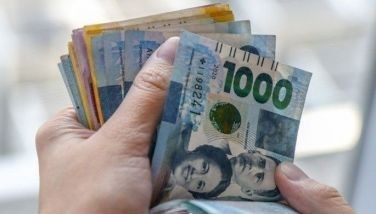
MANILA, Philippines - The House of Representatives will prioritize the approval of a measure reducing the cost of text messaging by half, from P1 to 50 centavos per text.
Speaker Prospero Nograles told The STAR yesterday that he is just waiting for the report of Quezon Rep. Danilo Suarez, chairman of the House oversight committee.
“Once I get the report, I will have it calendared for floor debates. We will give priority to reducing the cost of text messaging (for the) tens of millions of people sending texts every day,” he said.
Nograles said House leaders and President Arroyo support the Suarez proposal.
Suarez had told reporters that his committee has met with representatives of mobile telephone service providers, officials of the National Telecommunications Commission (NTC) and Bureau of Internal Revenue (BIR) and decided to cut the cost of text messages to 50 centavos.
He said the decision would be formalized in a resolution that he would file and ask the House to approve in one week’s time when Congress resumes session on April 13.
He said the 50 centavos includes a five-centavo computer education tax.
Since the tax is part of the maximum cost, it is in effect a pass-on levy, meaning it would be borne by subscribers, though Suarez claimed it is not.
He said the 50-percent reduction in the cost of text messaging would take effect on May 1, Labor Day.
Suarez pointed out that 50 centavos would be the maximum cost.
“Our estimate of the telcos’ (telecommunication firms) text messaging cost is 18-19 centavos. If you include the five-centavo tax, the net cost should be about 25 centavos. So if they offer text messaging at 30 centavos per text, they have a profit of five centavos,” he said.
“Since Filipinos send two billion text messages per day, a five-centavo profit translates to P100 million a day, P3 billion a month and P36 billion a year,” he stressed.
Cavite Rep. Elpidio Barzaga Jr., however, said a resolution might not be enough to force mobile phone operators to cut the cost of text messaging.
“A resolution is open to challenge. It is better that we pass a bill setting a price cap on text messaging,” he said.
Mobile phone service providers have vowed to contest any congressional enactment limiting the cost of text messages.
Telephone firm hits new text measure
Newly appointed Globe Telecom president Ernest Cu warned congressmen that it would be the consumers who will be hurt if government pushes through with a plan to set text messaging rates at 50 centavos.
Cu said that they are just like any other business where the basis of pricing is cost. “No one but the consumer will pay at the end of the day this unilateral tax imposition,” he emphasized.
He also pointed out that the plan would limit the offers and flexibility currently being enjoyed by mobile phone service providers. Industry experts have argued that the P1 per text rate applies only to postpaid subscribers, which account for a very small portion of the total subscriber base. If the zero-rated text and those covered by promotional offers are considered, the blended cost per text can be as low as 12 to 18 centavos per text. Of this amount, a huge portion goes to value-added tax, traders’ commission, among others, leaving service providers with very little profit per text, maybe even lower than the five centavos per text that will be set aside for computer education.
Cu said the House proposal would severely curtail telcos’ ability to roll out new products and to invest in their networks.
“In fact, our rollout of WiMAX did not come cheap at P7 billion. Government should allow telcos to sufficiently generate cash flow in order to contribute to nation building. Imagine the wealth of information that people can get from the Web, access to which is a service that we provide. It will be detrimental to the whole nation if they keep taxing us,” he said.
Globe corporate and regulatory affairs head Caridad Gonzales said this new imposition by the House would be passed on, whether directly or indirectly, to consumers.
“These additional fees also depress our ability to offer unlimited services since it assumes that the text tariff is still P1,” she said. – With Mary Ann Reyes








- Latest
- Trending