Moving forward

CEBU, Philippines — For Cebu Governor Pamela Baricuatro, before the province could even move forward, the administration first had to settle the past, including P63 million in provincial obligations left unpaid since 2018.
Baricuatro disclosed this in her State of the Province Address (SOPA), which capped Cebu’s 457th founding anniversary, where she reported on the province’s condition when she assumed office and the measures undertaken during her first year.
The governor clarified that the P63 million did not represent debts incurred by her administration but obligations of the provincial government that had remained unpaid.
“We also settled P63 million in obligations that had remained unpaid since 2018—not because they were my administration’s debts, but because they were obligations of the Province,” said Baricuatro.
She said the obligations also involved businesses and service providers that had already fulfilled their part of their agreements with the province.
“Behind every debt was also a hardworking business owner, small or big, that fulfilled its end of a service acquired by the province. And I believe, a responsible government honors its commitments,” she said.
The settlement was part of the administration’s “housekeeping” agenda, one of six key result areas her administration adopted to rebuild the provincial government’s systems and improve the delivery of services.
Baricuatro’s administration adopted a 2026-2028 Public Financial Management Improvement Plan, increased development-fund utilization to 80-percent in the second semester of 2025 and mobilized P900 million from the Office of the President, Department of Budget and Management (DBM), Department of Transportation (DOTr) and other agencies.
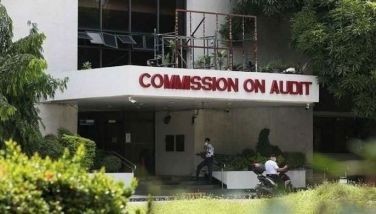
Provincial assets also increased by P2.039 billion from calendar year 2024 to 2025, based on Commission on Audit-audited statements, according to figures presented during the SOPA.
Inherited problems
Baricuatro said the unpaid obligations were among the problems her administration encountered when it took over the provincial government.
A year earlier during her first SOPA, she described Cebu’s situation using three words: “Guba. Gubot. Gutom,” referring to broken systems, disorganized processes and people lacking not only food but also services, opportunities, safety and responsive government.
“Because you cannot repair what you refuse to recognize. You cannot heal what you are afraid to name,” Baricuatro said.
The administration also identified 20 infrastructure projects from the previous administration with lacking and questionable procurement proceedings, involving a total of P120 million.
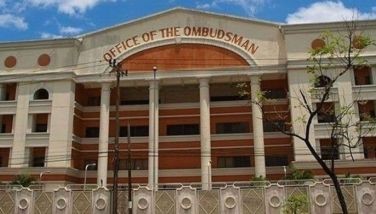
Four of these projects, according to Baricuatro, will be referred for National Bureau of Investigation (NBI) investigation and an Ombudsman complaint.
“When questionable proceedings were discovered, we did not hide them—we acted,” Baricuatro said.
The governor said her administration also introduced the Cebu Infrastructure Project and Management Monitoring System (CIPMMS), which monitors 150 infrastructure projects worth P1.9 billion, while live opening of bids and online Bids and Awards Committee proceedings were institutionalized.
She said the province also passed a Freedom of Information ordinance and expanded citizen participation, with 206 civil society organizations accredited since October 2025 compared with 55 accredited from 2019 to June 2025.
The governor said the provincial government also downloaded almost P1 billion to local government units and barangays within the year to speed up the implementation of projects and delivery of assistance.
She said more than P84 million was allocated to the Office of the Vice Governor and P15 million each to the 19 members of the Provincial Board, for a combined P345 million in legislative assistance funds.
Disasters add to pressure
As she recalled, the first year was further complicated by an earthquake, typhoon and flooding that damaged homes and livelihoods and affected communities across Cebu.
Baricuatro recounted seeing the deaths and destruction caused by the disasters and said she eventually broke down at Bogo City Hospital.
“Isip inahan sa probinsya, lisod kaayo tan-awon ang atong mga tawo nga nawad-an og balay, panginabuhi, ug mga minahal,” she said.
She also cited political noise, misinformation, attacks and attempts to divide the province as challenges faced by her administration during its first year.
Despite these, Baricuatro said the provincial government continued to pursue its priorities.
“Apan bisan pa sa kasaba, pagpangdaot, ug mga pagsulay sa pagbahin-bahin kanato, wala kita mawala sa atong direksiyon. Kay ang atong katuyoan klaro: ang pag-alagad sa katawhan sa Sugbo,” she said.
Healthcare push
Healthcare was among the administration’s largest investments, with P4.8 billion allocated to the provincial healthcare system, including more than P650 million for new equipment and infrastructure.
Close to P600 million was also allocated for medicines, while the meal allocation for admitted patients was doubled from P150 to P300 per meal.
The provincial government expanded its healthcare workforce, reporting 325 doctors, 818 nurses, 159 medical technologists, 56 pharmacists and 1,422 support personnel as of July 2026.
All 16 provincial and district hospitals became Yaman ng Kalusugan Program (YAKAP)-accredited, while all 16 now provide 24/7 laboratory services. PhilHealth PhilHealth Customer Assistance, Relations and Empowerment Staff (PCARES) compliance also increased from 35-percent to 98-percent.
"For a patient whose emergency happens at midnight, that difference is not administrative. That difference can be life or death,” Baricuatro said.
The province also launched medical scholarships for Cebuano students, with 73 scholars beginning in school year 2026-2027, while five medical and surgical missions have provided 13,440 services, she said.
Assistance and livelihoods
The administration expanded its assistance program into AMPING Cebu, increasing beneficiaries from around 100 to 1,000 monthly, with guarantee-letter partnerships established with 11 private hospitals and two pharmacies.
For food security, the province constructed five small farm reservoirs, established five corn-processing sheds and distributed 46 walk-behind tractors to 46 local government units.
It also installed 18 fish cages, distributed 248 fish-aggregating devices and provided livestock support to communities.
The province distributed 62,480 vegetable-seed packs to 4,800 households, while 5,329 livestock received vaccination, deworming, vitamins or treatment.
Education and disaster recovery
In education, the province began implementing 188 smart classrooms across 47 LGUs, with P660.7 million allocated for the project.
The province also funded 260 temporary learning shelters with P260 million for local government units affected by Typhoon Tino and the North Cebu earthquake.
A 120-day breakfast feeding program is being implemented for 10,723 Grade 2 learners under Tabang PangpaBaskog.
For disaster-affected Cebuanos, the province allocated more than P276 million in cash and livelihood assistance and P538 million for rehabilitation and reconstruction, including damaged roads, bridges and temporary learning shelters.
“We cannot stop earthquakes. We cannot order storms away. But your Provincial Government can decide whether Cebu meets the next disaster confused or coordinated, empty-handed or equipped, late or ready,” she said.
The governor said the province would also construct two satellite warehouses in northern and western Cebu to preposition food, equipment and other essential supplies before disasters strike.
Baricuatro acknowledged that Cebu’s flooding and water-security problems cannot be solved through short-term interventions alone.
She said the province is pursuing feasibility studies for watersheds, water-retention systems, impounding facilities, dams and other long-term flood-control and water-security projects.
“And that is precisely why the work should have begun a long time ago,” Baricuatro said, referring to the need for long-term water and flood-control infrastructure.
“We cannot recover the years that were lost. But we refuse to lose another year by doing nothing at all,” the governor noted.
Under the province’s 10-year Water Security Plan, the administration is targeting an additional 29 million liters of water per day from existing treatment projects and another 15 million liters per day for Dalaguete, Pinamungajan and Alcantara by next year.
Cebu’s tomorrow
Baricuatro said the Provincial Disaster Risk Reduction and Management Office (PDRRMO) was restored as a full department, with strengthened real-time monitoring of earthquakes, floods and typhoons and improved land- and sea-rescue capabilities.
The administration also began feasibility studies for watershed protection, water-retention systems, impounding facilities, dams and other long-term flood-control and water-security solutions.
“We cannot recover the years that were lost. But we refuse to lose another year by doing nothing at all,” Baricuatro said.
For the next 12 months, the governor said the province will focus on healthcare, agriculture, disaster readiness, water security, education, infrastructure, mobility and energy.
The province is also preparing to procure a Sea Emergency Response Vessel, while a new life rehabilitation center in Pinamungajan and an LGU-operated physiotherapy center at the Capitol are being pursued.
For transportation, Baricuatro said the province would roll out Tabang PangByahe, with fixed dispatch schedules and designated stops, followed by smart waiting sheds powered by solar energy and equipped with digital bus-arrival displays and phone-charging stations.
Electric buses are also expected to be introduced through six transport cooperatives, with plans eventually extending the service to Bantayan and Camotes.
Baricuatro said the administration’s second year would focus on moving from immediate recovery toward prevention, preparedness and long-term development.
Looking back at her first year, Baricuatro said the province had moved from the condition she described as “guba, gubot, gutom” toward recovery, rebuilding and forward movement.
“Cebu is no longer standing still. Cebu has been recovering. Cebu has been rebuilding. And Cebu has been moving forward with purpose,” she said.
She ended her address by reiterating her commitment to govern beyond political divisions, declaring, “Akong usbon: Gobernador ko sa tanang Sugboanon.”
“The best days of Cebu have not passed. They are still ahead of us—and we will build them together,” she declared. — (FREEMAN)






- Latest