Move against carbon privatization: Vendors launch nationwide campaign
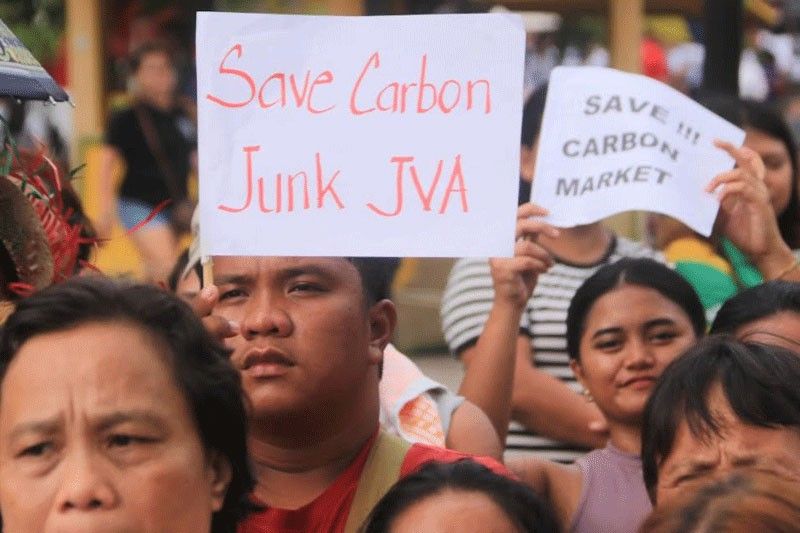
CEBU, Philippines — In its continuing resistance against the privatization of Carbon Market, the oldest public market in Cebu, a new national campaign has been launched as vendors and allied groups formally introduced the “Save Carbon Market Movement.”
The movement aims to withstand the privatization of Carbon Market under the Joint Venture Agreement (JVA) between the Cebu City Government and Megawide’s Cebu2World subsidiary.
The launch began with a solemn Mass at the Basilica Minore del Santo Niño, followed by a march toward Carbon Market.
At the forefront was Erwin Goc-ong, former president of the Cebu Market Vendors Multipurpose Cooperative (CEMVEDCO), who explained to THE FREEMAN why the movement was created.
“We launched last Monday the save Carbon Public Market Movement. Amo na siya gi-launch ay sa nilabay man gud nga mga katuigan, ug buwan pirmi kami ra gyud anag alliance,” said Goc-ong.
The alliance comprises four different vendors’ associations, namely CEMVEDCO, the Cebu City United Vendors Association (CCUVA), Carbohanong Alyansa, and homeowners in Sitio Bato, Ermita, an area adjacent to Carbon Market.
Goc-ong stressed that Carbon’s reach extends far beyond Cebu.
“Ang Carbon, konektado man sa La Trinidad, Benguet kay ilang patatas ug carrots muabot man diri… konektado ta sa La Union ug Nueva Ecija tungod sa ilang bumbay ug ahos ug bugas… konektado man ta sa Mindanao sa Malaybalay… Sa Bohol, sa Negros,” Goc-ong explained.
“So nakahuna-huna mi nga kaning mga lugara, among adtuon… mag-inform mi ug muhangyo nga mu-join sa panawagan nga ang Carbon ipabilin nga public… dili e-private,” he added.
The group has begun signature campaigns and community assemblies, reaching upland barangays to explain the effects of privatization.
“Why not involve everyone? Not just vendors but even other sectors,” Gok-ong added, envisioning a national movement that connects with public markets in major towns and cities across the Philippines.
The multi-billion JVA, signed in 2021, granted Cebu2World the rights to redevelop and operate Carbon Market for 50 years. The project includes the construction of Freedom Park, the Compania Maritima area, and new multi-level market buildings, with completion targeted for late 2026.
Critics argue that the deal risks displacing around 6,000 vendors and undermining the public character of the market, while supporters say it will modernize facilities and boost tourism.
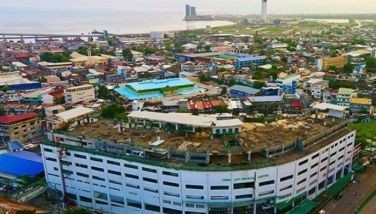
Carbon Market, established in the early 1900s as a coal depot, has long been considered the “Divisoria of Cebu.”
It is regarded as a hub for agricultural trade, linking Cebu with Luzon and Mindanao. Any disruption, vendors warn, will ripple across the country’s food supply chains.
The local vendors’ group has appealed to the Cebu City Council’s Committee on Housing, Markets, and Livelihood to review the JVA.
They are also coordinating with sympathetic lawmakers in Congress and the Senate.
“Para ma-pressure gyud ang City ug mismong si Megawide nga tiwason na lang niya ang construction, magpabayad na lang siya sa iyang gasto, unya dili na siya mu (oversee) sa operation… biyaan na lang like sa SM na ni-withdraw sa Baguio,” Goc-ong said.
Earlier, Mayor Nestor Archival signaled openness to revisiting the deal, while Vice Mayor Tomas Osmeña filed a petition before the Supreme Court questioning its constitutionality.
After the launch, organizers vowed to continue their “pulong-pulong” and expand their campaign nationwide.
“Among gi-envision into a national movement kay mu-connect man sad mi sa tanang public markets sa major towns and cities of the Philippines… to be aware on the effects of privatization,” Gok-ong said.
For Cebu’s vendors, the fight is not only about stalls and fees; it is about preserving a public institution that has defined the city’s identity for more than a century and ensuring that public markets across the Philippines remain in the hands of the people. — Jose Luis Flores, CTU Tuburan Intern (FREEMAN)





- Latest