Cebu conquered twin calamities
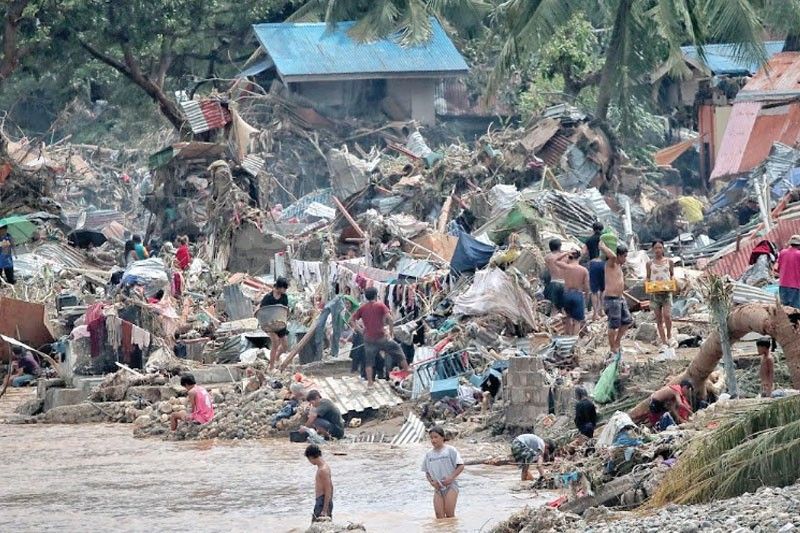
CEBU, Philippines — It was a year that tested the faith and resilience of Cebuanos, who embraced hope as they carried on to face another chapter in their long road to recovery.
In what officials described as one of the most punishing disaster periods in recent history, Cebu was struck by two major calamities within just over a month: a magnitude 6.9 earthquake on September 30 and Typhoon Tino on November 4, 2025.
The back-to-back disasters displaced thousands of families, crippled infrastructure, and tested the capacity of government agencies, private groups, and communities to respond to widespread devastation.
The earthquake that shook Northern Cebu
It was on the late evening of September 30 when a powerful magnitude-6.9 earthquake rattled 21 kilometers northeast of Bogo City, sending residents fleeing from collapsing homes and damaged buildings across northern Cebu. The earthquake caused massive power outages that affected more than 30,000 households, while damage to roads, bridges, schools, churches, and public facilities ran into the billions of pesos.
This led the national government to declare a state of calamity, releasing emergency funds and mobilizing rescue, medical, and relief teams.
President Ferdinand "Bongbong" Marcos Jr. personally ordered rapid response operations and later made two visits to quake-hit areas, meeting displaced families and inspecting damaged infrastructure.
Malacañang announced the release of ?150 million for earthquake rehabilitation, including ?50 million for the provincial government and direct allocations to affected local government units. Temporary shelters, including a "tent city" in Bogo City, were established using large weather-resistant tents from the Philippine Red Cross.
"We won’t let our people down. As long as there are needs, we will continue responding to them," President Marcos said during his October 17, 2025 visit to Bogo City and San Remigio town—his second visit since October 2, 2025.
At the regional level, various agencies deployed Quick Response Teams, mobile kitchens, water filtration units, and medical teams to aid displaced individuals.
Adding to the damage were churches, schools, and heritage sites that were crippled. Cebu Archbishop Alberto "Abet" Uy called for prayer and solidarity, urging parishes to support survivors through fundraising and relief initiatives, while temporarily suspending the use of damaged churches pending structural inspections.
Typhoon tino compounds the crisis
Barely a month after earthquake response operations were underway, Typhoon Tino battered Cebu on November 4, 2025, triggering massive flooding, landslides, and prolonged displacement across urban and low-lying areas.
More than 200,000 families were affected, with hundreds of thousands evacuated or displaced. Roads, power lines, drainage systems, and water facilities were damaged, causing days of outages, while casualties were reported in several towns.
Once again, Cebu was placed under a state of calamity, activating price freezes on basic commodities, calamity loan programs for displaced members, and emergency employment assistance.
President Marcos returned to Cebu twice more to oversee response efforts and ensure coordination between national agencies, local governments, and the private sector.
Air travel disrupted
The impact of the twin calamities extended to air travel at Mactan-Cebu International Airport (MCIA), the country’s second-busiest aviation hub.
During the September 30 earthquake, airport operations remained uninterrupted, with officials assuring the public that MCIA continued to function normally even as disaster response efforts were ongoing in northern Cebu.
However, the arrival of Typhoon Tino led to major flight disruptions.
As a safety precaution, more than 80 flights were canceled on November 3 and 4, as heavy rainfall, strong winds, and adverse weather conditions affected both domestic and international routes. Records showed that 49 flights were called off in a single day, followed by 34 additional cancellations the next day.
MCIA authorities later announced that airport operations had resumed by late morning on November 4, noting that no significant structural damage was found in airport facilities. Travelers were nonetheless urged to monitor flight updates and allow extra travel time, as flooding continued to affect access roads leading to the airport.
Government, private sector, and bayanihan response
In response to the twin disasters, national agencies rolled out large-scale assistance programs.
The Department of Labor and Employment-7 allocated ?100 million for emergency employment under the TUPAD program, providing displaced workers with temporary income while helping rehabilitate their communities.
The Department of Social Welfare and Development (DSWD), in partnership with the Department of Tourism, released emergency cash assistance to nearly 2,000 tourism workers affected by the earthquake. The Social Security System (SSS) extended calamity loans, while the Department of Trade and Industry (DTI) and Department of Energy (DOE) enforced price freezes on basic goods, LPG, and kerosene.
DSWD-7 led multi-faceted response operations throughout the latter part of 2025. The agency mobilized immediate relief, temporary shelter assistance, and psychosocial services in coordination with local government units (LGUs) and inter-agency partners.
DSWD-7, headed by Regional Director Shalaine Marie S. Lucero, delivered vital humanitarian services, from hot meals and food packs to cash assistance, for families affected by recent disasters across Central Visayas.
As of December 8, 2025, DSWD-7 extended humanitarian assistance amounting to more than ?1,075,146,886.14, including Family Food Packs, Family Tents, Modular Tents, Hygiene Kits, Family Kits, Clothing Kits, Kitchen Kits, and other essential relief items.
A total of 446,052 Family Food Packs worth ?244,477,121.00 and 3,813 non-food items were distributed to quake-affected families in the following LGUs: Bantayan, City of Bogo, Borbon, Carmen, Catmon, Daanbantayan, Danao City, Madridejos, Medellin, San Remigio, Santa Fe, Sogod, Tabogon, Tabuelan, and Tuburan.
DSWD-7 also provided burial assistance to 78 quake-affected families who lost loved ones, totaling ?1,451,500.00 in cash disbursements. Furthermore, the agency extended its Emergency Cash Transfer (ECT) program to 103,023 beneficiaries, amounting to ?581,472,165.00 in financial aid.
As of December 8, 2025, DSWD-7 extended a total of ?320,098,942.80 in humanitarian assistance to families affected by Typhoon Tino.
DTI-7 reported that more than 492 micro, small, and medium enterprises (MSMEs) in northern Cebu were affected by the magnitude earthquake, with estimated damages reaching ?122 million.
Their immediate response included the DTI-SBCorp Enterprise Rehabilitation Financing (ERF) Loan Application Fair conducted in Bogo City, Daanbantayan, San Remigio, and Medellin. Ongoing efforts include coordination with LGUs and engineering offices for facility assessments and exploring additional interventions for affected MSMEs, as well as business counseling and coaching/mentoring for recovery and rehabilitation.
In the wake of the earthquake, the Aboitiz Group and key partners mobilized resources to provide immediate relief to affected communities. As of October 3, the Aboitiz Group had allocated over ?2.5 million in assistance, distributing 11,385 liters of water, 3,600 food packs, and 2,000 non-food items, reaching 3,600 families in need.
A total of 225 families affected by the recent earthquake in San Remigio, Cebu also received housing support through the Post Earthquake Recovery Assistance Program of the Aboitiz Foundation, aimed at helping residents rebuild their damaged homes and restart their lives.
Recovery, flood control, and long-term resilience
In November, President Marcos launched Oplan Kontra Baha in Metro Cebu, ordering large-scale dredging and clearing of rivers, creeks, and drainage systems to prevent future flooding.
The project, set to run until August 2026, targets eight priority waterways spanning 161 kilometers, alongside 212 kilometers of drainage systems, with support from national agencies, LGUs, and private partners.
The government is also studying the construction of “sabo” dams in upland areas to slow water flow and trap silt, particularly along the Mananga, Butuanon, and Cotcot rivers.
Meanwhile, DepEd-7 continues to grapple with damaged schools, funding shortfalls, and a shortage of structural engineers. To address this, temporary learning shelters, blended learning, and public-private partnerships are being explored to ensure educational continuity for nearly 700,000 affected students.
DPWH Secretary Vince Dizon, who was dispatched by the President to Cebu, personally visited the hardest-hit communities, including Sitio Isla Verde in Barangay San Isidro, Talisay City (just below the Mananga Bridge), where homes were swept away by severe flooding.
“The President’s instruction is clear: Cebu will be a priority in the rebuilding of infrastructure. That’s why he sent me here immediately. DPWH will clear what needs to be cleared, fix what needs to be fixed, and help in rebuilding,” Dizon previously said.
It was there that Dizon said President Marcos emphasized the need for long-term solutions, not just repairs.
The President directed the DPWH to begin planning and constructing proper flood control and mitigation projects across Cebu, particularly in Talisay, Mandaue, and river systems like Butuanon and Mananga.
“The President told me we must ensure this never happens again,” Dizon said, referring to the massive flooding in Cebu during Typhoon Tino.
Looking ahead
While recovery efforts continue, hundreds of families remain in evacuation centers and temporary shelters across Cebu.
Government agencies, local officials, civic groups, and private partners are working together to rebuild damaged homes, schools, hospitals, and public facilities, while also restoring livelihoods and basic services.
Officials say the lessons learned from the earthquake and Typhoon Tino have reinforced the need to strengthen disaster preparedness and flood-control measures, as communities move forward with the hope of rebuilding safer and more resilient towns.
Disaster-risk reduction and preparedness programs are also being strengthened, with projects such as “Oplan Kontra Baha” targeting flood-prone waterways, the construction of dams in upland areas, and community-based early warning systems. These measures aim not only to rebuild what was lost but also to enhance Cebu’s resilience against future calamities.
Officials stressed that recovery is a shared responsibility. The ongoing relief and rehabilitation efforts, combined with the solidarity of Cebuanos and the bayanihan spirit, are seen as critical in helping communities regain stability, restore livelihoods, and return to normalcy. — (FREEMAN)





- Latest