ADB, S&P cut Philippines growth forecasts
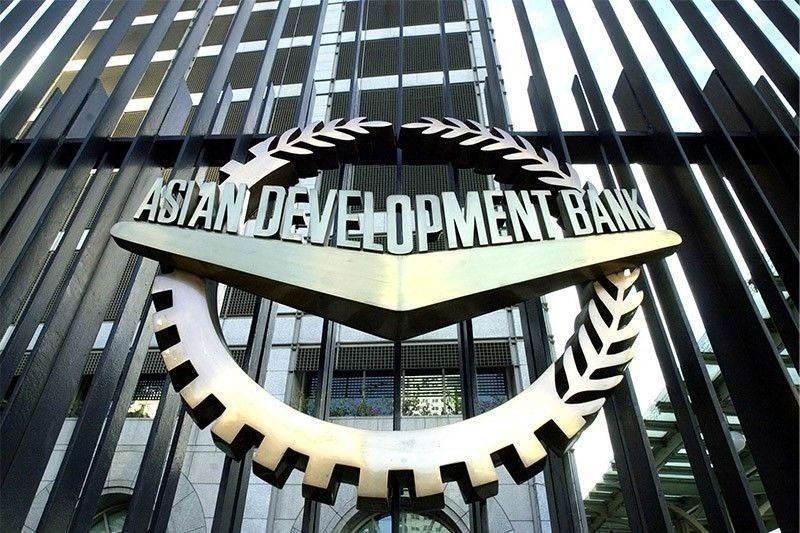
MANILA, Philippines — The Asian Development Bank (ADB) and S&P Global Ratings slashed the economic growth forecasts for the Philippines due to the prolonged impact of the Middle East crisis and weaker investments. The multilateral lender’s Asian Development Outlook (ADO) September 2026 report released yesterday showed that it now expects the Philippines to grow by 3.3 percent this year, down from 3.8 percent provided last July.
If realized, this year’s economic growth would fall below the government’s revised 3.5 to 4.5 percent growth target for the year and last year’s 4.4 percent gross domestic product (GDP) growth.
While the ADB expects Philippine economic growth to rebound next year, it also trimmed its growth forecast to 5.1 percent for 2027 from 5.3 percent, previously.
ADB’s revised 2027 growth forecast is within the government’s revised five to six percent growth goal.
ADB Philippines senior economics officer Teresa Mendoza said in a press briefing that the lowered growth forecasts are due to persistent external and domestic headwinds.
In particular, escalating geopolitical tensions have heightened inflation pressures and uncertainty, weighing more heavily on 2026 growth than expected.
ADB also cited weaker investments in the first half and soaring prices of imported fuel and other vital commodities such as fertilizers.
Likewise, S&P has sharply cut its Philippine growth forecast for this year to 2.9 percent, the steepest downgrade among the Asia-Pacific economies it covers, as weak government investment, high energy costs and elevated food prices weigh on domestic demand.
S&P lowered its 2026 GDP growth projection from its previous forecast of 4.1 percent. GDP measures the value of goods and services produced by the economy after adjusting for inflation.
It also trimmed its 2027 growth forecast to 5.4 percent from 5.8 percent and its 2028 projection to six percent from 6.2 percent. It expects growth at 5.8 percent in 2029.
“Growth for the first half was below expectations at 2.5 percent year over year, amid a series of headwinds for the economy,” S&P economist Vishrut Rana said.
“The economy is facing a sharp pullback in public capital expenditure, a steep energy price shock and elevated food prices, partly due to El Niño conditions,” Rana added.
The economy expanded by just 2.3 percent year on year in the second quarter, bringing the growth in the first half to 2.6 percent, with S&P identifying the Philippines as the “most notable exception” to the resilience in regional domestic demand as investments plunged.
Rana said the weaker first-half performance and expectations of a more gradual recovery prompted the downgrade.
“It will take some time for the economy to recover its footing. We expect public capital expenditure to normalize gradually as various public infrastructure works are initiated,” he said.
“Given strong reforms in the space to increase transparency and efficiency, it will take time for disbursements to ramp up. Elevated energy and food prices, together with the resulting tighter monetary policy, will continue to weigh on domestic demand.”
S&P nevertheless expects medium-term growth drivers to remain intact, supported by the competitive business process outsourcing sector, private investment in special economic zones and expansion in energy, electronics and other industries.
Despite inflation pressures, ADB kept its Philippine inflation forecast at 5.9 percent this year.
However, the multilateral lender hiked its 2027 inflation forecast to 4.4 percent from the 3.9 percent provided in July due to the anticipated impact of the El Niño phenomenon on agricultural output.
S&P expects inflation to average 5.5 percent this year, up sharply from 1.7 percent in 2025, before easing to 3.6 percent in 2027, 3.2 percent in 2028 and 2.9 percent in 2029.
With inflation remaining high, S&P expects the Bangko Sentral ng Pilipinas (BSP) to deliver another 25-basis-point rate increase before yearend, bringing the policy rate to 5.25 percent. It then sees the rate declining to 4.5 percent in 2027 and four percent in 2028.
“The BSP is likely to remain focused on the inflation mandate and, as such, we expect modest further monetary policy tightening this year,” Rana said. “We expect interest rates to be lowered in 2027 as inflation eases following dissipation of the energy and food price shocks.”
Inflation slowed to 6.1 percent in August from the previous month’s 6.2 percent. This brought the average in the eight-month period to 5.2 percent, above the government’s two to four percent target band for the year.
When it comes to monetary policy, Mendoza said that ADB expects the BSP to continue its tightening at a gradual pace as inflation remains above target.
“The economy continues to feel the impact of the Middle East conflict, but business indicators point to expected improvements in economic activity, with the industry sector still looking to expand next year,” ADB Philippines country director Andrew Jeffries said.
“For the Philippines to ride through the effects of external and domestic shocks in the near term, timely government spending on planned investments especially in the social sector and critical infrastructure projects will be important,” he said.
Mendoza said that the ADB expects gradual investment recovery in the latter part of this year, which would support the country’s growth.
“We’re expecting it gradually to improve starting fourth quarter of 2026. This is in line with the government’s move to accelerate ongoing flagship infrastructure projects, particularly railway projects,” she said.
As the government has been pursuing programs to mitigate the effects of the Middle East conflict and El Niño phenomenon, the ADB is preparing assistance through a countercyclical support facility.
“What it hopes to accomplish is it fills a budget gap that was created because of the Middle East crisis and because of the government’s UPLIFT (Unified Package for Livelihoods, Industry, Food and Transport) Program,” Jeffries said.
He said the government had about a $7 billion increase in spending because of the fuel subsidies and assistance to help those affected by the impact of the crisis.





- Latest
- Trending