


Kanlaon Volcano erupts; ashfall reaches Cebu
BACOLOD CITY , Philippines – A three-minute moderately explosive eruption occurred yesterday at Kanlaon Volcano in Negros Island Region, spreading volcanic ash in nearby areas as well as in some parts of Cebu.
The eruption generated a dark gray ash plume that rose two to three kilometers above the crater and drifted eastward.
It was the fourth eruption of Kanlaon this year, following similar volcanic activities on Feb. 19 and 26 as well as on March 15, according to the Philippine Institute of Volcanology and Seismology.
Phivolcs said pyroclastic density currents (PDCs) were seen descending from the southeastern slopes of the volcano and remained confined within one kilometer of the summit crater.
The PDCs were captured by a time-lapse camera installed at the Upper Pantao Observation Station in Canlaon City, Negros Oriental.
Despite the eruption, Phivolcs said Kanlaon remains under Alert Level 2 or state of increasing unrest.
Mari-Andylene Quintia of the Kanlaon Volcano Observatory said that monitoring stations recorded loud sounds that were heard in La Castellana, Negros Occidental and Canlaon City.
Ashfall and sulfur stench were reported in the villages of Bulwangan and Quezon in San Carlos City, and Maao in Bago, Negros Occidental as well as in Binalbagan in Canlaon City.
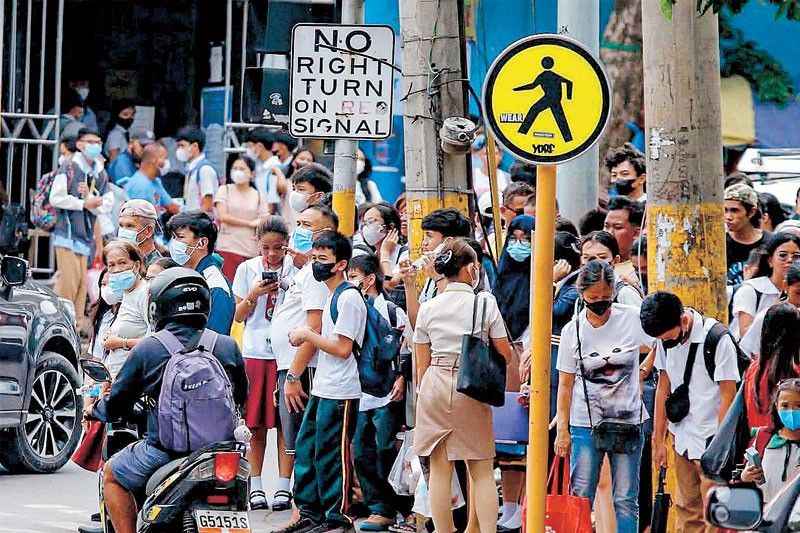
The volcanic ash spread to some parts of Cebu – particularly in the towns of Balamban, Pinamungahan and Aloguinsan as well as Toledo City – prompting local government units to cancel classes.
Farm produce sold at the Uptown Vegetable Market in Barangay Mabigo, Canlaon City were soaked in a muddy slush as rain exacerbated the ashfall.
Authorities said rocks believed spewed by Kanlaon damaged the roof of a house in Sitio Matagbak in Barangay Masulog, Canlaon City.
Phivolcs director Teresito Bacolcol said the eruption was stronger than ordinary ash emissions, but it was not considered as one of the volcano’s most powerful eruptions.
Bacolcol said Alert Level 2 remains appropriate for Kanlaon as there are no significant signs yet of escalating volcanic activity.
These signs include lava flows, substantial ground deformation and a sharp increase in volcanic quakes.
The eruption could have been caused by the sudden release of pressure from beneath the volcano, Bacolcol said. – Josiah Antonio


- Latest
- Trending


