Peso sinks past 64 to $1 barrier
Adds pressure on power, fuel costs
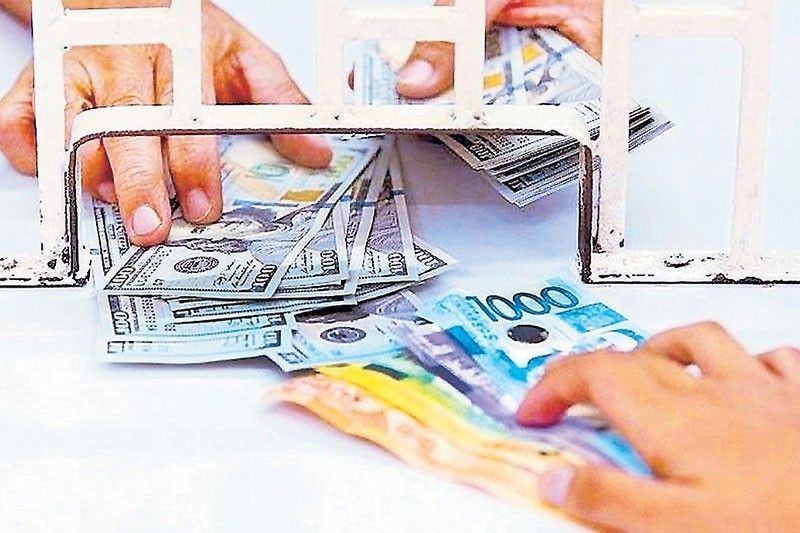
MANILA, Philippines — The peso breached the 64-per-dollar mark for the first time yesterday, deepening concerns that the currency’s continued slide could make electricity, fuel and other imported goods more expensive for Filipino consumers. Data from the Bankers Association of the Philippines showed the peso closed at a fresh record low of 64.17 per dollar, weaker by 22 centavos from Monday’s 63.95 finish. It was the local currency’s fifth straight trading session at a new all-time closing low.
The peso opened at 63.95 and briefly strengthened to 63.90, its best level for the day, before weakening to as much as 64.20, its weakest intraday level on record. Trading volume increased by about 4.7 percent to $1.73 billion from $1.65 billion previously.
The peso first closed above the 63-per-dollar level on Oct. 15, meaning it took just 12 days for the currency to breach 64.
Energy Secretary Sharon Garin warned that the weakening peso could drive up the cost of imported coal, diesel and liquefied natural gas. This could add pressure on electricity rates and pump prices at a time when the country is also grappling with high global oil prices and the threat of El Niño.
“This is not the best time to be secretary,” Garin said on the sidelines of the Singapore International Energy Week.
The Department of Energy is exploring possible measures to cushion the impact of the peso depreciation and continued market volatility. In particular, Garin said she would meet with Energy Regulatory Commission chairman and CEO Francis Saturnino Juan to discuss possible regulations to prevent sudden spikes in electricity bills.
The weaker currency has already contributed to higher electricity rates in Metro Manila and nearby provinces this month because some power supply contracts are denominated in dollars.
For petroleum products, the DOE is also considering asking oil companies to stagger price increases.
“We’ll ask them again once we see the computations this week. Normally, they follow, but hopefully, it won’t be necessary anymore,” Garin said.
Chinabank chief economist Domini Velasquez said the peso’s continued depreciation despite the Bangko Sentral ng Pilipinas’ surprise 50-basis-point rate hike last week reinforced concerns that monetary tightening by itself may not be sufficient to turn the currency around.
“Ultimately, the key question is how quickly the Philippine economy can recover amid heightened uncertainty,” Velasquez said.
Economic data could also complicate the outlook. Velasquez said inflation in October and November could approach eight percent, while third-quarter gross domestic product growth could slip below three percent.
BPI economist Jun Neri was somewhat less downbeat on growth, putting the upcoming GDP reading at “a little over three” percent. He nevertheless expects inflation to remain elevated, estimating the October rate at around 7.8 to 7.9 percent and saying November could rise above eight percent.
The combination of weak growth, high inflation and continued peso depreciation leaves policymakers facing a difficult balance. Higher interest rates may help contain inflation and support the currency, but they also raise borrowing costs at a time when economic growth is already under pressure.





- Latest
- Trending