Capitol: Quake recovery still far from over
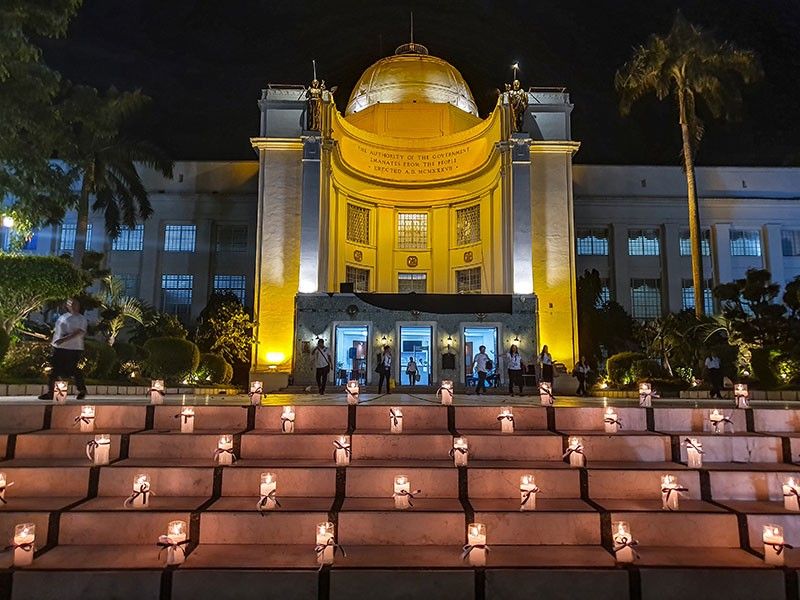
CEBU, Philippines — One year after the magnitude 6.9 earthquake devastated northern Cebu, the provincial government acknowledged that recovery remains a long way from complete, with a three-year rehabilitation plan in place.
The province estimates that rebuilding communities and restoring damaged infrastructure will require P19.28 billion, underscoring the scale of work still ahead despite assistance and projects already delivered in quake-hit areas.
Provincial Disaster Risk Reduction and Management Office (PDRRMO) head Dennis Pastor said the provincial government’s own participation in the recovery program stands at about P750 million, which has been directed toward interventions including temporary learning spaces, bridges and agricultural recovery.
“This is a three-year plan. Layo-layo pa gyud ta in terms of recovery but we are doing our best,” Pastor said in an interview on Wednesday, September 30, as Cebu marked the first anniversary of the disaster.
The Post-Disaster Needs Assessment (PDNA) presented to the Provincial Disaster Risk Reduction and Management Council earlier this year placed the overall recovery requirement at P19.28 billion.
The same report estimated that the earthquake caused P9.24 billion in damages and P47.74 billion in losses across various sectors.
The social sector suffered the biggest damage, with P4.05 billion in physical damages and P2.19 billion in losses. Its recovery requirements were placed at P10.13 billion, covering housing, education, health and social services.
Infrastructure, including roads, bridges, ports and other lifelines, sustained P1.98 billion in damages and P67.73 million in losses, with P2.83 billion identified as needed for recovery.
The productive sector, which includes agriculture, fisheries, tourism and trade, recorded P718 million in damages but incurred P9.52 billion in losses due to disrupted economic activities. Its recovery needs were estimated at P1.98 billion.
Cross-cutting sectors, including governance, the environment and disaster risk reduction, sustained P2.50 billion in damages and P35.95 million in losses, with P4.29 billion identified for recovery.
Priorities
Governor Pamela Baricuatro said the provincial government has so far allocated P238 million for the rehabilitation of bridges damaged by the earthquake.
One of these is a bridge in Borbon linking the municipality to Tabogon, which Baricuatro said the province decided to repair because national funding had not yet been made available and residents otherwise would have to take a longer route.
“Supposedly, it was supposed to be handled by DPWH, but since wala pay funding, and then we need to fix that kay layo kaayo tuyukan ang mga tao intawn. The province took it to repair the bridge na lang,” Baricuatro said.
In a previous report by The Freeman, Capitol had placed the infrastructure rehabilitation allocation at P276 million, while the repair and construction of eight bridges worth P159.732 million were reported ongoing in Borbon, Daanbantayan, Bogo City, Sogod, Tabogon and Medellin.
Another P94.2 million had also been identified for four bridges in Borbon and Sogod as of May, according to earlier provincial reports.
Education is another major component of the recovery program, with the province allocating P269 million for temporary learning spaces, Pastor said.
He said the province has reached about 40% of its target for temporary learning spaces, with around 3,000 classrooms sustaining major or minor damage during the earthquake.
Pastor also said the provincial government has set aside P30 million for agricultural recovery, which will be utilized by the Provincial Agriculture Office.
The province is also repositioning food and non-food items in northern and southern Cebu as part of its disaster preparedness measures, with procurement for these supplies ongoing, Pastor said.
Recovery is not limited to rebuilding structures. The province continues to deal with geological hazards, displacement and the effects of the earthquake on northern Cebu’s tourism industry.
Pastor said the DENR-Mines and Geosciences Bureau has conducted studies in Bogo and continues to provide findings to affected local governments.
The discovery of around 80 sinkholes has also prompted calls for affected local governments to review their comprehensive land use plans, particularly in determining areas where construction can safely proceed.
Pastor said the latest sinkhole reported in Bogo measures about 20 meters in diameter, further underscoring the need to consider geological hazards in future development.
Baricuatro acknowledged that northern Cebu’s tourism sector was also affected by the earthquake and described its recovery as an ongoing process.
“It's a work in progress. We're really doing our part,” she said.
'More prepared than ever'
For Baricuatro, one of the clearest lessons from the earthquake was the importance of preparedness and rapid response.
“Preparedness jud. Now is an opportunity to strengthen our PDRRMO. Ang atong quick response matters jud,” she said.
The provincial government has since strengthened its disaster response capacity through additional PDRRMO personnel, a command center in Barangay Busay and the acquisition of additional rescue equipment.
Baricuatro said the provincial government is now “more prepared than ever before,” while also recognizing the assistance extended by the national government, other provinces and international partners.
She said the support received by Cebu, including assistance through the Local Government Support Fund and pledges from other governors, helped the province respond to the disaster.
“We are really grateful for the help that we got from the national government, for other provinces and of course from international as well,” Baricuatro said.
The earthquake struck northern Cebu on Sept. 30, 2025, leaving 81 people dead, according to PDRRMO data.
A year later, Baricuatro said the province had completed the distribution of financial assistance to earthquake victims but acknowledged that much remains to be done.
“Daghan natag na-achieve. Naka-payout na ta, naay financial assistance, human na nato nahatag na tanan katong nabiktima sa earthquake,” she said.
During a Mass at the Capitol marking the first anniversary, Baricuatro also thanked provincial employees, including rescuers and medical personnel, who responded during the disaster and its aftermath.
She recalled receiving messages from Capitol employees who remained with her during the night of the earthquake and thanked them for continuing to serve affected communities in the days that followed.
“We all have our stories to tell, but I just want to thank each and every one of you, all the Capitol employees. I never get the chance to thank you all. I’m deeply grateful for all of you, for all the work that you have done,” Baricuatro said.
As the province enters the second year of recovery, the Capitol says the task is no longer simply about responding to the earthquake but completing a long-term rebuilding program while preparing northern Cebu for future disasters.
“Sa atong mga kaigsoonan sa amihanang Sugbo, kauban ninyo kami. Wala gyud namo malimtan,” the governor noted. — /FPL (FREEMAN)






- Latest