What are IPOs’ ‘up to’?
PSE chief talks valuation, pricing
MANILA, Philippines — There are several stages on the road to an initial public offering (IPO) to gauge if investors are feeling up to it.
In any IPO, the final offer price is established through a prescribed bookbuilding and price-discovery process, which considers investor demand and prevailing market conditions.
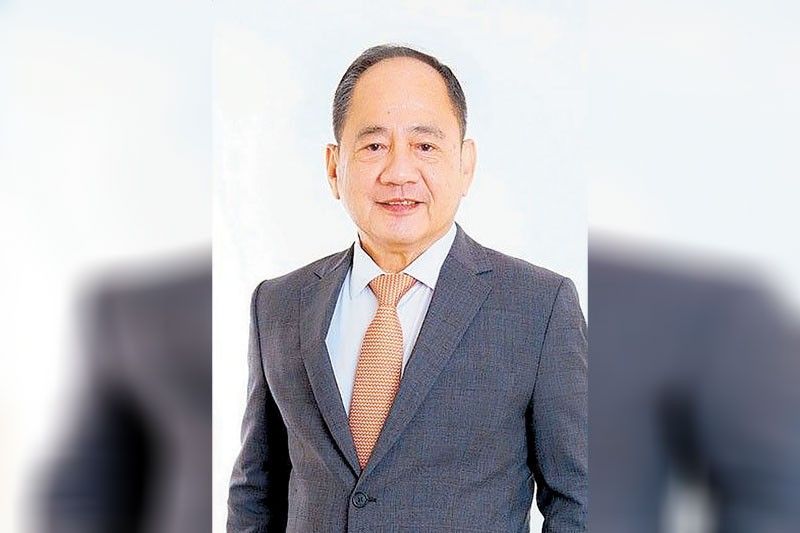
Philippine Stock Exchange (PSE) president and CEO Ramon Monzon observed how social media platforms recently erupted with criticism over the P10 share price for the upcoming IPO of Mynt Inc., the parent company of e-wallet giant GCash, with many investors calling it steep.
“This highlights a public misinterpretation of the ‘up to’ price in listing applications,” he told The STAR.
Monzon explained that the P10 figure serves strictly as the maximum cap and starting point for the underwriters’ bookbuilding process, not the final IPO price.
“Final pricing will reflect true institutional demand discovered during bookbuilding,” the PSE chief said.
Monzon said historical data over the past three years demonstrates that final IPO prices settle at an average 28.3 percent discount relative to the “up to” price in the registration and listing applications.
That means that the “up to price” does not actually end up being the IPO price most of the time.
The country’s last IPO courtesy of Maynilad Water Services Inc., for instance, was approved at an offer price of up to P20 per share, but the final IPO offer price was set at P15 per share.
Prior to that, Top Line Business Development Corp.’s IPO was priced at P0.31 per share, lower than the maximum offer price of P0.38 each.
As for Mynt’s upcoming IPO, its price is currently seen hovering between P7.50 and P8.50 per share, below the maximum P10 offer price indicated in the company’s prospectus, as earlier reported by The STAR.
Aside from IPOs, valuation also matters for listed companies, which is why they deal with valuation concerns seriously.
Monzon said most companies facing market undervaluation pursue one of three strategic paths.
Some optimize operational efficiency to boost profitability and dividends, while others launch share buyback programs to support stock prices.
For some, however, they opt to give up and apply for voluntary delisting from the exchange.
“While delistings happen regularly across all exchanges, minimizing them is a strategic priority for the PSE, given our relatively low number of listed firms compared to our ASEAN peers,” Monzon said.
Monzon noted that “the only silver lining in this gloomy delisting talk” is that in terms of the percentage of delistings relative to total listed companies, the PSE has the second lowest rate, ranking fourth out of five ASEAN stock exchanges.
As of July 2026, the PSE’s delisting rate stood at only 0.7 percent with two delistings so far, lower compared to that of Indonesia (2.1 percent), Singapore (1.8 percent) and Vietnam (1.7 percent).
In 2025, the PSE recorded a delisting rate of 1.1 percent with three delistings. This is in comparison to Indonesia (1.6 percent, 15 delistings), Vietnam (1.8 percent, seven delistings) and Singapore (4.5 percent, 27 delistings).
To enhance market liquidity and attract capital inflows, Monzon said the PSE is aggressively advancing its product offerings, technology infrastructure and regulatory frameworks to attract fresh capital and diversify investor options.
“We remain optimistic that a shift toward favorable economic, geopolitical and governance conditions will serve as the catalyst needed to revitalize inflows into the Philippine capital markets,” he said.





- Latest
- Trending