


MIND bill pushed to curb infrastructure corruption
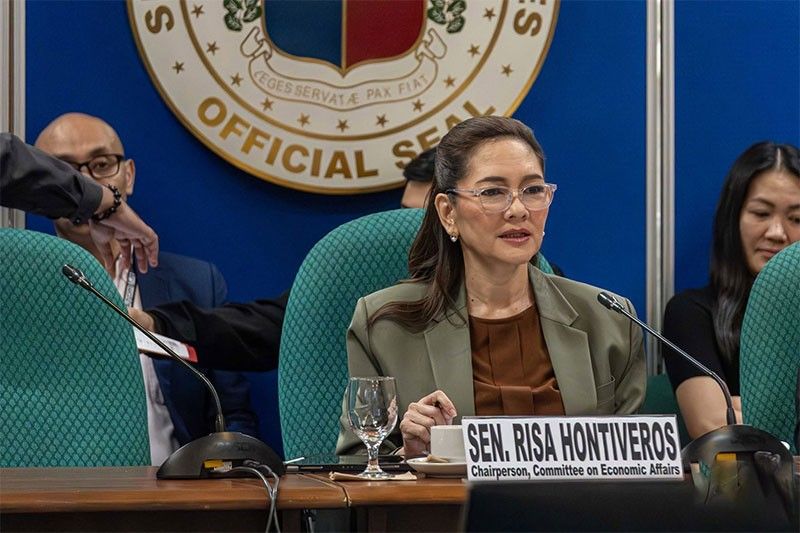
MANILA, Philippines — A proposed law requiring a long-term national infrastructure master plan could help stop multibillion-peso infrastructure scandals, including anomalous flood control projects, senators said Thursday as the Senate committee on economic affairs opened deliberations on the measure.
During the committee’s first hearing on the proposed Master Plan for Infrastructure and National Development (MIND) Act, chairperson Sen. Risa Hontiveros said the bill seeks to ensure that government infrastructure spending is anchored on long-term planning instead of politically driven priorities.
“The MIND bill is not just an important measure for economic development and sound government spending,” Hontiveros said. “If enacted, it could help prevent, and hopefully end, controversial infrastructure scams such as the flood control scandal.”
She said the proposal would require a continuing and comprehensive infrastructure master plan that would guide government spending and prevent billions of pesos from being allocated to projects that are poorly planned, unnecessary or fail to address the problems they were intended to solve.
According to Hontiveros, the measure aims to introduce reforms at the planning stage and ensure that budgets are aligned with approved development plans.
“When there is no master plan, the budget becomes an incoherent list of projects chosen not by community needs or economic potential,” she said.
The bill consolidates proposals filed by Senators JV Ejercito, Erwin Tulfo, Jinggoy Estrada and Senate President Sherwin Gatchalian.
Ejercito said the Philippines has fallen behind neighboring countries in transport infrastructure because of the lack of sustained long-term planning.
He noted that the country, once second only to Japan in development, now trails Vietnam, Thailand and Indonesia by decades in railway and mass transit systems.
“For me, infrastructure is a matter of national survival,” Ejercito said, adding that institutionalizing long-term planning would allow strategic projects to continue despite changes in political leadership.
Tulfo, meanwhile, criticized what he described as the “back-to-zero” culture in government, where new administrations discontinue projects initiated by their predecessors.
He said the proposed MIND Act would ensure that priority infrastructure projects are completed regardless of political rivalries.
“For too long, infrastructure planning has largely been tied to the priorities of each administration,” Tulfo said. “If we have a master plan embodied in law, projects will continue regardless of who becomes president.”
At the close of the hearing, Hontiveros said the committee would convene a technical working group to refine the measure while considering concerns raised by resource persons, including avoiding overlaps with existing planning bodies, ensuring flexibility in implementing a 30-year master plan, strengthening coordination with local governments, and integrating key sectors such as agriculture, energy, housing and tourism.
She said another public hearing may be called if unresolved issues emerge during the technical working group’s discussions.


- Latest
- Trending


