BSP raises BOP deficit forecasts
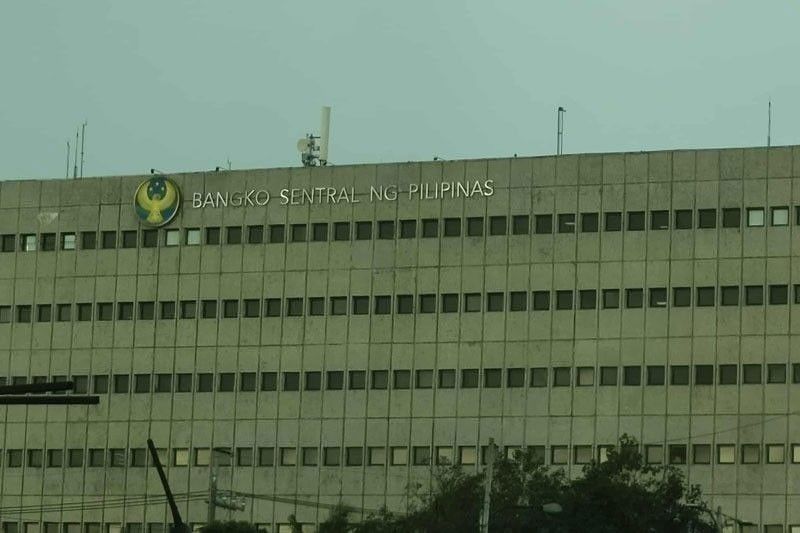
MANILA, Philippines — The Philippines is expected to post wider balance of payments deficits this year and next as elevated global uncertainty, weaker capital inflows and persistent energy price pressures continue to weigh on the country’s external position, the Bangko Sentral ng Pilipinas said.
Based on its latest forecasts, the BSP now expects the BOP deficit to reach $10.7 billion in 2026, wider than the $7.8-billion shortfall projected in the first quarter. This is equivalent to -2.1 percent of gross domestic product (GDP), higher than the -1.5 percent previously.
For 2027, the central bank raised its BOP deficit forecast to $11 billion from $8.5 billion, equivalent to -2.1 percent of GDP instead of the earlier projection of -1.6 percent.
“The Philippines’ external position is expected to remain under pressure in 2026 to 2027, as cost-driven trade imbalances and tighter financial conditions continue to shape both current account and financing dynamics,” the BSP said.
The BSP, however, narrowed its current account deficit projections for both years, reflecting expectations that softer domestic demand would help temper import growth.
The current account deficit for 2026 was narrowed to $18 billion (-3.6 percent of GDP) from the previous projection of $20.3 billion (-4 percent of GDP).
The 2027 forecast was likewise improved to a deficit of $19.7 billion, equivalent to -3.7 percent of GDP, from the earlier estimate of $21.9 billion or -4 percent of GDP.
The improvement in the current account outlook largely reflected lower import projections. For 2026, the BSP cut its goods import growth forecast to four percent from six percent previously, while maintaining its goods export growth projection at three percent.
Services export growth was also lowered to three percent from four percent, while services import growth was reduced to four percent from five percent.
Cash remittance growth was trimmed slightly to 2.7 percent from three percent, while revenue growth from the business process outsourcing (BPO) industry was cut to 2.5 percent from four percent. Travel receipts growth remained unchanged at one percent.
For 2027, the BSP retained its forecasts for goods export growth at four percent, goods import growth at five percent, travel receipts growth at two percent, services import growth at six percent and cash remittance growth at three percent.
However, it lowered its services export growth projection to three percent from four percent and reduced its BPO revenue growth forecast to three percent from four percent.
On the financing side, the BSP lowered its 2026 net foreign direct investment (FDI) forecast to $7 billion from $7.5 billion, while reducing its projection for net foreign portfolio investment (FPI) liabilities to $1.8 billion from $3.7 billion.
For next year, the net FDI forecast was maintained at $8 billion, but the net FPI projection was trimmed to $3.3 billion from $4.1 billion.
The BSP also downgraded its gross international reserves projections to $104 billion for end-2026 from $111 billion previously and to $105 billion for end-2027 from $112 billion.
Looking ahead, the central bank said non-trade inflows are expected to provide only partial support as remittance growth slows, IT-BPM earnings moderate and tourism recovery remains gradual.
It said that financing inflows would remain positive but subdued due to “tighter global liquidity, higher-for-longer interest rates, and increased investor selectivity.”
Still, the BSP expects conditions to gradually improve beyond this year.
“Although some recovery is anticipated in 2027 – supported by improving global conditions and structural catalysts such as bond index inclusion and sectoral investment pipelines – the rebound in inflows is likely to be gradual and uneven,” it added.





- Latest
- Trending