Roots
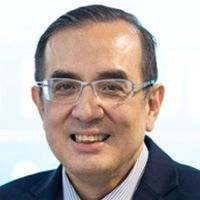
History felt very personal last week. I was invited by Kamuning Bakery owner and columnist Wilson Lee Flores at the famed Pandesal Forum to join a panel of historians.
I wore a totally different hat and perhaps one of the most meaningful to me: that of a descendant of a Philippine-American War hero. It was a moment that linked my family’s story to a larger national narrative, offering a rare opportunity to share my roots and reflect on how they continue to shape the person I am today.
I brought with me two books. One was “Lost Graves, Found Lives,” written by my elder cousin Agapito Labalan Del Rosario and Dr. Rosario Cruz Lucero, my literature professor in De La Salle University and as I later discovered, is actually my aunt.
I also carried a book about the founder of the Socialist Party of the Philippines Pedro Abad Santos, authored by his protégé and Hukbalahap Supremo Ka Luis Taruc. It was a rare volume without publication details, perhaps because it was self-funded by the Supremo himself.
I brought those books with me because they hold the stories of my families- the Del Rosarios and the Abad Santoses of Pampanga. Beyond mere references, they are reminders that history is a living force that continues to shape who we are and how our society evolves.
As I began my opening statement, emotion caught up with me. Pride rose in my chest as I spoke of the courage and sacrifice of my forefathers, their heroism echoing through generations.
“My name is Agapito Del Rosario Zaldarriaga, son of Cristina Baby Sicangco Del Rosario Zaldarriaga, grandson of Agapito Abad Santos Del Rosario. My grandfather, “Tatang Pitong,” was a former mayor of Angeles, Pampanga, one of the founders of the Partido Sosyalista ng Pilipinas and one of the founders of Upsilon Sigma Phi of the University of the Philippines. His wife, my grandmother Felicidad “Feleng” Sicangco Del Rosario, became Kumander Sisa, one of the most prominent amazonas of the Huk movement, after being widowed during the Japanese Occupation. She led guerrillas, negotiated with American forces and helped stabilize Angeles after the war.”
The deeper discussion at the forum centered on the Philippine-American War. I had the opportunity to talk about my great-grandfather Kapitan Isabelo Del Rosario, known as “Kapitan Bikong.” He initially joined the Katipunan to fight against Spaniards, alongside brother-in-law Pedro Abad Santos. When the US forces came, he warned his people in Kapampangan: “Den la sasaup, sasakup la” which translates to “they are not here to help us, they are here to conquer us.”
Kapitan Bikong was executed in 1901 for refusing to surrender to American forces. His final act of defiance, playing Danza Habanera de Filipinas on his violin before smashing it to the ground, was a powerful symbol of resistance. He was only 22 years old, yet his sacrifice continues to resonate.
The Philippine-American War was not just a change of rulers. It was a brutal assertion of power that shaped our politics, institutions and the society we live in today. Forgetting this is forgetting the sacrifices of martyrs like Kapitan Bikong, whose courage helped secure the freedoms we now enjoy. This is why history matters – it reminds us that today’s struggles such as inequality, polarization, questions of sovereignty, are part of a long, courageous journey shaped by figures like Kapitan Bikong, Ka Pitong and Kumander Sisa.
In my own family, resistance is a living legacy. Kapitan Bikong fought the Americans; Tatang Pitong faced the Japanese; Kumander Sisa led guerrillas in Central Luzon. Their courage reminds me that heroism is not confined to battlefields, it can be lived in civic life, in institutions and even in the work of communication.
As a communicator, I carry their advocacy into the modern world. In crises, communication becomes a bridge – we must clarify, explain and serve. History teaches us that truth and clarity are essential to a functioning society.
Beyond my profession, I have chosen to champion those vulnerable and often unheard. Through my social media channel, Manong Joe, I write about senior citizens’ welfare – a cause close to my heart at 62. I also support animal welfare, believing that compassion reflects a society’s values. These may not be revolutions, but they are daily struggles for dignity and justice.
History is more than dates and battles. It is about choices – choices to resist, to serve and to build. And by remembering these choices, we gain the perspective to understand our present and the responsibility to shape our future. Nation building is a task given to all of us, it is however our choice on what path to choose.




- Latest
- Trending