2025: A roller-coaster ride for Philippine economy
MANILA, Philippines — The year at best is a complicated one, the fifth since pandemic and one of guarded optimism and resilience amid mounting fiscal and external pressures.
The STAR’s Business Section looks back at some of the biggest stories that have made 2025 quite the roller-coaster ride that we’ve all experienced and continue to experience.
Our newsroom was far from quiet. We found ourselves on the edge of our seats many times throughout the year, shocked at some of the biggest developments of 2025.
There’s the changing global tariff landscape, from US to China to Manila and anywhere in between and its the impact on the local economy; the skyrocketing prices, the resilience of big businesses and the unprecedented corruption scandal that continues to hound this nation of 115 million.
As consumers and taxpayers ourselves, we were likewise affected by the impact of all the economic developments but as journalists, we continued to cover the changing tide.
Now, as we approach the end of 2025, we look back at all these developments and look ahead to the new year with hope and optimism.
Below is a compilation of some of the events that helped shape 2025, with invaluable research by our capital markets reporter Richmond Mercurio, and our interns, Heaven Grace Peralta, Kylyn Kyth Cuñado and Maicah Rachel Eugenio, all fourth year students from the Polytechnic University of the Philippines.
First Quarter
Optimism prevailed in the early part of 2025, with the economy growing at 5.6 percent in 2024, faster than the 5.5 percent recorded in 2023 but below the government’s 6.5 percent target.
As early as January, the International Monetary Fund had already warned that the Philippines is grappling with critical gaps in its business environment, infrastructure and labor market, which threaten its potential to attract private investment and boost productivity growth.
While the Philippines is comparable to peers on complexity and diversification, it lags on economic openness, business regulation reform, electricity access and logistics,” the multilateral lender said in a report by our banking reporter Keisha Ta-Asan.
Still, the IMF, in January 2025, projected the Philippine economy to expand by 6.1 percent this year.
This, however, became a farfetched estimate, as the year progressed.
As for inflation, it remained manageable in the early months, easing to a low of 1.8 percent in March.
Against this backdrop, the Bangko Sentral ng Pilipinas walked a careful line — signaling gradual easing, surprising markets at times by holding rates steady just as it did in February then freeing up liquidity through reserve requirement cuts, while flagging rising financial stability risks.
Debt remained high at P16 trillion.
Corporate Philippines, meanwhile, showed little hesitation with three of the biggest conglomerates teaming up for an LNG powerhouse.
Tycoons Manuel V. Pangilinan, Ramon Ang and Sabin Aboitiz sealed a $3.3-billion power venture to launch the country’s first and largest integrated liquefied natural gas facility, as reported by our energy reporter Brix Lelis.
The deal involved Pangilinan’s Meralco PowerGen Corp. and Aboitiz-owned Therma Natgas Power Inc. jointly investing in gas-fired facilities under Ang-led San Miguel Global Power Holdings Corp.
Infrastructure stayed at the heart of the growth narrative. Airports breached passenger records with the Ninoy Aquino International Airport passenger count breaching the 50 million mark.
Big corporate moves marked the quarter. Maharlika Investment Corp. readied key appointments at the National Grid Corp. of the Philippines while Metro Pacific Investments Corp.’s core profit hit a record P23.6 billion.
Robinsons Land Corp. appointed the company’s first female president and CEO, Maria Socorro Isabelle Aragon-GoBio, after tycoon Lance Gokongwei relinquished his role, while the country’s oldest conglomerate Ayala Corp. promoted four of its next-generation leaders, including Mariana Beatriz and Jaime Alfonso Zobel de Ayala, to take on bigger roles for the group.
Gokongwei-owned conglomerate JG Summit Holdings Inc. also announced early in the year that it was shutting down indefinitely its petrochemicals unit amid industry challenges, first reported by The STAR.
Metro Pacific Health Tech Corp. or mWell, meanwhile, reinforced its presence as a powerhouse in the country’s digital health care ecosystem with its acquisition of the Ayala Group’s KonsultaMD.
Another major deal during the quarter was the signing by Ayala Land Inc. of a memorandum of agreement with ABS-CBN Corp. for the acquisition of a portion of the latter’s headquarters in Quezon City, which houses several buildings including the network’s production facilities.
More foreign investments were likewise anticipated to flow into the country following the successful exit of the Philippines from the gray list of global financial crimes watchdog Financial Action Task Force after nearly four years, or since its inclusion in June 2021.
By the end of March, the story of Philippine business was one of momentum tempered by caution — an economy expanding on strong domestic demand and investment confidence, yet constrained by debt, external imbalances and execution risks.
Second Quarter
The second quarter saw energy transition moving faster. The government mapped nuclear sites and the World Bank committed $800 million for energy transition programs.
Energy spot market prices hit seven-month highs while the Department of Energy and Manila Electric Co. boosted summer energy output.
On the corporate front, optimism was still prevalent. Robinsons Land Corp. set aside P22 billion capex for 2025 while Filinvest Development Corp. allocated P24 billion.
The country saw the completion of the first initial public offering of the year in April courtesy of Top Line Business Development Corp., which raised P732.6 million.
Changes took place at the Securities and Exchange Commission as it welcomed Francis Edralin Lim as new chairperson, succeeding Emilio Aquino, who was appointed as SEC chairperson by former president Rodrigo Duterte in 2018.
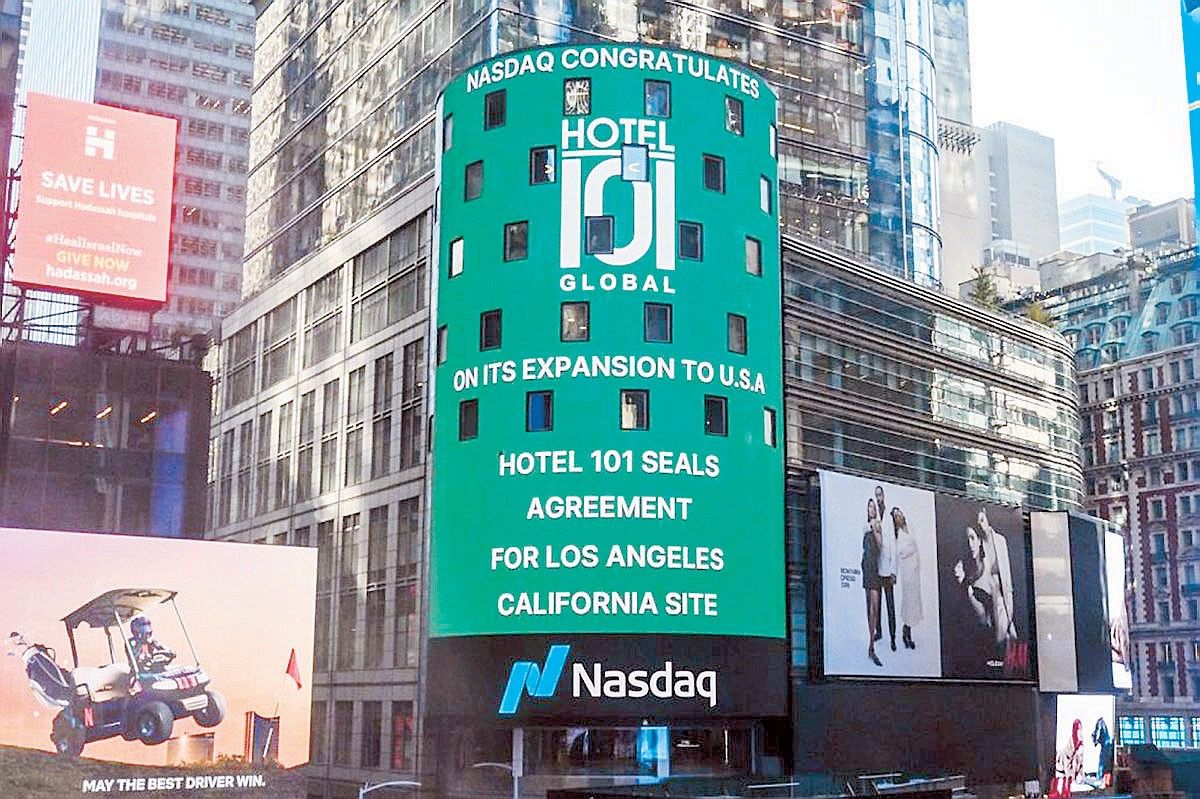
Hotel101 Global Pte. Ltd., a subsidiary of DoubleDragon Corp., made history in late June by becoming the first Filipino-owned company to be listed and traded on the US Nasdaq.
The cracks started to show, however, as the Philippine Statistics Authority reported in April that the Philippine economy expanded by 5.4 percent in the first quarter, below expectations.
Department of Economy, Planning and Development Undersecretary Rosemarie Edillon said the first quarter gross domestic product (GDP) growth was slower than the 5.9 percent growth in the same period last year.
The quarter also saw US President Donald Trump’s “Liberation Day tariffs” referring to a sweeping set of US import duties announced by President Donald Trump on April 2, 2025.
This was aimed at reshaping trade policy and protecting domestic industries but it sent jitters across the globe including the Philippines.
This would impact the Philippine stock market for most of the year, with the benchmark Philippine Stock Exchange index hitting below 6,000.
After the announcement, the PSEi plummeted over four percent to 5,822.85, its lowest close in about 30 months, as global markets reacted to US tariff policy uncertainty, way below the 6,100 to 6,200 level in the first quarter.
In the second quarter, the Philippine economy continued to face challenges, growing by 5.5 percent, just slightly higher than the 5.4 percent growth recorded in the first quarter.
Third Quarter
This quarter saw the Pandora’s Box of flood control corruption swing wide open.
It all blew up when President Marcos made it a key highlight of his State of the Nation Address, calling lawmakers to shame for pocketing funds meant for flood control.
Thousands gathered in the “Trillion Peso March” in September to demand accountability and punishment for those engaged in anomalous deals in the government and in the private sector, especially those who have pocketed trillions in public funds meant for flood control and infrastructure projects.
Concerns about online gambling continued to escalate as well during the quarter and as a result, the Bangko Sentral ng Pilipinas ordered e-wallet platforms to take down in-app links to online gambling platforms.
On the corporate side, Hann Holdings Inc., the operator of Hann Casino Resort in Pampanga, decided not to push through with its planned IPO eyed in September due to prevailing market conditions and sentiment. Its maiden offering could have been the country’s second IPO for the year.
Mobile wallet giant GCash, whose IPO is among the most anticipated listings in the country, also said that the company’s IPO would not take place anymore this year.
With the flood control controversy weighing on consumer and investor confidence, and typhoons disrupting economic activity, the country’s third quarter GDP grew by four percent, its slowest pace in four years.
Fourth Quarter
The final quarter of 2025 picked up where it left off in the third quarter and came far from the optimism that prevailed in the early part of year.
Former lawmaker Zaldy Co delivered an explosive statement which blamed no less than President Marcos for the P100 billion budget insertions.
Co’s allegations against Marcos rocked investor confidence, which sent the local stock market crashing to a new five-year low at 5,584.35 on Nov. 14, 2025.
Despite the uncertainties, however, Maynilad Water Services Inc. pushed through with its listing in November, making its P34.3-billion maiden offering the second largest IPO in the history of the Philippine Stock Exchange.
Major business transactions also took place, including the completion of Metro Pacific Investments Corp.’s acquisition of Franklin Baker Co. of the Philippines as well as the Lucio Co Group’s acquisition of the Villar Group’s PrimeWater Infrastructure Corp.
On the economic front, former Special Assistant to the President for Investment and Economic Affairs Frederick Go was appointed as the new Secretary of the Department of Finance to steer and push the Philippine economy toward sustained growth, while former finance chief Ralph Recto was named new Executive Secretary.
Amenah Pangandaman stepped down from her post as Budget Secretary after her name was among those dragged into the controversy over corruption in flood control projects, while Romeo Lumagui Jr. was removed as Bureau of Internal Revenue commissioner.
New BIR commissioner Charlito Mendoza, meanwhile, suspended all field audits and related operations, including the issuance of letters of authority and mission orders, in response to the concerns raised by the taxpayers and mounting calls from senators to investigate alleged corruption and abuse within the agency.
Amid the holiday cheer, however, December brought in more bad news —this time from multilateral institutions in terms of their growth outlook for the Philippines.
The Asian Development Bank pared down its economic growth projections for the country, slashing its 2025 forecast to five percent from the 5.6 percent projected in September.
The World Bank also cut its economic growth projection for the country to 5.1 percent for 2025, with growth weighed down by weak business confidence as well as typhoon- and flood-related shocks that have delayed public projects, among others.
With a sharper-than-expected slowdown in the third quarter, the International Monetary Fund likewise downgraded its full-year economic outlook for the Philippines to 5.1 percent for the full year, lower than its 5.4 percent projection in its October outlook.
With all these developments, the year is really quite a journey, and it isn’t over just yet.





- Latest
- Trending