Electronic exports may grow by 5-7 percent this year
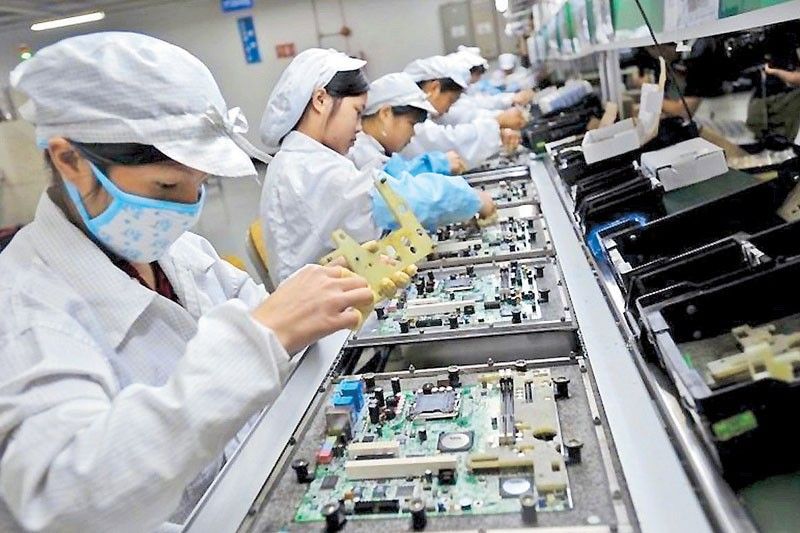
MANILA, Philippines — The country’s electronic exports are expected to rise by five to seven percent this year from a year ago, supported by demand for new technologies and telco products, according to the umbrella group of semiconductor and electronics firms in the country.
Semiconductor and Electronics Industries in the Philippines Foundation Inc. (SEIPI) president Dan Lachica told reporters that the group recently conducted its board meeting and approved a new growth projection of five to seven percent for this year.
Previously, the SEIPI was projecting flat growth for 2025.
Last year, electronics exports from the Philippines were down by six percent to $42.74 billion from $45.65 billion in 2023.
Data from the Philippine Statistics Authority showed that the country’s electronics exports rose by 9.5 percent to $33.5 billion in the nine-month period from $30.6 billion last year.
For next year, Lachica said the group expects electronics exports to grow by five percent.
He said the growth is expected to be driven by “the technologies that we use, AI (artificial intelligence), data centers and telecommunication products.”
While the Philippines does not produce high-end or advanced chips, he said the country can still supply other parts needed by the new technologies.
He also said the country’s exports of semiconductors are not covered by the 19 percent reciprocal tariff being slapped by the US on other goods coming from the Philippines.
As such, he said the US tariff “should not have any major effects because we’re still at zero tariff.”
He said the country’s electronics exports, however, may be affected by changes in the US tariff policy.
“If they say they will remove the zero tariff, then we are at risk,” he said.
Earlier, US President Donald Trump said the US plans to impose tariffs of up to 300 percent on semiconductor imports, but will provide exemptions for firms that will manufacture these products in the US.
To attract investments for the production of high-tech chips, Lachica said the country would need to show proof of concept.
This is the reason why the SEIPI has been pushing for a lab-scale wafer fabrication facility in the country to turn raw silicon wafers into integrated circuits or chips.
Lachica said the SEIPI is looking to resubmit its proposal for a wafer fabrication facility to the Department of Science and Technology.


- Latest
- Trending