Philippine economic growth slows to 4% in Q3 amid corruption issues

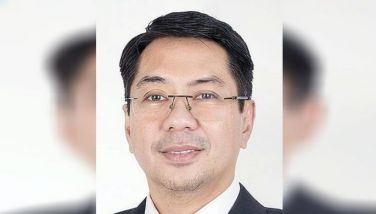
MANILA, Philippines — Corruption has dragged down the country’s economic growth to its slowest pace since the pandemic, according to the Philippine Statistics Authority (PSA) and the Department of Economy, Planning, and Development (DEPDev) on Friday, November 7.
The country’s third-quarter performance yielded a gross domestic product (GDP) growth rate of 4.0%, the lowest under the term of President Ferdinand Marcos Jr. and the weakest since the pandemic, which saw a -3.8% rate in 2021.
Excluding the COVID-19 pandemic, the current GDP is the lowest since 2011, when the economy grew by only 3.0%.
The latest GDP rate also fell below the government’s target of at least 5.5%. The government remains hopeful of recovering economic growth in the fourth quarter of 2025, when spending is expected to rise due to the holiday season.
Corruption woes
The DEPDev explained that the services and industry sectors posted slower growth following a sharp contraction in public construction after the corruption scandal at the Department of Public Works and Highways (DPWH). There have also been stricter requirements for billings and disbursements of government projects.
Household consumption also slowed. While DEPDev Secretary Arsenio Balisacan said that constant suspension of work and classes may have contributed to this, corruption may also be a culprit.
“Consumer confidence may have been affected by the ongoing probes and discussions on government infrastructure spending, prompting many households to postpone purchases, especially durable goods. Compared to the second quarter, we also observe a lower disbursement of conditional cash transfers during the third quarter, which contributed to weaker consumption,” Balisacan said.
The PSA also said that public construction slowed to -26.1%, the lowest since 2011. Balisacan said that there was a need to boost government spending on infrastructure even before the corruption scandal.
“We have been aiming for 5 to 6% of GDP for infrastructure spending, just to catch up with the rest of our neighbors. And we needed to do that for the next decade or so. But as we are seeing now, the productive capacity that we had wanted to happen was muted by all this corruption,” Balisacan said.
The country’s economic czar emphasized not just increasing government spending but also improving the quality of spending.
Investment in infrastructure, he explained, is meant to employ more people and improve the quality of jobs. Failing to do that means the government is not spending right.
There has also been noticeable underspending in key areas of government, Balisacan said.
Citing a backlog in vital infrastructure such as airports, railways, and other facilities, Balisacan said there was a need to catch up with other countries in the region.
Balisacan said that what the country lags in are government and institutional mechanisms that would enable high levels of spending to take place efficiently.
The Philippines has been rocked by one of the most shocking government scandals in recent years, with the DPWH being revealed as a cradle of corruption.
The discovery of ghost and substandard flood control projects has led to the uncovering of a multibillion-peso kickback scheme implicating various officials and lawmakers.


- Latest
- Trending