No risk of Philippines return to dirty money list – AMLC
Over DPWH corruption scandal
MANILA, Philippines — As corruption scandals involving infrastructure projects raise concerns about the country’s compliance with global anti-money laundering standards, the Anti-Money Laundering Council (AMLC) said the Philippines is not at risk of being placed back on the gray list of Paris-based Financial Action Task Force (FATF).
AMLC Executive Director Matthew David said the agency is strengthening its ability to detect, investigate and prosecute money laundering cases, which are key benchmarks for the FATF’s 2027 mutual evaluation.
“We’re doing our best for the Philippines not to enter the gray list anymore,” David told reporters after a Senate hearing yesterday.
“We are preparing everything for the 2027 evaluation where the FATF, through the Asia-Pacific Group, will assess our compliance,” he said.
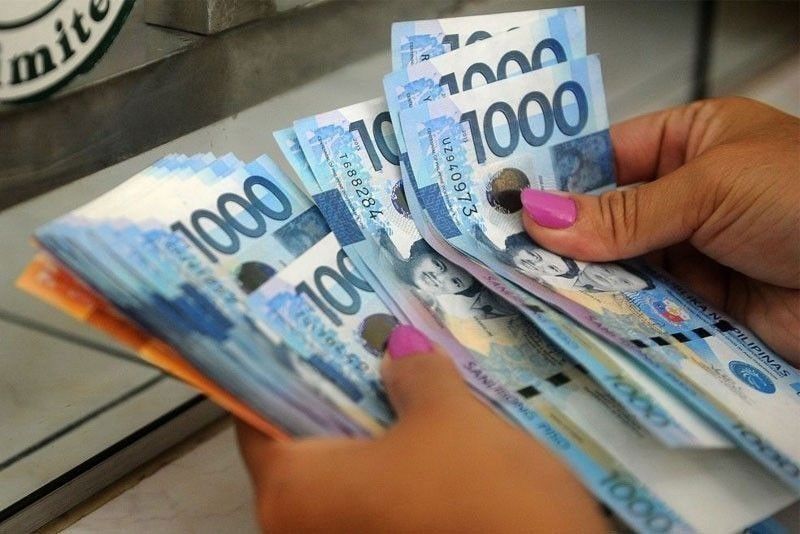
David’s assurance came amid testimony in Congress from former Department of Public Works and Highways (DPWH) officials, who revealed that contractors linked to the flood control program moved vast amounts of cash, raising fears of large-scale laundering of public funds.
He also confirmed that the AMLC has received suspicious and covered transaction reports related to the case.
“We already have case investigation reports that will be the basis for filing freeze orders, civil forfeiture cases and money laundering cases,” David said.
During budget deliberations, Sen. Raffy Tulfo questioned whether casinos were being exploited as venues to launder government kickbacks.
David conceded it was “possible,” but stressed that casinos are covered entities and are required to report suspicious transactions to the AMLC.
Tulfo urged the agency to assign personnel inside casinos to directly monitor large-scale gambling.
David replied that while not required by law, the AMLC is open to studying the proposal.
The Philippines has a long history with the FATF’s monitoring list. The country was blacklisted in 2000 for the absence of an anti-money laundering law and removed in 2005 following the passage of Republic Act 9160.
The country was again placed on the gray list in 2010, downgraded to the “dark gray list” in 2012, and delisted in 2013 after Congress passed the Terrorism Financing Prevention and Suppression Act.
In 2021, the Philippines returned to the gray list due to weak implementation of existing laws, before exiting again in February 2025 after completing its action plan.
Some legal experts, however, warned that the cases involving former DPWH officials could undermine the country’s current standing.
Russell Stanley Geronimo, founder and managing counsel of Geronimo Law, urged the FATF to revisit the Philippines’ removal from the gray list, citing the flood control scandal as proof of “large-scale cash withdrawals laundered with impunity.”
“This points to collusion and complicity by inaction of key gatekeepers. If politically exposed persons can move millions in cash without consequence, then the Philippines has not met, and cannot credibly claim to meet, the FATF standards,” Geronimo said.





- Latest
- Trending