Finding leaders, one career match at a time
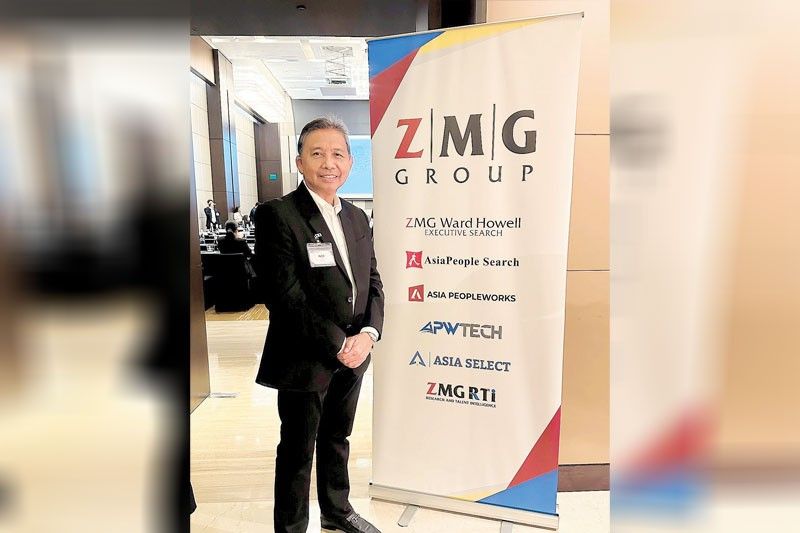
MANILA, Philippines — With close to 2,000 employees and at least 60 client companies, Alex Genil is sitting on top of a human resources empire. What’s surprising is that the current vice chair and CEO of ZMG Group actually did not study or take the traditional career route to become a Human Resources specialist.
A licensed chemical engineer, his first job was in glass production and furnace operations as a process control engineer. But with his openness to embrace opportunities as they came, challenging his left and right brain, Genil made many successful career pivots despite one attempt at retirement, maybe his only unsuccessful move.
As head of one of the country’s leading talent recruitment firms, what’s your typical day like?
I look at the placements we made the previous day especially the most senior roles. The ZMG Group has three direct recruitment businesses and amongst them, at any given day, we are working to fill up hundreds of roles requested by client companies. The rest of the day are filled up with meetings about sourcing strategies, with top contacts and clients, and interviews with senior talents. I also attend town hall meetings and business reviews, plus general membership meetings of industry and business associations.
I spend many hours each day reading: from general news, economic briefs, socio-political developments, industry reports, to developments in the human capital space. While the value we offer to clients is to find the best candidates for their business, we are most often consulted on people and business challenges that they face. Our understanding of current events makes us ideal partners in addressing organizational challenges.
You’re a chemical engineer who moved to sales and marketing then switched to human resources. How do you decide on these career changes?
The short answer is I just took any challenge or opportunity to learn and progress in my career.
With an engineering degree, the obvious career path was in manufacturing. On my second job, I realized that sales is a better career option for its flexible hours plus the benefit of a company car. When my company was absorbed by another, I tried my hand at a sales training job. This was my pivot to HR. As I didn’t have solid HR knowledge and experience, I was sent to Harvard Business School to attend its Strategic HR Management Program.
As HR Business Partner I worked with business heads to address their people challenges. In 2010, I was expatriated to South Africa to head HR operations in our factories and distribution centers. At age 52, I took advantage of early retirement and went back home. But I was promptly offered an HR lead role in a leading company and not long after that, I joined ZMG Ward Howell where I have stayed for 13 years now.
Before you became an HR practitioner, what was your view of the profession? Did they help shape your career growth, or were they more on the sidelines taking care of the administrative side of organizational operations and development?
I used to look at the HR function as about crafting policies, making and enforcing rules and disciplinary actions, industrial relations, facilitating company events, employee services. In summary, mostly administrative function!
Today, progressive companies consider HR as a strategic partner in organizational development to drive business growth. With top management support, and provided the right tools, competent HR professionals are able to facilitate development of the company culture, drive employee engagement and morale - thus creating a high performing organization.
From where you are now, what do you see as the common mistakes people make when choosing their next job?
There are still many people whose main motivation is salary. Based on our research though, the most important considerations nowadays are company culture (whether the candidate will fit), followed by flexible work set up, then training opportunities and career growth. Compensation comes in third or fourth only.
Other common mistakes are not clarifying role expectations, not doing enough research or asking about company – from reputation, financial health, leadership, failing to notice “red flags” like vague answers from interviewers; and accepting the first offer without negotiating – know your worth and negotiate respectfully.
Can you share the top 3 questions people should prepare for when they sit for a job interview?
1. Why do you think you are qualified for the job? This means having a good, prior understanding of the job and making an honest assessment of your capabilities and commitment to deliver. Be prepared to cite concrete achievements or evidence of specific skills set that you possess.
2. What do you value most as a person and as a professional? This allows the interviewer to assess your fit with the company culture and whether you can navigate the power and political dynamics in the organization. This is also a sense-check for the candidate after doing research on the culture and organizational norms of the company.
Be prepared also for the standard 3. Tell me about your strengths and weaknesses. This question is asked to validate and provide more context to your qualifications and, for the weaknesses, to remind the hiring manager of potential gaps or development areas.
What career advice did you give to your children when they were looking for their first jobs?
The general advice I gave my four children was to go for the for the most difficult or challenging ones. New graduates tend to flock to desk-bound or familiar jobs. There is less competition for unique or difficult jobs. They are also character building.
In the case of Marella, my eldest daughter, she was choosing between an entry-level role in a bank, procurement assistant in a distribution company and customer assistance supervisor in a big supermarket chain. She took the last option upon my advice. I thought that this first job would provide her with the most real-world experience working with consumers including handling customer complaints. It also involved “supervising” staff that are assigned to gather push carts and assist shoppers carrying their grocery bags to their cars. That’s leadership experience at age 20.
The earlier in their career people experience and overcome challenges or handle leadership responsibilities, the faster their trajectory will be.
Any bold predictions on the next big jobs in the next three to five years, as AI continues to gain traction?
We can expect more jobs in administration, clerical, assembly line, customer service and all those in repetitive, predictable, transactional and process-driven functions to be affected the most.
Jobs will not disappear overnight. They will evolve, requiring new skills and hybrid roles. It is important for everyone to be open to upskill or reskill in order to adapt and be relevant. Human oversight will still be critical in areas like ethics, creativity, complex decision-making, and of course, leadership.
As for future jobs, examples of AI-adoption related jobs we expect to see are systems architects, machine learning engineers, AI governance and compliance officers and generative content designers, to name a few.
For those aspiring to work in HR and in talent recruitment, what advice can you give?
You should really like the job and have passion to engage people. The important motivation or mindset is helping people in the workplace. Always be prepared to do a balancing act between driving management objectives and championing workers’ interests and welfare.
Many times, personal sacrifices are required of the HR practitioner. Recruitment is like matchmaking. You need to understand the requirements and expectations of both sides and propose how gaps can be bridged. This requires time and can be really frustrating work that requires patience. A recruiter must like chasing and engaging people and should be able to handle rejection or failurewell.


- Latest
- Trending