Trade gap narrows to $4 billion in July
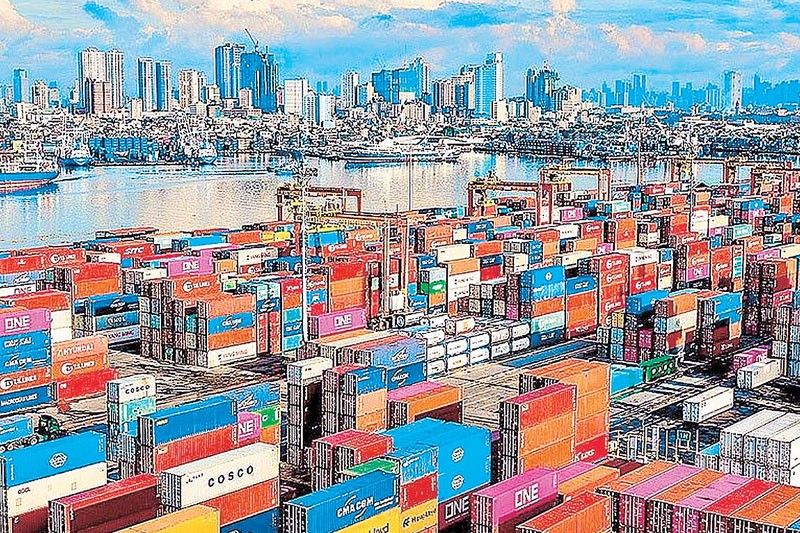
MANILA, Philippines — The country’s trade deficit narrowed in July as exporters frontloaded shipments to beat the United States’ reciprocal tariffs, which took effect on Aug. 7.
Preliminary data from the Philippine Statistics Authority (PSA) yesterday showed that the balance of trade in goods or the difference between exports and imports in July amounted to a $4.05 billion deficit, down by 17 percent from the $4.88 billion gap in the same month last year.
The July trade shortfall was also smaller than the $4.4-billion trade gap booked in June.
Moody’s Analytics economist Sarah Tan said the trade balance improved in July as exports growth outpaced imports.
PSA data showed the country’s merchandise exports in July rose by 17 percent to $7.34 billion from $6.25 billion in the same month last year.
Electronics continued to post the highest export sales in July, with earnings rising by 21 percent to $3.92 billion from $3.25 billion in the same month in 2024.
The US remained the Philippines’ top export destination, accounting for $1.16 billion or 16 percent of the total.
The US imposed a 19-percent reciprocal tariff on Philippine goods starting Aug. 7.
On the other hand, the country’s imports inched up by two percent to $11.38 billion in July from $11.13 billion in the same month a year ago.
Electronic products had the biggest imports value in July amounting to $2.8 billion, 10 percent higher than the $2.54 billion in the previous year.
China was the biggest source of imported goods, valued at $3.4 billion or 30 percent of the total in July.
For the January to July period, the Philippines posted a smaller trade shortfall of $28.46 billion compared to the $29.93 billion trade deficit in the same period in 2024.
Exports increased by 14 percent to $48.62 billion from $42.69 billion in the same period last year.
“While the export rebound highlights the strength of the country’s export sector, it also reflects some frontloading of shipments ahead of tariff changes, raising concerns about whether the upturn can last in the months ahead,” Tan said.
Likewise, imports grew by six percent to $77.09 billion from $72.63 billion in the same period last year.
Tan said the challenge for the Philippines now is to turn the temporary boost in exports into a more sustainable export strategy.
“Diversifying both products and markets will be crucial, whether by pushing into new industries, strengthening ties with regional partners, or moving up the value chain in electronics manufacturing. Without such shifts, the Philippines risks seeing its gains eroded as global trade conditions grow more uncertain,” she said.





- Latest
- Trending