BAP charts path for ‘smarter, bolder’ banks
AI-driven future
MANILA, Philippines — The country’s banking sector is gearing up for a bold leap into the future, with the Bankers Association of the Philippines (BAP) outlining sweeping reforms and digital priorities anchored on artificial intelligence (AI), cybersecurity and modernized legislation.
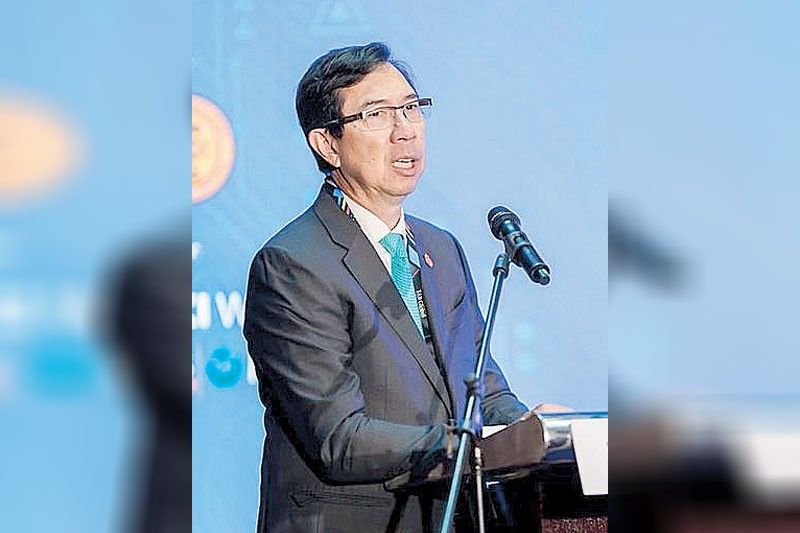
Speaking at Finance Philippines 2025, BAP president Jose Teodoro “TG” Limcaoco said the industry faces a defining moment as banks grapple with rapid digital transformation, shifting customer expectations and rising risks from cybercrime.
“Our response as the Bankers Association of the Philippines is clear and unequivocal: We must become smarter, more proactive and much bolder,” Limcaoco told delegates at the conference co-hosted by BAP and Singapore-based The Asian Banker.
This year’s theme, “Smarter Banks, Bolder Moves: AI and the Future of Finance,” captured the thrust of the one-day gathering at the Grand Hyatt Manila that brought together bank executives, regulators, fintech leaders and technology innovators.
Rebuilding the foundations
Limcaoco, who is also president and chief executive officer of Ayala-led Bank of the Philippine Islands, said BAP has identified five priority areas that will shape the industry’s transformation. The first is market infrastructure rationalization, which seeks to streamline how financial markets operate.
He explained that the BAP has recently restructured its role in the Philippine Dealing System by concentrating on the Philippine Dealing Exchange and transferring custody functions to the Philippine Stock Exchange.
This move, he added, is more than administrative. It clarifies responsibilities, ensures stronger alignment among institutions and builds a clearer foundation for capital market development.
By rationalizing infrastructure, Philippine banks can now better leverage technology and data analytics to improve transparency and decision-making.
Another key focus is digital resilience and cybersecurity. With cybercrime cases on the rise, Limcaoco said security has become central to the banking experience. The passage of the Anti-Financial Account Scamming Act, which BAP lobbied heavily for, is a landmark achievement.
The new law criminalizes phishing, mule accounts and other digital fraud, categorizing large-scale scams as economic sabotage.
“Smarter banks are secure banks,” Limcaoco stressed, noting that BAP has committed industry-wide resources to prevention, interdiction, and prosecution of financial crimes.
The association has also partnered with the Bangko Sentral ng Pilipinas and the Department of Information and Communications Technology to deploy advanced digital tools and artificial intelligence for monitoring and enforcement.
Payments modernization is also on the agenda. Limcaoco announced that BancNet and the Philippine Clearing House Corp., the country’s two major payments networks, are being consolidated into a unified structure with centralized governance.
The integration aims to reduce costs, minimize operational risks and enable faster rollout of intelligent payment solutions that match the needs of businesses and consumers in a highly digital economy.
“A smarter banking system demands seamless, efficient and reliable payments infrastructure,” he said.
BAP is likewise pushing for banks to embrace technology and digitalization more decisively. Rather than treat fintech firms as rivals, Limcaoco said the industry must see them as partners. Collaboration will help banks harness innovations such as AI for hyper-personalized customer experiences, optimized operations and stronger consumer trust.
“Our vision is clear: banks of the future will thrive not merely by the strength of capital, but by their agility, intelligence and boldness in using technology,” he said.
Finally, BAP is advocating for modernizing outdated laws and regulations that no longer match today’s financial realities. Limcaoco cited mandatory credit allocation rules and strict bank secrecy provisions as examples of well-intentioned measures that have since become barriers to competitiveness and innovation.
By updating these policies, he noted, the industry can strengthen risk management, improve credit assessment and create a more transparent financial system that aligns with global standards.
Beyond reform pillars
Beyond BAP’s reform pillars, the Finance Philippines 2025 conference featured discussions on emerging trends reshaping global finance. Experts highlighted how generative AI is being deployed to enhance customer engagement and improve real-time decision-making, while digital currencies — from stablecoins to central bank digital currencies — are becoming more mainstream.
The adoption of cloud-based systems was cited as a key driver of scalability, data security and operational efficiency, while decentralized finance is expected to further disrupt conventional models through smart contracts, open banking and embedded finance.
There was also growing interest in how carbon credit financing is being integrated into banking services, a move that would align financial institutions with environmental, social and governance goals.
For BAP, co-hosting the conference with The Asian Banker underscores its commitment to preparing Philippine banks for a future that is not only digital but also inclusive and sustainable.
Limcaoco said the event is meant to go beyond dialogue and spark meaningful reforms.
“This conference is more than just a platform for dialogue. Rather, it is a call for collective action to shape a more resilient, inclusive and future-ready financial system in the country,” he said.
The gathering comes at a critical time. With global markets facing uncertainty and technology reshaping every aspect of financial services, Philippine banks are being challenged to move beyond incremental change and embrace bold transformation.
As Limcaoco put it: “The choice before us is clear — to innovate or to stagnate; to boldly move forward or risk irrelevance.”





- Latest
- Trending