Managing wealth starts with earning clients’ trust
MANILA, Philippines — Taipan in Chinese means big boss, but in the Philippines, it is used to describe powerful, wealthy individuals, and most of them are Chinese-Filipino who head large business empires. No wonder that many young Chinese-Filipino aspire to follow in their footsteps, more interested in setting up businesses that could be the next big thing.
That road would have been the easy one for Melvin Jao Esteban, but he wanted a different path, one that led him to the largest financial institutions in the country and across the region.
“From a young age, I was absolutely captivated by numbers and a love for logic. It truly fascinated me,” recalls Esteban. That passion drew him to pursue Mathematics at the University of the Philippines and build a career with banks and insurance companies.
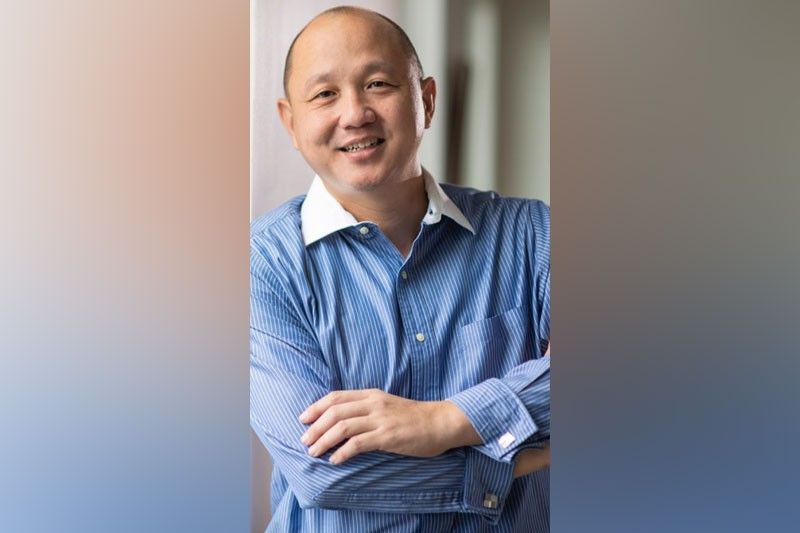
Far from being your usual nine to five banker, Esteban is a wealth management specialist. As CEO of WELEAD Financial Advisory Services, his clients not only include the HNWs (high-net-worth) but the ultra HNWs, with investible assets from P40 million to P2.7 billion. It is a testament to his risk management skills that after two decades of working with financial giants, he set up his own advisory company when the world was facing an unprecedented pandemic.
You launched WELEAD Financial Advisory Services in 2019, right in the middle of the COVID crisis. Looking back, would you change anything?
It turned out to be an incredibly opportune moment! That challenging period truly highlighted the critical importance of managing risk over chasing high returns. People suddenly realized that true financial security wasn’t just about how much you could gain, but how well you could protect what you had.
Fascinatingly, 2020 was our clients’ best-performing year, with almost 17 percent growth on our client’s investment, even amidst the pandemic. Admittedly, we got a good number of referrals after this. We’ve always been deliberate about limiting our client base to less than 30 families. This isn’t about exclusivity; it’s about ensuring we can dedicate our undivided attention and truly tailor our approach to each family’s unique needs.
Our proudest achievement? Despite the global pandemic, the Russia-Ukraine war, the soaring inflation of 2022, and recent shifts in global trade (Trump tariffs), we have not had a single year of loss for our clients. Not one. Even this year, we’re already up by around five percent despite all the volatility. This unwavering track record comes from our steadfast commitment to prioritizing risk management above all else. We truly believe that if you master risk, positive returns will naturally and consistently follow.
What is the first question you normally ask a prospective client? And how important is their answer in your being able to provide them the right advice?
For me, traditional ‘first questions’ can feel a bit like an interrogation. So, I prefer to start by sharing our story – what we do, how we’ve helped families, and our philosophy. We even share situations and our approach. Once we’ve built that initial connection and our values align, my first question is always, “How can we help you?” Their answer isn’t just important; it’s the foundation of everything we do. It’s like being a compass; without knowing where someone wants to go, I can’t possibly guide them on the right path. Their dreams, concerns, and hopes truly show us the way we’ll take together.
At what stage in their wealth building would a client need a professional financial advisor?
The best time to partner with a professional financial advisor is as soon as you start earning. Think of it this way: even a small seedling needs the right soil and care to grow into a strong, resilient tree. A financial advisor is like that dedicated gardener, ensuring your earliest earnings are planted wisely, helping your passive income blossom, and building a robust safety net for life’s unexpected turns. For our clients, who are often in the upper segment of the market, our role expands to guiding smooth transitions of their legacy and wealth. We also help orchestrate intricate family and business succession plans. Ultimately, the greater your wealth, the more it requires care, and the more essential a seasoned guide becomes.
What should clients need to know about their financial advisor to help them choose the best one for their needs? Is there a list of criteria one should refer to?
Choosing a financial advisor is one of the most significant decisions you’ll make, much like choosing a co-pilot for your financial journey. First and foremost, look at their credentials. These often show their expertise. However, it’s true that some certifications might not reflect real-world skills. The best approach is to talk to them and truly understand their experiences. Does what they say make practical sense, or does it sound like generic textbook advice?
Beyond certifications, you need to feel an absolute sense of trustworthiness. This is critical, especially here in the Philippines, where sadly, anyone can claim to be a “financial advisor” without strong oversight. This is precisely why our advisory is purely client-focused. We aren’t connected to any other company.
How did a Mathematics degree help you in your career?
I was drawn to the Mathematics program at the University of the Philippines because it doesn’t just teach you formulas; it hones your logical thinking, sharpens your problem-solving abilities, and trains your mind to spot patterns and connections where others might only see chaos. This deep analytical foundation is what truly empowers me to navigate the complexities of wealth for our clients.
For someone who wants to be a financial advisor, what academic path would you recommend they take?
My career path has been a continuous journey of learning; I think I have around 12 or 13 professional designations earned across the United States, Canada, and the Philippines. If I were to recommend one foundational path, it would be the Certified Financial Planner (CFP) designation from the US. It’s incredibly comprehensive and deeply focuses on strategic financial planning. As a powerful complement, I’d also suggest the Management of FAMCORP program from AIM. It’s exceptionally well-structured and provides a fantastic starting point if you aspire to specialize in family wealth succession.
Beyond formal education, I cannot stress enough the importance of reading a lot. Even though I’m not a lawyer, I’ve delved into countless books, especially on intricate topics like succession and tax. Seek out the technical, in-depth volumes rather than those simply for entertainment. Knowledge is your most valuable asset in this field.



- Latest
- Trending