Marcos to SEC: Make investing more accessible to Filipinos
MANILA, Philippines — President Ferdinand Marcos Jr. has directed the Securities and Exchange Commission and other relevant agencies to make investing more accessible to ordinary Filipinos.
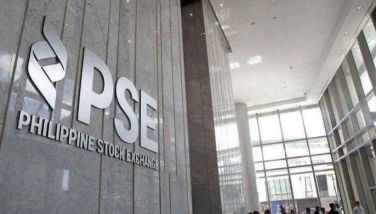
Marcos rang the bell at the Philippine Stock Exchange in Taguig City to mark the passage of the Capital Markets Efficiency Promotion Act (CMEPA). The law introduces key market reforms, including a significant reduction in the Stock Transaction Tax (STT) from 0.6% to 0.1%.
“Let me be clear: The reform is not just for the well-off and for the professionals, for the stock traders. It is for every Filipino who dreams of better financial security. It empowers the small business owner, the young professional, and the overseas Filipino worker to start investing their hard-earned money to build a better future,” Marcos said.
“To ensure the successful implementation of this reform, I direct the Securities and Exchange Commission to streamline its procedures, remove bureaucratic bottlenecks, [and] reduce transaction costs within its control. Undertake the necessary changes to fulfill your responsibilities in these changing times,” he added.
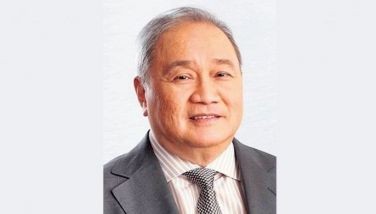
Marcos recently appointed Francis Edralin Lim, a former president of the PSE, as a new SEC commissioner.
Key features of CMEPA. Beyond the STT reduction, CMEPA also removes the stamp tax on mutual funds and Unit Investment Trust Funds. It standardizes the tax rate on interest income at 20%.
“From now until 2030, CMEPA is projected to generate over P25 billion in net revenue—a substantial sum that can help fund the building of roads, bridges, hospitals, schools, [and] other social safety net programs as well. But beyond revenue, CMEPA reinforces confidence. It shows that our financial system is becoming more equitable and structured for long-term stability,” Marcos said.
Why this matters. The Philippines previously had the highest friction costs among ASEAN countries at 0.6%. Friction costs refer to the typical expenses involved in investing, including taxes and fees.
In comparison, Singapore, Thailand, and Malaysia have no STTs or brokers' fees, while Indonesia and Vietnam impose just 0.01%.
“Friction cost has an influence on an exchange’s trading volume,” Monzon said.
He cited Taiwan as an example: when the country reduced its transaction taxes for day trading from 0.3% to 0.15% in 2017, daily trading volume more than tripled between 2016 and 2020.
“We must complement this STT reduction with continuing initiatives to grow the number of listed firms and expand our product and service offerings,” Monzon said. “We must also continue to find more ways to get more people to invest in the stock market instead of spending for non-essentials or throwing their hard-earned money on online gambling.”
With the CMEPA, friction cost in the Philippines has been reduced to 0.1%.



- Latest
- Trending