Let private sector help with infra

There is something very wrong with a government that does not effectively use the private sector to help it with something as urgent a need as infrastructure. It boggles the mind why government makes it difficult for the private sector to help. Much hope was placed on the PPP program as P-Noy and the cabinet members in the economic cluster told ecstatic businessmen in various conferences in 2010 it is a flagship program. Then… nothing much happened.
According to Cosette V. Canilao who heads the PPP Center, there are two PPP projects now being implemented, as in something really happening on the ground: DepEd’s classroom project and Daang Hari.
Classrooms for public schools are now being constructed by various private sector contractors who are also providing the financing. One of these companies is headed by former MMDA Chairman Bayani Fernando. The last time I talked to him, he said he is completing his assignment at a very fast clip. He is assigned to build classrooms in Region 1.
For Daang Hari, Ms Canilao said it is 30 percent complete – mostly on Segment 1 (the one with advanced works done by PNCC before DPWH took it over to make it part of the PPP program. I understand DPWH had to compensate PNCC P300 million for work done.).
For segment 2, clearing and preparatory work is underway. Other sources told me this was delayed due to bad coordination with the SLEX management by DPWH resulting in some design disputes. Construction completion is targeted on June 2014 or one more year for such a short project… four lanes, four kilometers.
The delay Ms Canilao said in a briefing last Dec. 21, 2012 as reported by Rappler “is because the design of Segment 2 was revised. The revised version submitted by winning bidder, Ayala Corp. will need approval from the South Luzon Tollways Corporation (SLTC), which operates SLEX, before any construction works begin.â€
Canilao also said the changes would require some increase in costs but it is unclear who will shoulder these costs. DPWH and Ayala Corp. are still arguing this point.
Of course we all know that San Miguel has already paid the P11B upfront payment for the right to build the NAIA Expressway. That’s on top of the estimated P15 B cost of construction. But DPWH has yet to turn over the right of way so work can be full speed ahead. It has to be completed in time for the APEC summit we are hosting in 2015.
The entire project is a 4-lane, 7.75 kilometer elevated expressway and a 2.22 kilometer at-grade feeder road that will link up terminals I, II and III of the NAIA to the Skyway and the Manila-Cavite Toll Expressway. It will also provide entry and exit ramps on both Macapagal and Roxas Boulevard, including the Pagcor Entertainment City.
Bidder due diligence is ongoing for four other projects - DepEd’s second phase of classroom construction, and DOTC’s LRT Line 1 extension, Automatic Fare Collection System and Mactan Cebu International Airport.
Advertisement of DPWH’s Cavite-Laguna Expressway (CALAx) project was published last month. Ms Canilao also reports that on MPIC’s NLEX-SLEX connector road proposal, the contractual terms and technical arrangement of the common alignment of CITRA’s Skyway project is being finalized. The Swiss challenge will be published thereafter. She gave no timeframe.
I asked my sources at San Miguel about the status of their various proposals including the much delayed MRT 7 and connector road projects.
According to my sources, they have already submitted all the requirements for the SMC-Citra-PNCC connector road project, and they are just awaiting the President’s final go-ahead to approve the STOA (supplementary toll operation agreement).
For MRT 7, my sources say it has been elevated to the President through the NEDA board for final consideration. This would connect San Jose del Monte in Bulacan to the Trinoma Central Station of LRT 1 and MRT3.
The Tarlac Pangasinan La Union Expressway (TPLEX) project is ongoing. They have just about completed the segment from Tarlac City to Gerona, Tarlac and will soon apply for a government permit to operate by August. They are also expecting to complete the Gerona to Carmen, Pangasinan segment by Q2 of 2014.
It is clear that much of the bottlenecks are on the side of government. Investors like San Miguel are eager to get going on their proposed projects but government seems to be taking its time giving them the go signal. P-Noy must straighten up the mess that is hampering a faster implementation of private sector financed infrastructure projects.
MRT 7 had languished at the desks of approving authorities at DOF and NEDA for years even before P-Noy assumed office. During the last three years, the proposal had gone back and forth in the two agencies as proponent San Miguel clarified terms and agreed to changes proposed by the government agencies. Now, it seems, it is waiting for final approval at P-Noy’s desk.
The San Miguel alternative airport to NAIA, said to be planned in either Cavite or Bulacan, has been withdrawn temporarily by San Miguel’s Ramon Ang. The last time I asked him, Mr Ang explained that he was turned off by a policy enunciated by DOTC limiting the allowable investment in airports by holding companies with airline interests to 30 per cent. He said he will wait for a clarification if that’s only applicable to Mactan or to all airports henceforth.
But in his interview with CNBC’s Christine Tan last Friday, Mr Ang sounded and looked enthusiastic about the airport project again. He also told Ms Tan that this is a private endeavor using private land and he doesn’t see any reason why government will stall the project. He also said P-Noy is supportive of the idea. San Miguel’s other airport project is in Caticlan, gateway to Boracay. It should be done in another two years at the most.
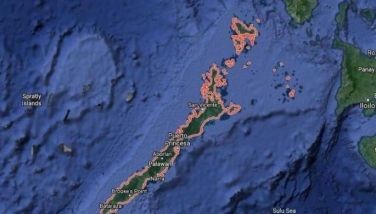
Still on airports, a friend told me that Discovery Shores is putting up two major hotel projects in Coron, Palawan. They would like to modernize the airstrip in Busuanga so more tourists can come. They are at a loss on which agency in government to approach.
On MRT 3, government is actually better off accepting the offer of Manny Pangilinan to take over modernization and refleeting and will even give a royalty payment to government. That would take a contentious legal problem off government’s hands and also save billions of pesos on capex urgently needed by MRT 3. Time and money saved means commuters can benefit earlier. Seems like a “no-brainer†but government has rejected the offer.
Actually, government should take advantage of all these private sector interest to invest in vitally needed infrastructure. They can do it faster and cheaper than government. P-Noy should not just encourage such interest but actively help these potential investors hurdle the bureaucratic hoops.
Money can no longer be used as an excuse for inadequate infrastructure. The bureaucracy simply does not have the sense of urgency nor the imagination needed to get private sector investments in infrastructure realized so that more jobs can be created specially in the countryside.
Again, I hope P-Noy takes a direct hand here and cracks the whip so we can all get going at last.
Gary Teves
Former Finance Secretary Gary Teves sought me out last week to react to a previous column which touched on the recovery of our Nampeidei property in Tokyo, Japan. Gary said he was hurt with what he thought was an insinuation he had a personal interest in the controversial disposition of the war reparations property. He objected to my use of the word “karma†because he said, it suggested he did something morally questionable.
According to Gary, he merely inherited the proposal to dispose of the property when he assumed the Finance portfolio after his predecessor, Cesar Purisima, walked out on President Arroyo with the so called Hyatt Ten. It even preceded Purisima, Gary clarified, as it was included in the privatization program of government way back in 2003.
In fact, Gary told me, he found the legal basis of the transaction so problematic he was ready to recommend the abrogation of the contract to President Arroyo. He showed me a copy of a Memo he wrote to President Arroyo dated 15 June 2009 that said that.
Then, Gary said, the courts took over with a series of orders, both here and in Tokyo. Gary also clarified it is not a sale but a lease.
Gary said he is in agreement with the recent decision of the Court of Appeals on the case and he is glad our government has taken possession of the property again.
Uniforms
Congressmen and senators should wear uniforms like Formula One drivers… that will make it easy to know what vested interest they are working for.
Boo Chanco’s e-mail address is [email protected]. Follow him on Twitter @boochanco




- Latest
- Trending