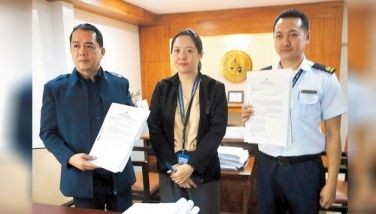
DMCI-Marubeni bags $1.1-billion MRT-7 project
MANILA, Philippines - DM Consunji Inc. (DMCI), a wholly-owned subsidiary of DMCI Holdings Inc. and Japan’s Marubeni Corp., have signed a contract for the engineering, procurement, construction and commissioning of the Metro Rail Transit System of the MRT-7 project with Universal LRT Corp. (BVI) Ltd. for $1.1 billion.
The Marubeni-DMCI consortium will execute and warrant the works for the 22-kilometer rail system which starts from San Jose del Monte, Bulacan and ends at the integrated MRT Line 3- MRT Line 7 station at North Avenue, EDSA in Quezon City, with combined elevated and at-grade guideway sections for a period of 42 months.
Company officials said this infrastructure project will further address the transportation needs of the riding public and alleviate traffic in Metro Manila, particularly traffic going to and coming from Northern Luzon.
It was earlier reported that diversifying conglomerate San Miguel Corp. (SMC) has signed a memorandum of understanding with the controlling owner of MRT-7 for the acquisition of a majority stake in the railway project.
SMC president Ramon Ang earlier told The STAR that an MOU has already been entered into with businessman Salvador “Buddy” Zamora III, who owns 63 percent of Universal LRT Corp. (ULC), which, in turn, wholly owns the MRT-7 project, whereby Zamora will sell his majority interest in ULC to SMC.
Zamora acquired majority control of the ULC consortium in 2008 from its original proponent, Israeli businessman Eli Levin.
Ang also revealed that they are also exploring possible investment in a light rail transit project in Cebu, as well as other projects in Cagayan de Oro, Davao and Iloilo.
The STAR earlier reported that SMC is interested in building a bullet train railway that will run the Laoag-Manila-Bicol route. Ang said they have commissioned a group that includes international companies with experience in bullet trains to study the possibility of building a bullet train railway that will run from the north to the south end of Luzon.
Meanwhile, when asked how much the 63 percent stake in ULC would cost and when the actual sale will be made, Ang said SMC is still undertaking due diligence work.
MRT 7 is a build-“gradual transfer”-operate, maintain and manage project for the development, financing, operation and maintenance of a 22-kilometer light rail transit route that extends from the MRT Line 3’s North Edsa terminal to San Jose del Monte, Bulacan.
ULC earlier said that it has tapped Morgan Stanley as its financial advisor to raise equity and debt needed to finance the construction of the project.
ULC vice-chairman Roberto de Ocampo said that while it is true that Morgan Stanley has approached SMC to be part of the project, there are other interested parties who are also in talks with the financial advisor.
In response, a source from SMC said Zamora may just have failed to inform De Ocampo that an agreement has already been reached between SMC and Zamora.
Earlier, SMC said it has been offered a majority interest in MRT 7 and that the company is negotiating with the members of the consortium of the project. There were reports that SMC was already in the “advanced stages of negotiation” to take control of ULC, the consortium tasked to build the MRT 7 project.
Aside from Zamora, other stakeholders in ULC include the SM Group of Companies, which plans to put up a mall in San Jose del Monte, Bulacan that will have an access to the MRT 7 line.
SMC has been expanding from its core food and beverage business and into heavy industry such as power, infrastructure and telecommunications to fuel faster future growth.
The MRT 7 project involves the construction of a 22-km light rail transit system carrying at least half a million passengers a day.
The project also includes an intermodal transport terminal—a transportation hub for buses and other forms of public conveyances—in San Jose del Monte, as well as a 22-km, six-lane feeder highway from the northern end of the line to Bocaue, Bulacan. This highway will link the intermodal terminal to the North Luzon Expressway.
As envisioned by the proponents, the rail component of MRT 7 project will initially operate 108 rail cars in a three-car train configuration. Initial capacity is projected at 448,000 passengers a day, but will eventually be expanded to accommodate as many as 850,000 passengers daily.
The rail line will have 14 stations, namely: North EDSA, Quezon Memorial Circle, University Avenue, Tandang Sora, Don Antonio, Batasan, Manggahan, Doña Carmen, Regalado, Mindanao Avenue, Quirino, Sacred Heart, Tala and Araneta San Jose Del Monte.
The intermodal terminal, on the other hand, will be able to accommodate 60 buses and will also feature passenger facilities and amenities.
The entire project is expected to be fully completed in 42 months, although parts of it may be made operational in phases.
Once completed, ULC will operate and maintain the rail service, the intermodal terminal and the highway for a period of 25 years. The government will get a 30-percent share of net passenger revenues and a 20-percent share of other earnings.
The rail and road network is expected to cost as much as $1.3 billion, while the commercial and residential developments that are expected to rise along the route would cost another $2 billion.


- Latest
- Trending