FDIs drop sharply in Jan-Aug
Foreign direct investments (FDIs) slowed down steadily in the first eight months of this year, falling by a whopping 56.3 percent to $1.08 billion from $2.492 billion a year ago.
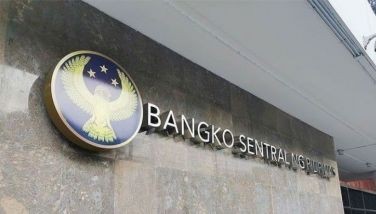
Data from the Bangko Sentral ng Pilipinas (BSP) showed that foreign investors have begun to feel jittery as early as May this year as the world watched the meltdown in the US financial markets.
Right before the actual collapse of giant financial institutions in the US, foreign direct investments into the Philippines have fallen steadily with equity capital inflows plunging by 55.6 percent to $789 million during the eight-month period from $1.77 billion the previous year.
In August, the BSP said FDIs sustained a net inflow of $128 million with all FDI components posting surpluses. In particular, net equity capital inflows at $73 million were more than twice the level recorded in the comparable period in 2007.
BSP Officer in Charge Armando Suratos said the August inflows reflected foreign capital infusion for the privatization of a hydropower plant in northern Luzon.
Reinvested earnings amounting to $30 million during the month were also higher by nearly 60 percent relative to the year-ago level as foreign investors opted to plow back earnings in local enterprises and corporations.
The other capital account also recorded a net inflow of $25 million, but this was lower compared to that in August 2007, owing largely to intercompany loan availments from foreign direct investors.
Despite the pick-up in August, the cumulative inflows in the first eight months were significantly lower than last year’s total inflows.
Suratos said this partly underscores a “more challenging global financial environment”.
Last year, FDI inflows were boosted by two large-scale investments in a local beverage company and a power holding company, Suratos explained.
The BSP reported that gross equity capital placements amounted to $997 million coming largely from the US, Japan, Singapore, South Korea, Germany, and Malaysia.
The BSP said these inflows were channeled to the following sectors: manufacturing (shipbuilding and repair, auto electronics parts & components, paper products, cigarette/tobacco products), services (recreational/cultural), mining, construction (hotel/leisure and resort/water spa development, power plant facility, hydropower facility rehabilitation), real estate, and financial institutions.
According to Suratos, reinvested earnings during the eight-month period, meanwhile, climbed to $309 million, up by almost 40 percent compared to the level recorded in the same period in 2007, as some foreign investors opted to retain part of their profits in local firms.
On the other hand, the other capital account, consisting mainly of intercompany borrowing/lending between foreign direct investors and their subsidiaries/affiliates in the Philippines, reversed to a net outflow of $10 million, due to intercompany loan repayments and higher trade credits extended to affiliates abroad.
The drastic slowdown in net FDI was not unexpected, however and the BSP has already projected that total inflow this year would dropto $2.6 billion and possibly even less from $4.2 billion in 2007.
Foreign direct investments, according to the BSP, would suffer from the impact of slower demand in developing markets which had discouraged direct investments into industries that were originally expected to attract investors this year, such as mining.



- Latest
- Trending