


From geopolitical shocks to household costs: Strengthening energy security, consumer welfare
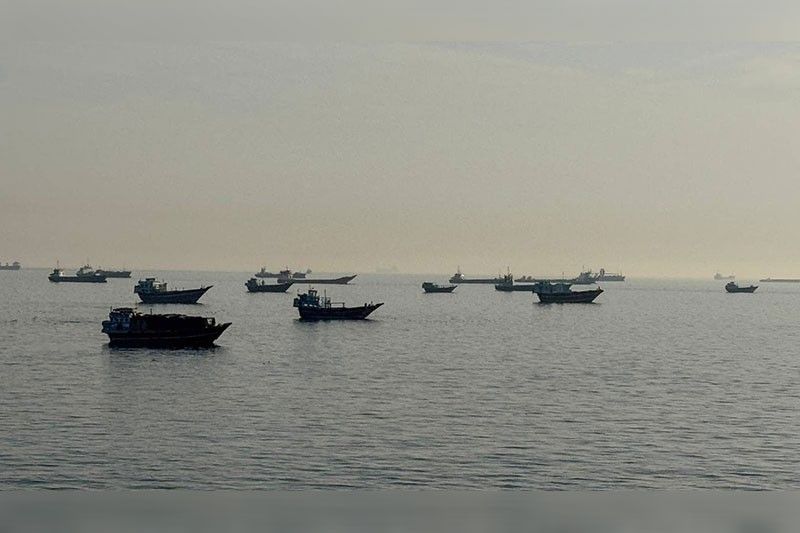
The ongoing Middle East crisis exposed the vulnerability of economies dependent on imported energy, with consequences extending well beyond global oil and gas markets.
For the Philippines in particular, geopolitical instability has become an increasingly pressing economic concern as rising fuel prices, electricity costs, and transportation expenses place additional burdens on businesses and households. These developments highlight a fundamental challenge for the country: ensuring that energy remains reliable and affordable despite external disruptions beyond its control.
The growing connection between geopolitical tensions and economic stability is reflected in the World Economic Forum's Global Risks Report 2026, which identified geoeconomic confrontation as the risk most likely to trigger a material global crisis. Energy security has become central to these concerns, particularly as conflicts threaten critical shipping routes and international supply chains.
Among the most significant vulnerabilities is the Strait of Hormuz, a strategic passage connecting major Middle Eastern energy exporters to global markets. With Asian economies accounting for the majority of shipments historically passing through this route, disruptions have intensified competition for alternative supplies and increased uncertainty over energy availability and prices.
For the Philippines, the implications are particularly significant because of its dependence on imported petroleum products, coal, and increasingly, liquefied natural gas (LNG). Although the country continues to develop indigenous resources, its energy system remains exposed to international price fluctuations, supply chain disruptions, as well as foreign exchange movements. The depreciation of the Philippine peso vis-a-vis the US dollar amplifies these pressures by increasing the local currency cost of imported fuels, even when international prices remain unchanged.
It is worthy to note that Department of Energy Secretary Sharon Garin has also warned that peso depreciation could further increase the cost of imported coal, diesel, and LNG, potentially raising electricity rates and consumer prices amid the global oil crisis and looming El Niño threat.
Energy insecurity also presents risks to economic activity. The PwC-Management Association of the Philippines’ 2026 Philippine CEO Survey identified Middle East instability as the leading geopolitical concern among Philippine business leaders, ahead of US-China tensions and global supply chain fragmentation. Similarly, the Bangko Sentral ng Pilipinas' latest Business Expectations Survey showed that business confidence remained negative in September 2026, despite improving from the previous month. Elevated energy costs, rising inflation, peso depreciation, and geopolitical uncertainty continued to weigh on sentiment.
These findings suggest that prolonged energy volatility could affect business expansion and investment decisions. Higher operating expenses reduce profitability, particularly for energy-intensive industries such as manufacturing, transportation, and logistics. Smaller enterprises, which often have limited financial capacity to absorb cost increases, may be forced to raise prices, scale down operations, or even postpone expansion. Consequently, persistent energy instability could weaken competitiveness and constrain economic growth.
For households, the effects are more immediate. In October 2026, Meralco increased its overall electricity rate by P0.3191 per kilowatt-hour (kWh), bringing the rate for a typical residential customer to P15.0615/kWh. This translated to approximately P64 in additional monthly expenses for a household consuming 200 kWh. Although electricity rates depend on multiple factors, the increase shows how energy-related pressures affect household budgets.
The economic consequences are evident in inflation. Just this week, the Philippine Statistics Authority announced that headline inflation accelerated to 7.8% in October 2026 from 7.2% in September, bringing the January-October average to 5.6%. Transport inflation rose to 20.1%, while inflation for housing, water, electricity, gas, and other fuels reached 9.3%. These developments reflect the transmission of higher energy costs across the economy, although domestic supply conditions, weather-related disruptions, and the ongoing El Niño phenomenon also influence consumer prices.
Moreover, increased fuel expenses raise the cost of transporting food and other commodities between production centers and markets. Agriculture and fisheries face additional costs for machinery, irrigation, fishing vessels, and distribution. As businesses pass on these expenses, consumers ultimately shoulder higher prices. Low-income households are especially vulnerable because electricity, transportation, and food account for a substantial share of their expenditure, leaving less disposable income for other necessities.
Addressing these challenges requires more than temporary interventions. The Philippines must strengthen its energy security through a balanced strategy that combines domestic resource development, diversified imports, renewable energy development, and resilient energy infrastructure. Reducing exposure to external shocks does not necessarily mean eliminating imported energy immediately, but rather building sufficient flexibility to withstand external disruptions without compromising electricity reliability or affordability.
A significant development occurred this week on November 5 when Malampaya Phase 4 achieved its first natural gas delivery from two new wells. The project added an estimated 222 billion cubic feet of recoverable reserves, potentially supporting continued production until around 2034. While this strengthens indigenous energy supply, imported LNG will remain important in meeting domestic requirements. The priority should therefore be to maximize domestic resources while maintaining diversified and commercially sustainable fuel import arrangements.
Renewable energy development provides another avenue for reducing long-term exposure to international fuel markets. Under the Philippine Energy Plan 2023-2050, the government targets a renewable energy share of 35% in the power generation mix by 2030 and 50% by 2040. Expanding geothermal, hydropower, solar, and wind energy, including offshore wind, can improve supply diversification. Nevertheless, the transition must be supported by adequate transmission capacity, energy storage, and dependable generation sources to maintain grid stability.
Equally important is ensuring that energy policies translate into tangible consumer benefits. Investments should be evaluated not merely by additional generation capacity but also by their contribution to dependable supply, manageable electricity rates, and greater protection against future price shocks.
Ultimately, the Middle East crisis proves that energy security is inseparable from consumer welfare and economic resilience. For the Philippines, the long-term objective must be an energy system that is sufficiently diversified to withstand geopolitical disruptions, reliable enough to support economic activity, and affordable enough to protect household purchasing power.
Indeed, achieving this balance will require sustained policy coordination and investment, thus moving beyond short-term relief toward structural reforms that make the country less vulnerable to recurring global energy crises and geopolitical risks.
--
Venice Isabelle Rañosa is the Research Director of the Stratbase Group.




- Latest


