Food exporters dig deep to capitalize on ube rush
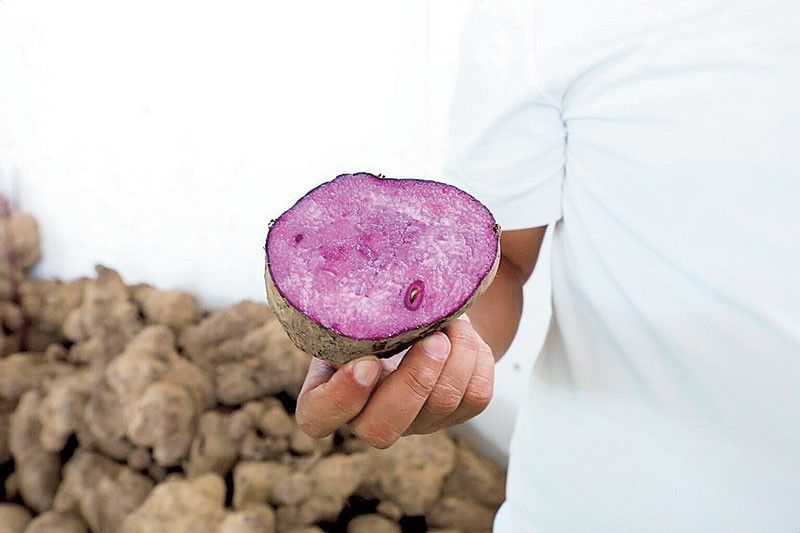
Gomez files bill classifying ube as a national priority crop
MANILA, Philippines — As the Philippines rushes to capitalize on the surging global appetite for its iconic purple root crop, food processors are pushing to secure high-quality ube (purple yam) materials for processing and export.
With demand rising for ube, the country’s food exporters and processors are looking for more ube raw materials to capture the growing popularity of the tuber in overseas markets, industry group Philippine Food Processors and Exporters Organization Inc. (Philfoodex) said.
“The problem of the Philippines, especially in ube, is the raw material. Our supply is low, so we really need to increase the quantity,” Philfoodex president Ruben See told The STAR.
He added that a higher supply of ube as raw material would allow the country’s food industry to meet the ever-growing local and international demand for the vibrantly colored root crop.
“If your supply is low and there’s a big demand for it, then the price will definitely increase and we don’t want that,” See added.
He stressed that the Philippines must safeguard the quality of its ube, warning that rival purple yam producers could outpace the country and potentially shift overseas buyers away from Filipino exporters.
“We should maintain our quality, because if we don’t maintain the quality we will be surpassed by our competitors in the ASEAN region,” he said.
The government has been pushing to increase the domestic production of ube through tissue culture, community-based nurseries and other propagation techniques.
Amid the ongoing push to improve production, researchers from the University of the Philippines-Los Baños (UPLB) have identified 10 key ube varieties that would improve domestic farmers’ harvest.
The Department of Agriculture (DA) said scientists from UPLB have pinpointed 10 ube varieties from 188 greater yam types in farms and gene banks across the country.
Among the identified ube types was the Villasis 2 variety, which boasted improved yields by producing more than 60 tons per hectare. On the other hand, the ube kinampay remained a gold standard due to its unique flavor.
Other identified varieties also stood out for their aroma and color, or anthocyanins, a natural compound behind ube’s purple hue and antioxidant properties.
The researchers also used thousands of genetic markers to create a DNA profile for the country’s ube varieties. This genetic database would help distinguish specific yam types and support further identification and certification.
“Genetic mapping can support future varietal identification and certification, helping ensure that farmers plant authentic stocks and giving exporters confidence that what leaves Philippine ports is exactly what buyers ordered,” the DA said.
The agency has also called on ube stakeholders to formalize an ube federation that would allow local producers, processors and exporters to strengthen coordination with the government.
The ube federation will develop a standardized color classification, improve marketing campaigns, secure protection for the country’s ube and focus investments in production areas.
Earlier, Agriculture Secretary Francisco Tiu Laurel Jr. said that the agency has been actively identifying agricultural products that gave high export potential to plug the country’s trade deficit.
“With ube now enjoying global recognition, we see an opportunity to expand production, increase exports and help reduce the country’s more than $10 billion annual agricultural trade deficit,” Tiu Laurel added.
The DA is looking to allocate about P93 million to support the country’s root crops, the funding will be used to improve domestic production and export promotions.

National priority crop
To further support the country’s ube industry, a lawmaker has filed a bill proposing to establish a national framework that will develop, promote and protect the sector.
Leyte 4th District Rep. Richard Gomez has filed House Bill 10225, known as the Philippine Ube Industry Development Act.
The measure seeks to declare ube as a national priority crop, establish a Philippine Ube Industry Council and boost research, production, processing, branding and export promotion.
This move will lay the groundwork for improving the competitiveness of the purple yam and create more income opportunities for Filipino farmers and rural communities.
“Ube is more than a beloved Filipino delicacy, it is part of our culture, our identity and a valuable agricultural resource. It is time that we invest in our farmers and build an industry that will allow them to earn more while showcasing the best of the Philippines to the world,” Gomez said.
The proposed measure will also enable the government to back farmers through the distribution of quality planting materials, research and development, post-harvest facilities, processing, financing, quality standards, market access and export promotion.
It also seeks to safeguard the authenticity of Philippine ube by introducing better geographic indications and certification systems, while also strengthening the role of farmers, cooperatives and micro, small and medium enterprises across the ube value chain.
A National Ube Industry Development Program will also be established, bringing together the DA, the Department of Trade and Industry (DTI), the Department of Science and Technology, local government units and other stakeholders.
The initiative aims to boost productivity, drive innovation, and strengthen branding and market competitiveness of Philippine ube products.
“By strengthening the ube industry from farm to global market, we create jobs, stimulate rural economies and ensure that Philippine ube remains the gold standard around the world,” he added.
The Philippine Statistics Authority reported that the country has produced 12,488 metric tons of ube in 2025, down by 6.7 percent from the previous.
The country typically exports ube to key markets, including the United States, United Kingdom, Italy and the Middle East. Total shipments reached $3.06 million last year, according to DTI data.




- Latest
- Trending