Philippines urged to diversify economic base as AI threatens BPOs
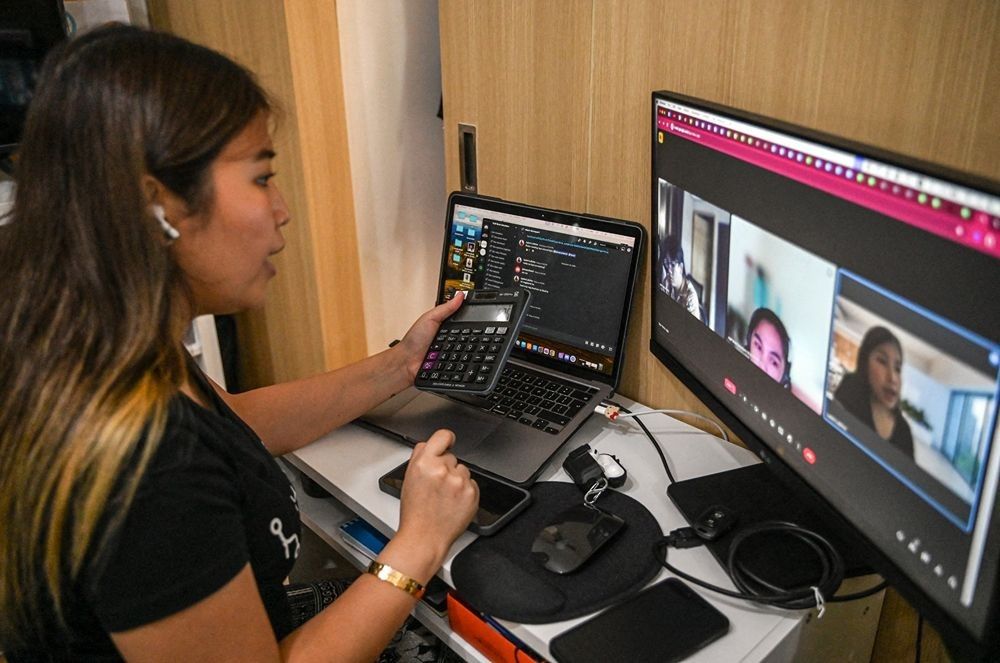
MANILA, Philippines — The Philippines' next test may come from the industry that helped power its rise: call centers and business process outsourcing.
As artificial intelligence threatens to disrupt jobs in the sector, global management consulting firm Kearney said the country's new upper-middle-income status should push the government and businesses to build more engines of growth, from manufacturing to tourism, and invest in the infrastructure needed to support them.
Among the risks cited by Kearney Philippines country head Marco de la Rosa and Southeast Asia managing partner Varun Arora is AI's impact on call centers and the business process outsourcing industry, one of the country's major economic drivers.
In 2023, Kearney said up to 100,000 jobs in the Philippines could become obsolete because of AI, which it said was already affecting financial institutions and telecommunications.
While AI is feared to disrupt many industries globally, the Philippines has more at stake than most countries. The BPO sector has become of its largest sources of jobs and foreign exchange, generating $38 billion in revenue and employing 1.82 million workers in 2024. The industry has also helped absorb college-educated workers and anchor office demand in major urban areas.
De la Rosa said such risk makes infrastructure investment more urgent, especially if the Philippines needs to build up industries beyond BPOs.
"So, if we need to diversify away from contact centers and BPOs, and we need to look into other industries, be it manufacturing or tourism, all of those things require good, stable, strong and scalable infrastructure," De la Rosa said in a Philstar.com interview.
Infrastructure is important on its own, but it becomes even more critical for a country trying to broaden where growth comes from.
Preparing for shocks
Arora said governments and companies also need to prepare for more "black swan events," or unpredictable shocks with serious consequences, especially those tied to technology.
"What if these black swan events happen? Then what will we do? So let's say there is, and I'm not saying just Philippines, but let's say there is a massive cybersecurity incident which happens that can rattle an economy," Arora told Philstar.com in the same interview.
Arora said these uncertainties are unlikely to disappear soon, and foreign investors will increasingly look at whether markets have enough resilience and options to absorb disruption.
"The uncertainties created by AI and technology and the risk of job losses, as well as the risk of technology disruptions, cyberattack or technology breakdown or AI going wrong, those uncertainties are very high for companies right now," Arora said.
More options needed
In a more volatile global environment, the Philippines needs to show investors that it has more strategic options across industries if it wants to remain competitive, Arora said.
"Bringing up other sectors of industry, BPOs are getting disrupted. So resilience and options is very important for the government and a lot of these enterprises to think of because we are in a world where we can't just look at the upside," Arora said.
Arora and De la Rosa said the Philippines' income upgrade should be treated less as a finish line than as the start of a tougher race for investment and competitiveness.
"We're progressing, and we're advancing, and we're developing. But now it's about making sure we stay competitive and we get in front of other opportunities," de la Rosa said.


- Latest
- Trending