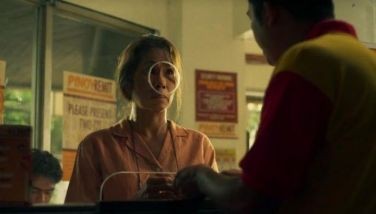
Capitalism as comedy in ‘No Other Choice’

The film’s title, “No Other Choice,” is uttered by various characters throughout its two-hour runtime. The phrase is used by an American executive to justify layoffs following the acquisition of a South Korean paper company, where Lee Byung-hun’s character works. In turn, he also uses it to motivate himself when he is about to murder for survival.
Showing in Philippine cinemas through CreaZion Studios, the film stars Lee as Man-soo, who is laid off from the company he has worked for 25 years. As the family’s breadwinner who managed to purchase his childhood home, he jumps from one job interview to another while working a dead-end job at a grocery store.
A year passes, and Man-soo’s severance pay is running dry. His wife, Mi-ri (Son Ye-jin), decides to cut back on expenses, including selling their home, which was paid for through a mortgage.
Desperate to find employment, Man-soo devises a plan to kill his competition – two applicants who are more qualified than him, and a man currently holding his desired position – to increase his chances of getting hired at a rival paper company.
Unlike Lee’s “Squid Game” character, the Front Man, Man-soo is no mastermind when it comes to committing crimes. He often hesitates to pull the trigger, leaving behind a trail of half-baked attempts that rely on miracles to avoid getting caught.
Adapting the 1997 novel “The Ax” by Donald E. Westlake, director-writer Park Chan-wook uses black comedy and satire to explore how capitalism drives people to commit terrible acts out of desperation to survive and maintain their status quo. It’s almost as if the very concept of capitalism is a comedy in itself.
While many may compare “No Other Choice” to Bong Joon-ho’s “Parasite,” given that both feature similar themes, Park’s approach differs in tone and execution. Still, the two films would make for an excellent double feature.
The film also examines how a breadwinner’s love for his family, particularly for his spouse, can push them toward heinous acts in the name of survival. This is evident in the parallels between Man-soo and his targets, Seon-chul (Park Hee-soon) and Si-jo (Cha Seung-won), who were also laid off from their work.
Beon-mo, who is in a deteriorating marriage with A-ra (Yeom Hye-ran), mirrors the fears Man-soo harbors about his own relationship with Mi-ri. Meanwhile, Seon-chul’s love for his daughter reminds Man-soo of his shortcomings as a father, deepening his desperation to reclaim his sense of purpose.
Beon-mo (Lee Sung-min), the hedonistic worker Man-soo seeks to replace, lives too comfortably in his current position, aided by artificial intelligence – a hint at the kind of person Man-soo may eventually become by the film’s end.
Far from his colder portrayal in his hit Netflix series, Lee delivers a 180-degree performance as a well-intentioned family man whose dire circumstances push him into moral ambiguity. His nuanced, layered performance feels Oscar-worthy.
Ye-jin also shines as Mi-ri, who balances sweetness and sacrifice with rationality. She is determined to keep her family from falling into bankruptcy, even if it means making choices that their children wouldn’t like.
While it’s easy to view the film as a comedic takedown of capitalism, it also functions as a twisted love story — one that questions how much a spouse is willing to “tolerate” for the sake of conformity.
Fans of Park’s work will be glad to see how much of his signature style is on display in this film, from meticulous editing and clever, seamless transitions to dynamic cinematography that reinforces his distinct voice as a filmmaker. He also cleverly uses visual metaphors to reinforce the film’s themes – such as Man-soo’s aching tooth, symbolizing the decay of his morality.
The film’s ending may feel like too much of a fairy-tale resolution for some, yet the buildup to its climax leaves audiences with a lingering sense of uncertainty about whether Man-soo’s choices were worth it, especially at the expense of his morality.
With its clever satirical storytelling, gorgeous, detailed visuals, and award-winning performances from its leads, “No Other Choice” is one of the best films released this year that may have a chance to secure nominations at the Oscars next year. Four and a half stars out of five.





- Latest