


‘Unsurrendered 3’ docu focuses on Cebu’s overlooked role during WWII
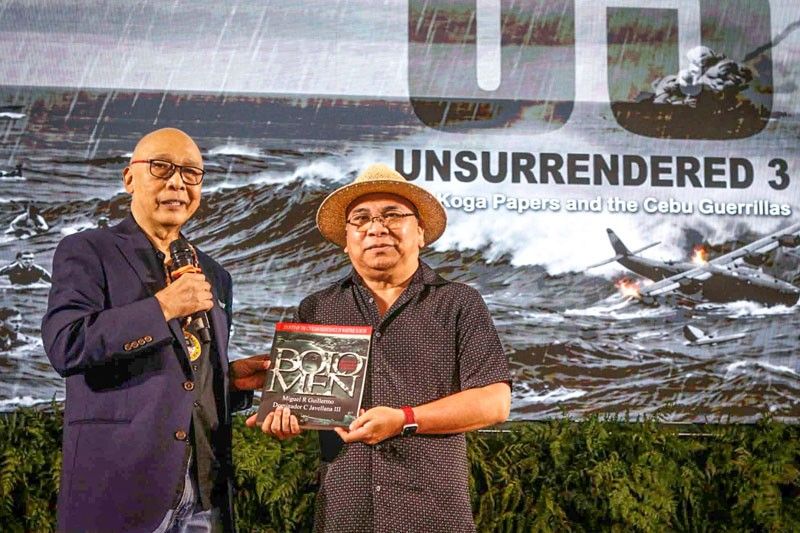
CEBU, Philippines — Who knew that the discovery of highly sensitive intelligence plans by two Cebuanos of humble means amid the Japanese occupation of the Philippines would set off a domino effect that would eventually help turn the tide toward the country’s liberation?
There was a lot going on surrounding World War II that even a three-hour epic or an eight-part miniseries wouldn’t be enough to cover everything, especially the Philippines’ role in the war when the former Imperial Japanese Empire occupied the country before it was taken back by the Americans. Even when talking about the Philippines during the war, several stories that took place are often overlooked in our textbooks.
This is what former filmmaker-turned-documentarist Miguel “Lucky” Guillermo wants to do with his film series, “Unsurrendered,” which takes an extensive view of the Filipinos’ role in fighting against the Japanese occupation during WWII in an attempt to preserve the fighters’ and survivors’ firsthand accounts before they pass away.
Produced by his nonprofit company Spyron AV Manila, the series began in 2009 with “Unsurrendered: 100 Voices,” which focuses on guerrilla fighters fighting underground following the fall of Bataan and Corregidor. His follow-up six years later, in 2015, “Unsurrendered 2: The Hunters ROTC,” focuses on college cadets forming their own guerrilla group.
It would take 10 more years, in 2025, for a third entry to exist, “Unsurrendered 3: Koga Papers and Cebu Guilleras.” This time, it focuses on Cebuano guerrilla fighters and the Queen City of the South’s role in WWII that helped turn Cebu from a Japanese-occupied base into an asset against them by the Americans.
It first premiered in Honolulu, Hawaii, last December 11, before being shown in Metro Manila on April 8. Cebu City was the third stop on their tour to present the documentary in the Philippines and North America, with the Cebu screening taking place last September 5 at the Cebu Provincial Capitol.
When asked why the film series is called “Unsurrendered,” producer Ferdinand De Ocampo explained during a post-screening Q&A: “We are showing these stories because we are the main characters. History is written by victors. But for us, we were not just victors, we were also attacked, colonized and oppressed. But in the end, we won. Hence, we are the unsurrendered. The word is usually an adjective. But for us Filipinos, it’s a noun.”
The story starts with Shigeru Fukudome, a vice admiral of the Imperial Japanese Navy and chief of staff to Admiral Mineichi Koga, who was traveling by aircraft to Davao when the plane crashed off the coast of Cebu during a typhoon. Koga, who was traveling in a separate aircraft, was killed.
The plane carrying Fukudome crashed near San Fernando, Cebu, where fisherman and shopkeeper Pedro Gantuangko and his neighbor and fellow fisherman Rufu Wamar discovered a red leather portfolio among the wreckage that washed ashore.
After retrieving the portfolio and drying the water-soaked documents, they realized they were holding important Japanese military papers that had been aboard Fukudome’s aircraft. The documents contained highly sensitive intelligence, including the Japanese Navy’s Z Plan, a strategy plan outlining Japan’s preparations to counter an expected American offensive in the Pacific. These documents became known as the Koga Papers.
Gantuangko and Wamar eventually turned the documents over to Cebuano guerrillas, who brought them to American guerrilla leader Lt. Col. James Cushing. Fukudome, who survived the crash, had also been captured by the guerrillas.
As Japanese forces launched a search for both Fukudome and the documents, they began killing civilians and burning villages in an effort to pressure the guerrillas into surrendering the Japanese prisoners. Cushing eventually agreed to release Fukudome and the other Japanese captives in exchange for an end to the attacks on civilians.
But Cushing managed to keep the Koga Papers. He rolled the documents tightly and placed them inside empty mortar shells before sending them toward southern Negros. From there, the documents were transported by submarine to Australia, where they were translated and analyzed by Allied intelligence, providing the Americans with valuable information about Japanese military strength and defensive plans in the Philippines.
The papers also revealed that the Japanese defenses in the Visayas were weaker than those in Mindanao, intelligence that contributed to the decision to shift the planned American invasion from Mindanao to Leyte.
The documentary contains firsthand interviews with Cebuano guerrilla fighters that took place in 2016. As of the Cebu premiere, only one of them is still alive, but bedridden.
Guillermo explained that what took the film this long to produce was the supposed financing from a nonprofit organization that had earlier expressed interest but eventually fell apart, coupled with the complications brought by the COVID-19 pandemic.
Despite the challenges, Guillermo opted to push through with the documentary to showcase different perspectives of the war in the Philippines that are not often featured, after receiving feedback suggesting that his documentaries should cover the entire country, not just Luzon, where many of the well-known events took place.
Guillermo, who started his filmmaking career as a protégé of the late director Jun Raquiza, said he wanted to make documentaries on the Philippines’ role in WWII because of his personal connection to it through his father, Antonio “Silver” Guillermo, who was also a guerrilla leader.
“It took the U.S. and the Philippine governments a long time to recognize my father,” he told The FREEMAN.
Guillermo later followed his father’s military footsteps as part of the core command of San Beda ROTC in 1968 before pivoting to the film industry, where he started out as a producer.
His three sons would later follow, becoming military officers based in the United States, while his only daughter followed in her father’s filmmaking footsteps, graduating from the International Academy of Film and Television in Lapu-Lapu City, also known as Bigfoot.
He wanted his documentaries to focus on other Filipino guerrilla fighters before focusing solely on his father. His upcoming fourth one will home in on the fighters in Mindanao, while the fifth will delve on Silver — a narrative-driven piece that would see him return to directing movies since 1985's “Zuma.”
Cebuano historian Jose Eleazar Bersales, who was featured in the documentary, called for local government units, specifically San Fernando and Carcar, to create initiatives for the local populace to remember their significance during WWII.
“If the local governments can come to an agreement, the National Historical Commission of the Philippines [NHCP] is willing to put up a marker where the events took place,” he said. “If Leyte has so many NHCP markers, where are the national historical markers for the ones where the Koga Papers were discovered?”
Janette Andrada-Lane, U.S. representative of Spyron AV Manila, stressed that the organization aims to help educate, remind, and inspire Filipinos that they were important in the history of WWII.
“Learning about war is not just an advocacy; it’s also an experience we can learn from,” she said. “Everything that happened here during the war had its purpose, and we should learn from them.” — (FREEMAN)



- Latest


