Iloilo City: Where the present courts the past
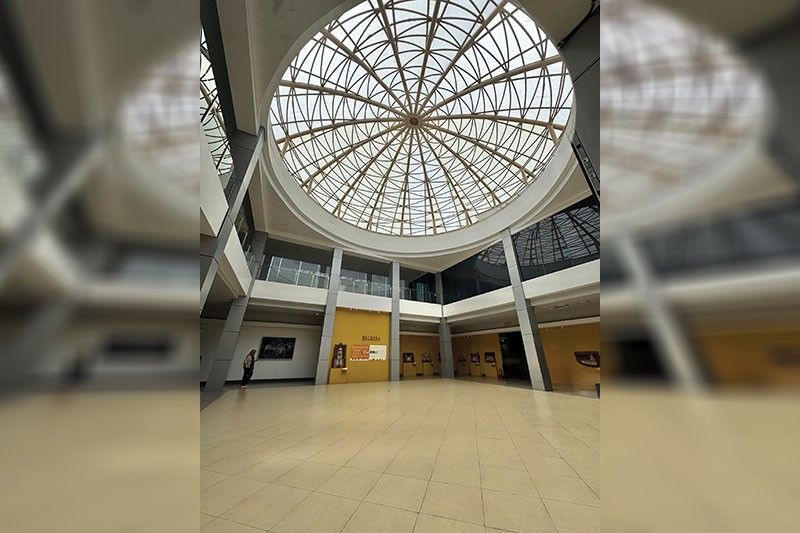
Iloilo weaves past and present so seamlessly, just like the fine threads of the hablon. That is why it is called the city where “the past is always present.” Its well-preserved heritage buildings and cultural traditions are not blurred, but in fact, bloom, with modern development.
Despite the city’s growth and modernization (the minute you land in the airport, you will see why), many ancestral houses, churches, and other landmarks from the Spanish colonial era and beyond stand proud.
A group of journalists were in Iloilo City recently upon the invitation of Sen. Loren Legarda. Though she is from Antique, about 2.5 hours away from Iloilo, she doesn’t favor any one province when it comes to culture. In fact, the Traditional Philippine Textile gallery in the Old Iloilo Provincial Prison, now the National Museum of Western Visayas, was established with her “strong support.”
Iloilo boasts numerous ancestral houses, like the Avanceña-Camiña Balay nga Bato near Molo, which are testaments to its rich past. Legarda was also instrumental in the installation of the National Museum “Important Cultural Property Marker” in this heritage house, which she calls her “happy place” when in Iloilo.
“Iloilo is one of the few cities and provinces where you can find many heritage buildings,” former Sen. Franklin Drilon, an Ilonggo, once told me proudly.
I knew the minute our Philippine Airlines plane touched down at the Iloilo International Airport that the Iloilo of my youth had changed — for the better. The airport is a newer version of NAIA II.
The old airport in Mandurriao is now a business park developed mostly by taipan Andrew Tan of Megaworld, who also donated the land on which the handsome Iloilo Convention Center now stands.

***
Our first stop was the old prison-turned-modern museum.
This 1911 heritage building, now the National Museum Western Visayas was one of the first American structures built in the Philippines. Also known as the Iloilo Rehabilitation Center, it was used as a jail until 2006.
The National Museum of the Philippines (NMP) declared it an Important Cultural Property in 2016 for its exceptional architectural, cultural and historical value. The jail was designed by architect William Parsons, then consulting architect of the Philippine government working with the Bureau of Public Works. During World War II, the Japanese used the jail as an internment camp for prisoners of war.
When the building became too small to house its inmates, then Iloilo Gov. Arthur Defensor Sr. asked the NMP to fund its restoration instead of destroying it, making it the regional museum of Western Visayas. The province of Iloilo funded its retrofitting while National Museum funded its restoration in 2015. It was designed by former United Architects of the Philippines president, the late Guillermo Hisancha.
Museum-goers can enjoy two permanent exhibitions at the IRC – the “Habol Panay: The Woven Artistry of Western Visayas” (the textile gallery) and the “Geology and Paleontology Exhibition.”
The prison’s original huge windows with its iron grills have been preserved, as well as its turrets. The old prison cells are now galleries. The courtyard has been covered by a dome with the crisscross lines of a rattan basket.
Just like many of the prisoners it once sought to rehabilitate, the building now has a fresh start.

***
On the way to our next stop, the Avanceña-Camiña Balay nga Bato, we passed by the Assumption Convent campus on Gen. Luna Ave., built around 1913 according to historical accounts (though the school was established in 1910, reportedly on another street.)
That place has a permanent spot in my heart because it was where I first went to school, and studied for five years while my family was living in Iloilo. Like the convents of Europe, Assumption Iloilo has remained as stately as I remember it. The old convent still looks like the abbey in The Sound of Music. The chapel where I had my first Holy Communion looks like it has aged gracefully, and faithfully.
***
Lunch was at the Avanceña-Camiña Balay nga Bato, where we were welcomed by Luth Camiña, a walking search engine on Ilonggo history. She shared that in ascending the grand staircase, cultured women do so facing sideways. Lisa Guerrero-Nakpil of the National Historical Commission of the Philippines and I tried to be prim and proper and did the side steps, literally, with STAR’s Büm D. Tenorio Jr. making sure neither of us missed a step!
The buffet was a feast spread on a long narra table that probably could accommodate 24 to 32 guests if used for dining. There was a cornucopia of salads and fresh fruits, lumpiang ubod, longganisa rice, daing na bangus, and roast pork belly, among others.
Dessert of minatamis na saging was accompanied by hot chocolate, so thick you could probably slice it with a knife!
Indeed, Iloilo’s fabric is dyed with the elegance of the past, and the vibrance of the present. *





- Latest