Palace to appeal SC ruling on budget
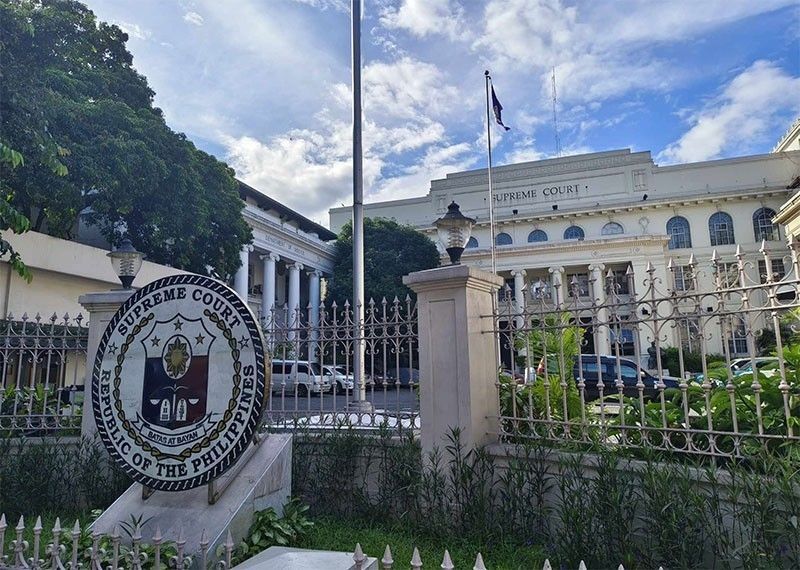
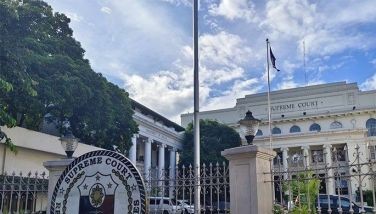
MANILA, Philippines — The Marcos administration will ask the Supreme Court (SC) to reconsider its ruling declaring as unconstitutional the national budgets for 2024 and 2025 due to a large increase in unprogrammed appropriations.
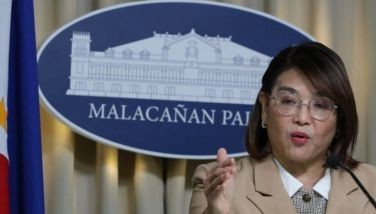
“We respectfully urge the Supreme Court to reassess its decision. The Office of the Solicitor General has been directed to file a motion for reconsideration,” Palace press officer Claire Castro said yesterday.
Castro said while the high court did not declare unprogrammed appropriations (UA) as unconstitutional, the conditions it set made it difficult for the government to use the funds.
“We respectfully disagree with some parts of the ruling of the high court. In our view, it maintained the mechanism on paper, but the setting of conditions that went beyond the conditions set by Congress since 2015 did not just make (the use of the funds) very difficult, it made the mechanism useless for the programs of the government,” Castro said at a media briefing.
The SC struck down as unconstitutional the 2024 national budget because of Congress’ increase of UAs by P449.5 billion, which led to a hike in the President’s total recommended outlay.
Last year’s national budget has also been declared unconstitutional because of the P17.99-billion hike in the special road fund made by the legislature, which raised Marcos’ total recommended appropriations.
The high court also ruled as unconstitutional some UA provisions in the 2026 national budget.
According to the ruling, pegging certain fiscal conditions to any new or excess revenue, without regard to whether the whole revenue target was exceeded, departs from the unprogrammed appropriations’ original feature as a deficit neutral mechanism and undermines fiscal discipline and the coherent fiscal program contemplated in the Constitution.
The Supreme Court also described the provisions as “overly broad, lacked prioritization standards and partly functioned as prohibited lump sum appropriations.”
Castro said the ruling’s condition that revenue collections should exceed the target before UAs can be used changed the conditions set by Congress as the branch of government tasked by the Constitution to pass the annual national budget.
She pointed out that since 2015, Congress has allowed the release of funds if the collection target is exceeded even if they come from a non-tax revenue source.
“The Marcos administration merely followed this rule,” Castro said, adding that the previous national budgets were in line with the Araullo vs Aquino ruling, the 2014 SC decision that declared acts under the executive branch’s Disbursement Acceleration Program unconstitutional.
‘No law violated’
Castro maintained that Marcos did not violate any provision of the Constitution, stressing that there is no criminal or administrative liability if the funds are used in good faith.
“This administration merely followed the processes stated under the law. So, we do not see any accountability on the part of the President,” she said.
Asked whether the administration would withhold the release of certain funds in this year’s budget because of the ruling, Castro pointed out that the court’s decision is not yet final.
SC: Marcos Jr. not at fault
However, the SC maintained that the President should not be faulted for “certifying as urgent” the controversial House bill due to the state of “public calamity or emergency.”
“The President did not commit grave abuse of discretion when he certified as urgent House Bill No. 8980,” according to the 121-page decision penned by Senior Associate Justice Marvic Leonen dated Oct. 7.
The bill was signed into law as Republic Act 11975, which according to the ruling contained the P4.7512-trillion budget for 2024.
In their petition challenging the constitutionality of the 2024 budget, former Senate president Aquilino Pimentel III and former House speaker Pantaleon Alvarez argued that the bill being certified as urgent was “tainted with grave abuse of discretion.”
They said it did not follow the constitutional standard of three readings on separate days for congressional bills, and that there was no public calamity or emergency at the time to hasten its passage.
At a press conference yesterday, SC spokesperson Camille Ting said the decision – which received a 13-2 vote – was “not yet final and executory” and that the Office of the Solicitor General may file a motion for reconsideration within 15 days from notice.
Penalize authors
Opposition lawmakers in the House of Representatives welcomed the SC ruling, with one progressive legislator proposing a new and better way of holding officials more accountable.
House Deputy Minority Leader Antonio Tinio of ACT Teachers party-list suggested that independent constitutional bodies like the Office of the Ombudsman and the Commission on Audit may establish a system that will penalize with certainty the authors of such budget anomalies.
“I think the ombudsman and COA should conduct a thorough study on how they will be able to hold these ‘authors, proponents and implementors’ criminally liable for violating the 1987 Constitution and our laws. If the party is indeed over, then it’s time to settle accounts,” he emphasized.
Tinio singled out the President as the highest government official who fits the description of the chief “implementor,” while the rest of his concerned Cabinet members – the underlings – can be deemed as accomplices.
Independent Rep. Toby Tiangco of Navotas said the SC ruling only “reinforces” even further his repeated calls for “transparency and accountability” in the budget process, particularly in the allocation and use of public funds.
He said the tribunal’s findings concerning insufficient documentation of bicameral budget changes, broad spending discretion and the need for fiscal safeguards underscore the very concerns he has repeatedly raised in Congress.
Sara: BBM, Congress liable
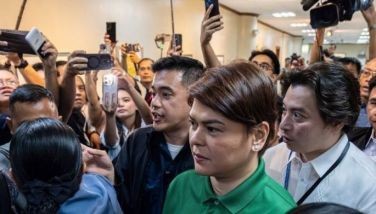
Vice President Sara Duterte said President Marcos and Congress should answer for approving the three budget laws that were declared as unconstitutional by the SC.
“The President is liable for approving the budget that was in violation of the National Expenditure Program. He must answer why he signed those budgets,” said Duterte.
She thanked the high court for strengthening the Constitution and upholding the law, based on its decision.
Duterte said the SC decision proved that her warning in 2024 was correct, that the bicameral conference committee was not doing its job.
‘Significant win’
Rep. Leila de Lima (Mamamayang Liberal party-list) – one of the SC petitioners – felt vindicated.
De Lima said officials behind the 2024 and 2025 national budgets may face criminal and administrative cases, and praised the SC ruling as a “significant win” in the fight for transparency and accountability in the use of public funds.
De Lima said the SC ruling stated that the doctrine of operative fact only applies to irreversible programs whose beneficiaries acted in good faith based on the presumed validity of the funding.
She also thanked the high court for “setting clear constitutional limits” on unprogrammed funds, which she said is meant to be “a standby, not a slush fund.”
“The Court has put it back in its proper place,” she said.
De Lima said unprogrammed funds had been growing “out of control” and had been used by lawmakers as a “holding area for pork” where they parked funds for their pet projects.
The SC ruling, however, has “closed that backdoor,” she said. – Ghio Ong, Delon Porcalla, Evelyn Macairan, Joana Lei Yanson





- Latest
- Trending