


Public-private partnerships drive ASEAN competitiveness


In a lively convergence of media minds, business strategists, and policy architects, the 2026 ASEAN Editors and Economic Opinion Leaders Forum took place recently, marking one of the first major activities under the Philippines’ chairmanship of the Association of Southeast Asian Nations (ASEAN).
The two-day forum, held at the Fairmont Hotel in Makati City, underscored the growing role of ASEAN, not only as a geopolitical actor but a crucible of economic strategy in a rapidly transforming global landscape.
As ASEAN assumes an elevated position on the world economic stage, the forum brought together editors, journalists and economic thought leaders from across the region to discuss shared opportunities and challenges — from trade integration and digital transformation to geopolitical risks and sustainable investment. Participants and speakers alike framed their remarks around ASEAN’s central theme for 2026, “Navigating Our Future, Together,” a reflection of both shared ambition and collective uncertainty.
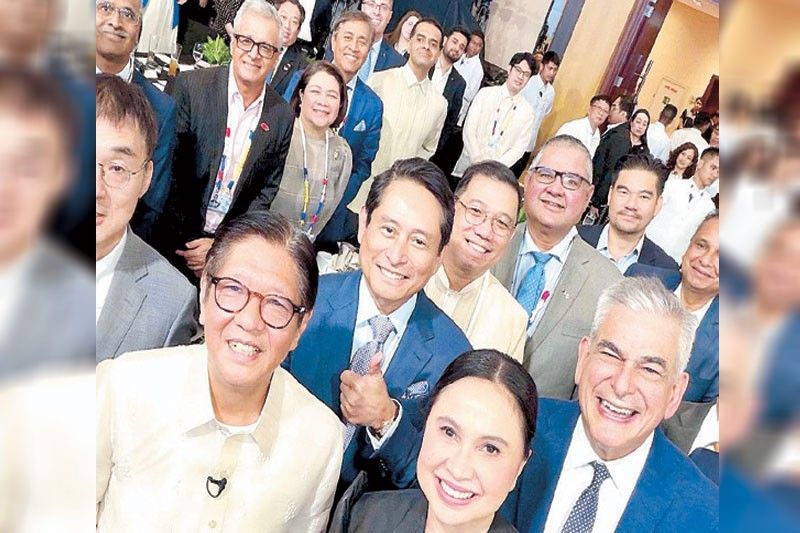
Speaking to an audience of regional opinion shapers and media representatives, Finance Secretary Frederick Go highlighted ASEAN’s dynamic growth potential. He said the bloc remains one of the world’s most resilient economic growth regions, buoyed by strong demographics, expanding trade corridors, and deeper integration among member states.
Go’s remarks aligned with the Philippines’ priorities as ASEAN Chair — emphasizing regional stability, connectivity, and inclusive economic expansion.

Government officials used the forum to spotlight opportunities for investment and cooperation in emerging sectors. Discussions ranged from public-private partnerships to address infrastructure and education gaps to regional collaboration on artificial intelligence and technology corridors, notably with India.
At the margins of the event, Department of Information and Communications Technology officials said talks are underway on a potential Bangalore-Clark AI tech corridor, as well as broader ASEAN AI cooperation frameworks aimed at supporting small and medium enterprises and building consensus toward a regional AI declaration later this year.
Economic commentators at the forum didn’t shy away from acknowledging the headwinds facing ASEAN. With geopolitical tensions and shifting trade policies creating global uncertainty, analysts stressed the need for deeper economic ties and diversification of markets. They also underscored ASEAN’s commitment to regional centrality — the principle that the bloc should remain at the heart of diplomatic and economic engagement in Southeast Asia.
For his part, Ayala Corp. chairman Jaime Augusto Zobel de Ayala, or JAZA, said that the Philippines should turn recent infrastructure setbacks into an opportunity to attract private investment, leveraging its ASEAN chairmanship this year as a global showcase. He called for stronger, rules-based public-private partnerships (PPPs) to make infrastructure projects more credible and investable.JAZA also said that the Philippines hosting ASEAN is a tremendous opportunity to start showcasing the country and its strengths, “a great marketing period.”
The highlight of the forum was the fireside chat with no less than the top honcho, President Ferdinand “Bongbong” Marcos Jr. (PBBM) and seasoned news broadcast journalist Rico Hizon as moderator. During this session, the President said, “It has certainly been an exciting time for the Philippines in many senses because we have really approached the entire system of governance, especially as it pertains to the economy, by making serious structural changes in the way that we do business.”
When asked pointblank as to what the ideal president should be in 2028, PBBM said that (I am just summarizing the points) the next president should be somebody who understands economics; understands how to create jobs; understands how to keep the inflation rate down; understands how to make food supply a given; understands productivity; is competent; and is a nation builder.
For many editors and journalists in attendance, the forum was both a news-making event and a testing ground for narratives about ASEAN’s future.
Discussions ranged from the bloc’s role in shaping global trade flows to the ways in which media and economic opinion leaders can responsibly convey ASEAN’s story to the public — a theme echoed in remarks by the Secretary-General of ASEAN, Dr. Kao Kim Hourn, who delivered recorded greetings emphasizing the critical role of credible journalism in sustaining trust in regional cooperation.
I was honored to join as a panelist for Session 2, where we discussed how Public-Private Partnerships (PPPs) remain central to sustaining ASEAN’s growth momentum.
From the perspective of the MVP Group and the Chamber of Mines of the Philippines, I emphasized that PPPs are not new to us — they are part of our institutional DNA. Metro Pacific Investments Corp. has long been at the forefront of infrastructure delivery across water, power, toll roads, healthcare, and telecommunications — helping bridge critical development gaps for decades.
At the same time, we were candid about the realities. The most significant challenges PPPs face are mid-stream regulatory changes and right-of-way constraints — issues that directly affect project timelines and investor confidence.
Encouragingly, reforms such as the Public-Private Partnership Code and the Ease of Doing Business Law through the Anti-Red Tape Authority, headed by Secretary Nes Perez, are beginning to produce tangible results.
In mining, the passage of the Enhanced Mining Fiscal Regime Law has brought transparency, predictability, and accountability to long term investments, while the Ease of Doing Business Law has helped streamline approvals — with the goal of cutting processing timelines significantly.
Policy stability and regulatory clarity are the foundation of sustainable partnerships. I am grateful to Secretary Cristina Roque and the Department of Trade and Industry for convening this timely forum as the Philippines assumes its ASEAN 2026 Chairship.
Conversations like these help shape not only national progress, but regional competitiveness.
Beyond policy speeches and panels, the forum also revealed broader questions about ASEAN’s public engagement and transparency. Some media professionals at the event noted challenges related to access and information flow during proceedings — reflecting the delicate balance between official communication and independent reporting in high-profile diplomatic settings.
Nevertheless, this gathering set an early benchmark for ASEAN’s agenda this year. As member states and global partners watch closely, the forum served not just as a forum for debate but as a barometer of regional intent — a place where economic ambitions, strategic priorities, and public discourse intersect. With ASEAN’s chairship now underway, the messages shared here are likely to shape not only the bloc’s image but its tangible outcomes in the months ahead.
All towards competitiveness in ASEAN, especially for the Philippines under the Marcos Jr. administration. *


- Latest


