


Labor groups, employers differ on wage hike public hearing
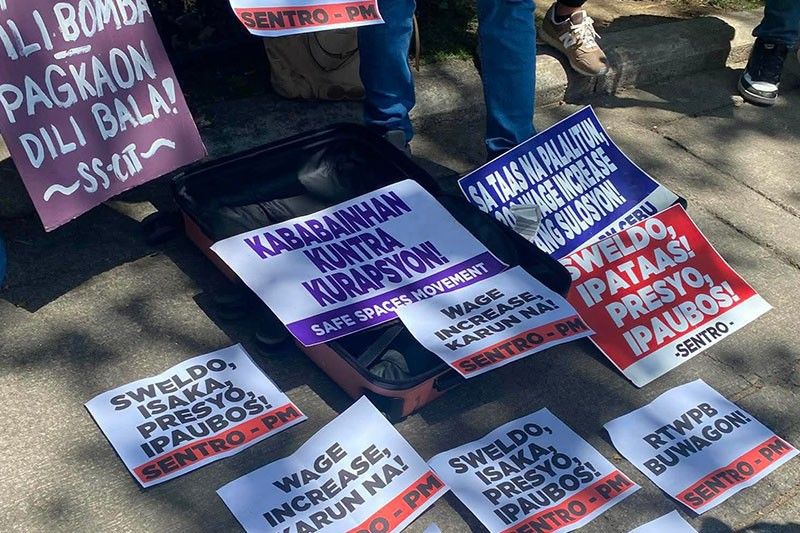
CEBU, Philippines — Labor groups and employer representatives raised contrasting positions during the public consultation conducted by the Regional Tripartite Wages and Productivity Board in Central Visayas (RTWPB-7) on Thursday, as the board assessed whether there are sufficient grounds to conduct an early review of the region’s existing wage order.
RTWPB-7 Secretariat Atty. Evita Balane clarified that the board is still in the stage of gathering sentiments and feedback from stakeholders and has not yet started the formal wage determination process.
Balane explained that the board’s immediate task is to determine whether “urgent and reasonable grounds” exist to justify an early review of the current wage order before its anniversary date.
She said the earliest the board can begin formal wage deliberations is Aug. 5, provided consultations and evaluations establish valid grounds for an early review.
She encouraged workers, employers, and other stakeholders to actively participate in the consultations, stressing that their inputs will guide the board in deciding whether to proceed with wage determination ahead of the regular schedule.
Labor groups, however, urged the board to act swiftly, arguing that rising fuel prices, inflation, and the increasing cost of living establish urgency for the implementation of measures.
Jaime Paglinawan, chairperson of BAYAN, criticized what he described as the slow response of government agencies to the economic difficulties faced by workers.
He recalled that labor groups had sought a P5,000 subsidy for low-wage earners through the National Wages and Productivity Commission (NWPC) but were informed that no funds were available for the proposed assistance.
Paglinawan questioned the value of consultations if government agencies had already ruled out certain relief measures due to budget constraints. He said workers expected concrete solutions instead of explanations centered on funding limitations.
He also cited delays in government aid programs for sectors affected by fuel price hikes and emphasized that many workers have been forced to extend their working hours or seek additional income sources just to meet daily expenses.
Labor representative Dennis Derige said labor groups filed their petition for a wage increase before Holy Week, citing the impact of fuel price increases linked to tensions in the Middle East.
Derige argued that while other government agencies had already responded to the fuel surge through assistance programs and consultations, the wage board had yet to act on labor’s petition.
He pointed to data showing multiple fuel price increases from February to June and cited figures indicating that inflation has significantly eroded the purchasing power of minimum wage earners in Central Visayas.
According to Derige, the real value of the region’s P540 minimum wage has declined substantially due to inflation, reducing workers’ ability to meet their basic needs.
He challenged claims that wage increases discourage investments, saying investors are more concerned about issues such as high electricity costs, corruption, traffic congestion, and other structural problems affecting the business environment.
Kyle Enero, president of the BPO Industry Employees Network (BIEN)-Cebu, said workers’ basic pay should be at least equivalent to the prevailing monthly minimum wage of P16,425, computed from the P540 daily minimum wage. He stressed that despite advertised salary packages that include incentives and allowances, many BPO workers continue to receive contractual basic salaries below this amount.
Kamanggagawa Party-list Rep. Eli San Fernando argued that available economic data already justify a wage increase. He cited inflation figures and economic growth data showing that while Central Visayas’ economy has expanded significantly in recent years, workers have seen only minimal gains in real wages.
San Fernando also questioned why Cebu workers continue to receive provincial wage rates despite the province having three highly urbanized cities with living costs comparable to those of other major urban centers.
Employers, on the other hand, say
While employer representatives expressed sympathy for workers’ concerns, they cautioned against imposing wage increases that could adversely affect businesses.
Fred Escalona of PHILEXPORT Cebu said inflation and unemployment are major concerns but argued that businesses should not be solely responsible for addressing them.
He proposed government interventions such as reducing value-added taxes on food and fuel, lowering electricity costs, improving agricultural productivity, strengthening support for micro, small, and medium enterprises (MSMEs), and providing incentives for businesses.
Escalona also defended the regional wage-setting system, saying local wage boards are better positioned to understand regional conditions.
Philippine Retailers Association-Cebu Chapter President Jay Fernandez said employers understand workers’ difficulties but emphasized that solutions should be balanced and data-driven.
He urged the government to play a larger role in addressing inflation and economic pressures instead of placing the burden entirely on employers.
Delia Suplig of the Mactan Economic Zone Chamber of Exporters and Manufacturers and the Japanese Chamber of Commerce and Industry of Cebu likewise advocated a technical and data-driven approach to wage setting.
She supported expanding non-taxable benefits and incentives that would increase workers’ take-home pay without significantly increasing labor costs or disrupting salary structures.
Labor representative to the wage board Antonio Cuizon reiterated labor’s appeal for government assistance, particularly the proposed P5,000 aid package for minimum wage earners.
Cuizon said workers continue to struggle with rising healthcare expenses and other household costs, making government support increasingly necessary.
The consultation forms part of RTWPB-7’s evaluation process in determining whether there are sufficient urgent and reasonable grounds to conduct an early review of the region’s wage order. — (IHM) (FREEMAN)


- Latest


