Marcos commits to science, technology investments
GENERAL SANTOS CITY, Philippines — President Marcos committed on Wednesday to investing in science and technology as “vital instruments of national development.”
“The strength of a nation greatly rests on its ability to understand the challenges of the times, to find lasting solutions through the knowledge and ingenuity of its people, and to strive to continuously improve,” the President stressed in a video message aired at the opening of the 2026 National Science, Technology and Innovation Week of the Department of Science and Technology (DOST).
“For this reason, we continue to invest in science, technology and innovation as vital instruments of national development,” he said.
In making these investments, the President wants a nation with competent people, competitive industries and resilient communities.
“Behind these aspirations are our Filipino scientists, researchers and innovators, whose knowledge and dedication help turn these possibilities into realities,” Marcos said.
The Chief Executive urged the DOST to use the national science week as a platform to advance discoveries and forge partnerships that will benefit the Filipino public. “Let us continue to nurture Filipino ingenuity, advance our research capabilities and transform promising discoveries into practical solutions that will serve our national interests,” Marcos said.
Coconut planting partnership
The government and the private sector yesterday signed a memorandum of agreement (MOU) that aims to plant 10 million coconut trees as part of ongoing efforts to rehabilitate one of the country’s key industries.
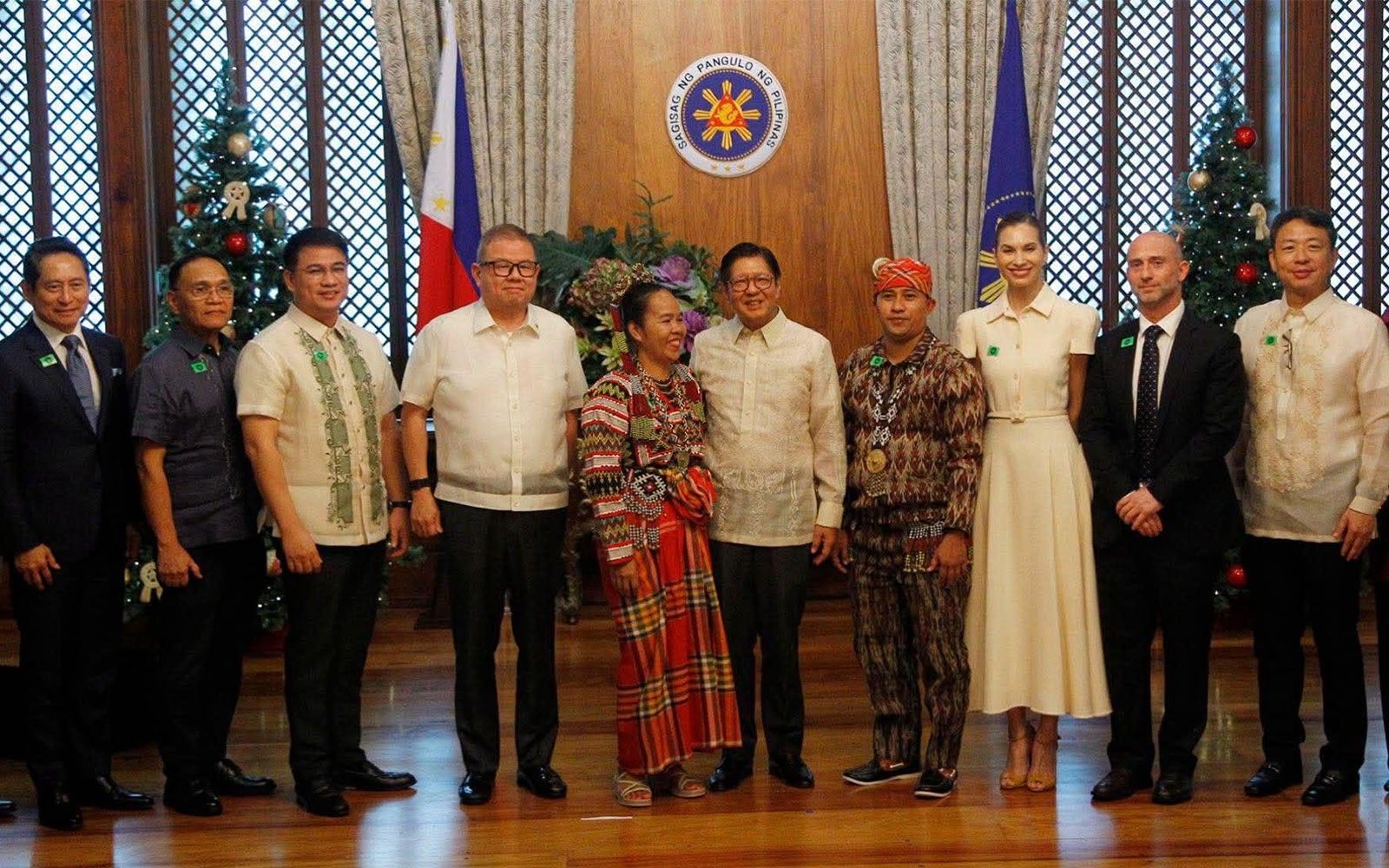
President Marcos witnessed the signing of the MOU for a 10-million coconut tree partnership, which is designed to help replace aging coconut trees by distributing quality seedlings to 100,000 farmers in Mindanao and providing training on sustainable farming practices and access to buyers.
The MOU, which supports the government’s goal to plant 100 million coconut trees by 2028, was signed by the Philippine Coconut Authority, Metro Pacific Agro Ventures Inc., Vita Coco Community Foundation, Century Pacific Food Inc. and HOPE.
Marcos said coconut palm has provided food and livelihood for generations of Filipino families, sustained communities and helped establish the Philippines as a leading coconut exporter in the world.
However, he acknowledged that many of Filipino farmers still harvest from palms that their parents and grandparents once tended.
Marcos said the agreement could help farmers earn an additional P30,000 to P65,000 per year, produce more raw materials for processors, generate jobs in rural communities and spur greater opportunities to expand coconut exports.
No funding for vaccine institute
The Virology and Vaccine Institute of the Philippines (VIP) continues to hit a snag after the executive branch failed to allocate a budget for the building’s construction for the third year in a row.
The DOST has requested the full cost of the project at P680 million, but when the 2027 National Expenditure Program was submitted to the House, the item did not appear.
“The project has no budget for 2025 or 2026; there was a proposed one of P680 million for 2027, but this was not granted,” DOST budget sponsor Sen. Bam Aquino said on Tuesday night. “In the NEP, it was not granted; it has not been since, for three years already.”
The five-hectare facility, set to rise in New Clark City, Tarlac, will feature a human and animal virology laboratory, a plant virology laboratory, an animal isolation, biosafety levels 3 and 4 laboratory building, a plant cultivation area, a good manufacturing product building and an administration building.
DOST-Philippine Council for Health Research and Development director Dr. Jaime Montoya said the VIP will house researchers under one roof and accelerate research to prevent another pandemic.
While there’s no budget for infrastructure, attached programs to the VIP still enjoy funding under the DOST’s Grants-in-Aid program, though the allocation declined from P205 million in 2026 to just P65 million in 2027.
Budget scrutiny
Meanwhile, on Tuesday night, during the Senate plenary deliberations on the DOST’s budget, Sen. Imee Marcos asked Secretary Renato Solidum Jr. what concrete interventions the DOST is implementing to arrest the decline in the Global Innovation Index rankings.
“In terms of the input, admittedly it’s low, but they’re committed to really increase the output based on the innovations that the agency is doing,” Senator Aquino said.
The Philippines slipped from No. 50 in 2025 to No. 52 this year in the rankings, as limited resources for innovation endeavors outweigh the country’s growing capacity to produce high-tech outputs.
Aquino urged Congress to increase investments in R&D to prevent the decline, while Senator Marcos told the DOST to set targets in the number of patent applications, technology exports and private sector investment.
The executive branch proposed a P30.47-billion budget for DOST in 2027, a decline of P1.26 billion from the previous year, but the Senate has added P143 million to the agency’s funding. — Alexis Romero








- Latest
- Trending