Japan to give P28 billion for Philippines' fuel relief program
MANILA, Philippines — Japan will give around ¥70 billion (about P28 billion) to help fund UPLIFT — the Marcos administration's relief program meant to "cushion" the public from price shocks — as conflict in the Middle East has driven up fuel prices and thrust inflation to its highest in nearly four years.
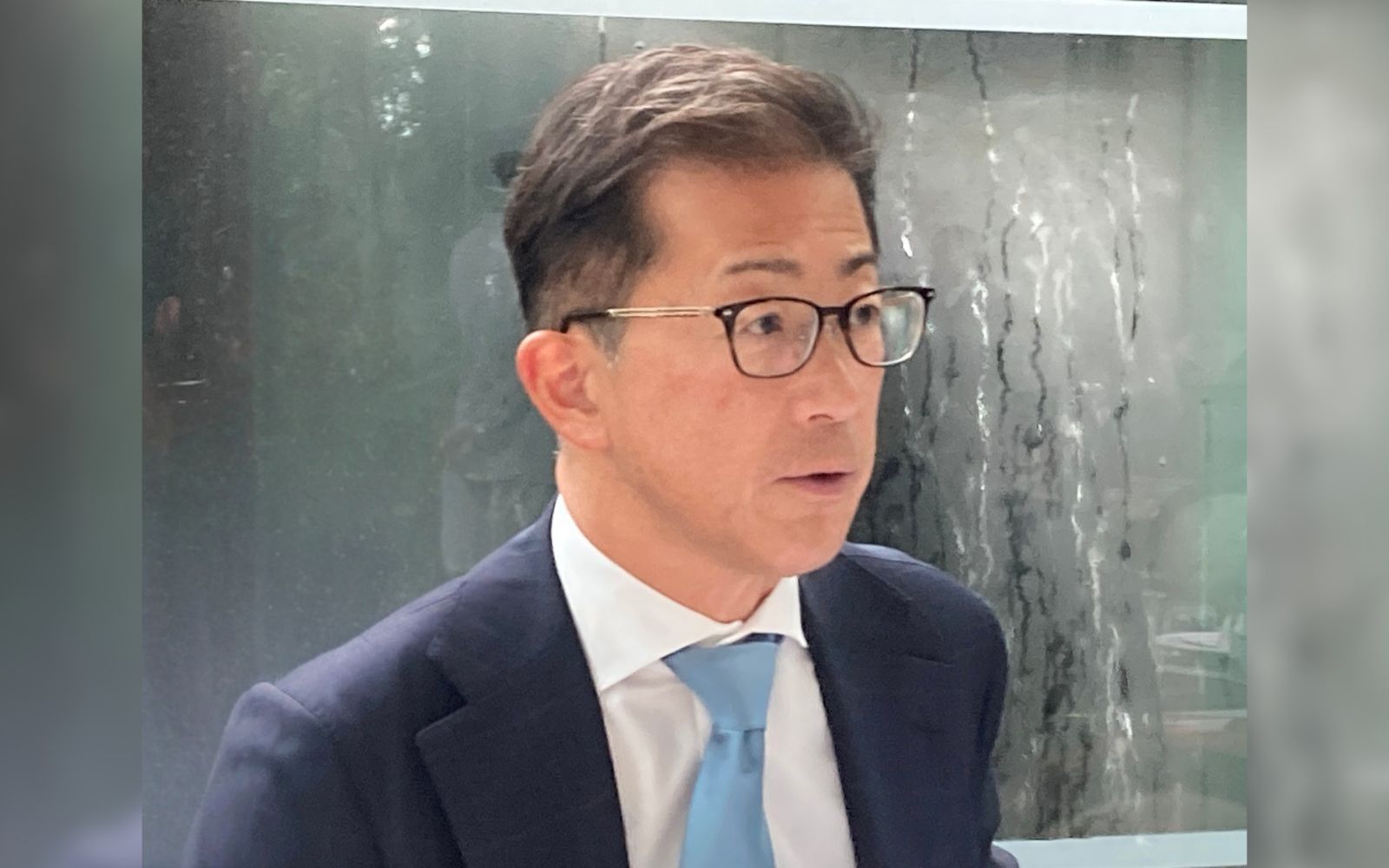
Toshihiro Kitamura, Japanese foreign ministry press secretary, told a group of journalists in Manila on Wednesday, November 18, that Prime Minister Sanae Takaichi made the commitment while in Manila for the Association of Southeast Asian Nations (ASEAN) summit.
"Another announcement made by Prime Minister Takaichi this time was the provision of financial assistance to Philippine ... in the amount of ¥70 billion, to support the Philippine policy UPLIFT," Kitamura said.
"In order to support the implementation of this policy, we have decided to provide this financial assistance," he added.
Marcos and Takaichi had a bilateral engagement Monday, November 16, on the sidelines of the ASEAN summit, where they "confirmed that they would cooperate toward the realization of economic resilience," the Tokyo's official summary of the meeting read.
The Philippines is under a one-year national state of energy emergency as soaring global oil prices — driven by the US-Israel war with Iran and disruptions to shipping through the Strait of Hormuz — continue to batter the local economy.
Signed by Marcos in March, Executive Order No. 110 launched the Unified Package for Livelihoods, Industry, Food and Transport (UPLIFT) nearly a month into the Middle East conflict.
To offset rising costs, the government through UPLIFT rolled out cash aid for 7.5 million households, or about 37.5 million Filipinos, alongside a fuel subsidy for jeepney and UV Express drivers that was eventually raised from P10 to P12 per liter.
Budget officials earlier estimated the government needs around P155 billion to fund all planned initiatives under UPLIFT.
The global energy crisis has been punishing for households in the Philippines as high pump prices have caused inflation to accelerate to 7.8% in October from 7.2% in September, the highest reading since February 2023.
The Philippines gets most of its crude through the Strait of Hormuz.
Kitamura said the aid is also "important for Japan" given more than 1,800 Japanese companies operate in the Philippines.
Japanese firms “also are facing this crisis in terms of energy,” Kitamura said. Keeping them running “will also contribute to [the] Japanese economy because we import a lot of parts or our products from here,” he said.
The funding, the Japanese official said, is under POWERR Asia, the $10-billion initiative Japan announced on April 15 to help Asian countries buy oil and build reserves.
On Tuesday, Japan proposed a task force to coordinate oil stockpiling across Asia, which would let neighboring countries use idle storage capacity in Japan. Takaichi said the initiative would be coordinated with a Philippine-led joint oil stockpiling scheme.
Upper-middle income
Kitamura also spoke about Japanese aid in general, which the Philippines may, in the near future, get on less favorable terms.
The World Bank reclassified the Philippines as an upper-middle income economy Injuly after its gross national income per capita reached US$4,850 in 2025. The country had been trying to reach that rank since the 1980s.
Asked whether the upgrade would affect Japanese development aid, Kitamura said: "We cannot exclude the possibility of the change... But there will be some transition period."
Japan would "not suddenly stop" its assistance, he said, but he could not specify exactly how long the transition would last, though it will likely take a "few years."
A lot is at stake for Manila with the deduction of any aid from Japan as Tokyo has been its biggest source of loans and grants. For instance, it was Japanese loans that paid for flagship projects such as the Metro Manila Subway.
In July, after the new income rank was announced, Finance Secretary Frederick Go said there was no cause for concern as the country would need to keep the upper-middle income classification for at least three years "before any change happens."
Security aid however will not be affected with the reclassification, Kitamura said.
"Our assistance in the field of security in the form of OSA, that will continue," he said.
Official Security Assistance is a grant program by japan launched in fiscal year 2023 to provide defense equipment to like-minded countries. It is separate from Japan's traditional development aid.
Beyond aid, Kitamura said, the two countries can cooperate "in various forms, including investment or other types of loan."
Takaichi left Manila on Wednesday for the APEC leaders' meeting in Shenzhen, China.





- Latest
- Trending