


Visayas grid instability to hit Cebu businesses until 2028
CEBU, Philippines — Persistent electricity supply disruptions and price volatility in the Visayas could raise operating costs and constrain business expansion through 2028, prompting energy services provider COREPLUS to urge Cebu companies to strengthen their power infrastructure and reduce their exposure to grid instability.
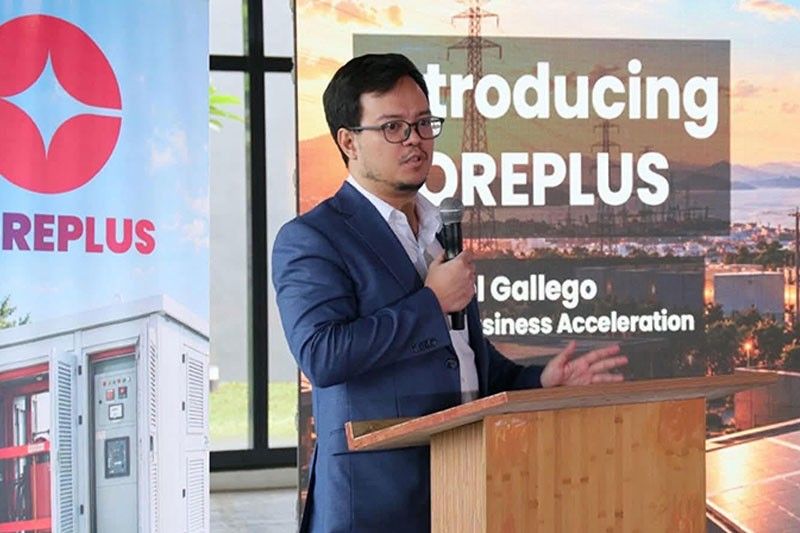
The company delivered the message at SIDLAK CEBU: Building Business Resilience During Energy Volatility, which gathered about 50 business owners and industry professionals at JEG Tower.
The warning highlights the growing importance of power reliability to business competitiveness in a region where companies face recurring grid alerts, generation outages, rising electricity demand and volatile power prices. Beyond higher utility bills, unstable electricity can disrupt production, damage equipment, reduce operating efficiency and complicate investment planning.
“The State of the Visayas Grid,” a keynote delivered by PJ Vinoya, senior business development manager at COREPLUS, attributed the expected persistence of volatility through 2028 to structural challenges rather than seasonal fluctuations.
For businesses, the implication is that waiting for external supply conditions to improve may leave them exposed to risks they could partly mitigate through investments in their own facilities, Vinoya said.
“Businesses need to look beyond the direct cost of electricity. Voltage dips and outages, equipment wear, downtime, inefficient loads, and planned expansion all affect operations, and these are factors businesses can act on,” he said.
The issue has implications beyond individual company balance sheets. Unreliable and expensive electricity can weaken the investment case for expanding manufacturing capacity, commercial facilities and other power-dependent operations.
For Cebu businesses competing on cost and delivery reliability, energy performance is increasingly a factor in operational planning.
COREPLUS, a subsidiary of COREnergy under Vivant Energy, provides engineering and technical services for commercial and industrial facilities, including electrical audits, system maintenance, energy-efficiency retrofits, energy management system integration, and solar power and battery energy storage system projects.
At the event, the company and its partners presented options intended to help businesses identify vulnerabilities, improve electrical infrastructure and evaluate investments in alternative power solutions.
Jonas Mapili, chief operating officer of COREPLUS partner FV Mapile, discussed how electrical safety audits can identify potential hazards and weaknesses in existing systems.
Dorcas Jay Regalado, COREPLUS head of engineering, examined how compact secondary substations can strengthen internal power infrastructure and accommodate higher electricity requirements.
Romeo Cubangbang Jr., COREPLUS head of solar, outlined key considerations for businesses evaluating solar investments. Technology partners Huawei and Jinko Solar also showcased solar solutions, while one-on-one consultations allowed participants to discuss potential upgrades for their facilities.
The discussions reflect a shift in how companies can approach energy management: from treating electricity as a fixed operating expense to assessing it as a source of operational and financial risk.
Investments in solar generation, battery storage, energy monitoring and electrical-system upgrades can help businesses manage certain supply disruptions and improve their control over energy use. Their financial value, however, depends on facility-level demand, capital costs, electricity tariffs, operating profiles and the reliability requirements of individual businesses.
For COREPLUS, the priority is to help companies evaluate those options against their specific operational needs rather than adopt technologies without a clear business case.
“The current energy landscape calls for businesses to be more proactive about understanding and managing their energy needs,” said Melo Del Gallego, assistant vice president for business acceleration at COREPLUS.
The company aims to help businesses prepare for energy challenges through technical expertise, technology partnerships and solutions tailored to their requirements.
The challenge remains regional: company-level investments can reduce exposure to certain power risks, but they cannot replace adequate generation capacity, reliable transmission and distribution infrastructure, or effective electricity-market oversight.
As the Visayas grid faces continued pressure, businesses will need to weigh the cost of resilience investments against the potential losses from disruptions.
For policymakers and energy-sector stakeholders, the same outlook reinforces the importance of addressing the underlying supply and infrastructure constraints that shape electricity costs and reliability.





- Latest