Mandaue City Council pushes El Niño measures
CEBU, Philippines — The Mandaue City Council is calling for comprehensive measures to prepare the city for possible prolonged dry spells, extreme heat, and water shortages linked to the El Niño phenomenon.
The council approved two resolutions on the matter during its regular session on Monday, October 5.
Both measures seek to strengthen the city’s preparedness through additional disaster funds, water security measures, health protocols, and coordinated action among city departments and barangays.
The first resolution urges the City Disaster Risk Reduction and Management Office (CDRRMO), City Health Office (CHO), and other concerned local government offices to formulate and implement a comprehensive El Niño action plan.
It also recommends the immediate augmentation of the city’s Local Disaster Risk Reduction and Management Fund (LDRRMF), or the use of available unappropriated surplus funds, to purchase emergency water containers, stationary water tanks, and other supplies for vulnerable communities.
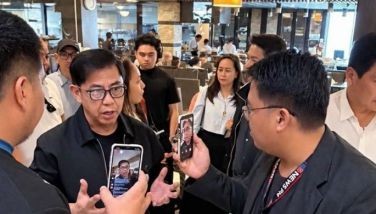
“We approved resolution nga i-augment ang disaster fund nato para magamit sa Super El Niño Disaster Plan,” Fortuna said in an interview.
Fortuna said he recommended that the City Budget Office augment funds in preparation for the phenomenon.
The proposed purchases include food-grade jerry cans or water containers for informal settler families and low-income households, 1,000-liter or larger water tanks for strategic deployment in high-density and low-pressure barangays, as well as water fittings, valves, and purification or treatment tablets.
The resolution calls for the City Engineering Office and CDRRMO to coordinate with the Metropolitan Cebu Water District (MCWD) and local water suppliers in securing alternative water sources, deploying water tanks, and establishing predictable rationing schedules for vulnerable communities.
It also directs the City Social Welfare Services Office and CDRRMO to oversee the distribution of emergency water containers, while the CHO is tasked to establish protocols for heat-related illnesses and ensure the availability of oral rehydration salts, intravenous fluids, and essential medicines in barangay health centers.
The resolution further proposes temporary community cooling hubs in public facilities, fire risk assessments in high-density communities, and information campaigns on water conservation and the early warning signs of heat-related illnesses.
The second resolution calls for the creation of a multisectoral El Niño Task Force chaired by the local chief executive, with separate branches for water security and public health and safety.
“We are suggesting to the Office of the Mayor to create a task force for the El Niño,” Fortuna said.
He said the CDRRMO and CHO would serve as lead agencies for the task force.
“Kay sa recent nga announcement sa PAGASA (Philippine Atmospheric, Geophysical and Astronomical Services Administration), gi-describe nila ang heat level, nga kung sa sakit pa na gikombulsyon na kuno ang tao,” Fortuna said.
The Water Security Branch would coordinate with water providers on leak monitoring, alternative water sources, and localized rationing networks, while the Public Health and Safety Branch would monitor heat-related illnesses and coordinate the deployment of emergency response resources.
The resolution also calls for city departments to clear drainage systems, establish small rainwater impounding facilities, rehabilitate community artesian wells for non-potable use, and promote water recycling among commercial, industrial, and construction establishments.
“We are also calling establishments who are heavily dependent sa ilang business on water like car wash, water refilling stations,” Fortuna said.
According to Fortuna, water refilling stations should also review their processes to reduce water wastage.
“Sa water refilling stations gud, only about 30 to 40% ana gamiton para ibaligya as mineral water, the rest of the water is just waste,” he said.
Fortuna said he is pushing the Mandaue City Environment and Natural Resources Office (MCENRO) to look into ways establishments can recycle water used in their operations.
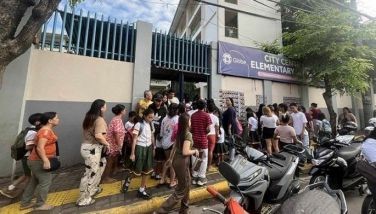
Among the proposed heat-mitigation measures are adjusting school and outdoor work schedules to avoid peak heat hours, deploying hydration stations and misting tents in high-traffic areas, and preserving urban greenery along public walkways.
Barangay disaster risk reduction and management committees would also be tasked to map vulnerable residents, including bedridden individuals, infants, and senior citizens, and conduct water truck delivery drills in preparation for possible localized water disruptions.
The resolution provides that implementation of the action plan may be funded through available LDRRMF allocations for pre-disaster and anticipatory measures, subject to existing accounting and auditing rules.
“Ang importante nga andam ta daan dili kay dira pa ta morespondi nga diha na ang sitwasyon,” Fortuna said. –





- Latest