Metro Manila water allocation cut as Super El Niño looms
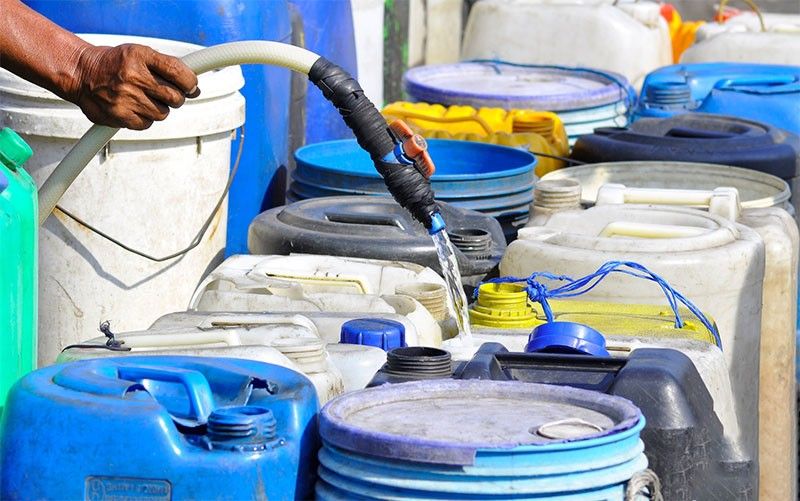
MANILA, Philippines — Metro Manila’s water supply allocation will be reduced starting October as the government prepares for the potential impact of Super El Niño.
The National Water Resources Board (NWRB) said Wednesday, September 30, that it will cut the water allocation for Metropolitan Waterworks and Sewerage System (MWSS) from the regular 50 to 53 cubic meters per second to 44 cubic meters per second.
The MWSS is the main government-owned corporation that manages and provides the water supply in Metro Manila, as well as some areas in Cavite and Rizal through private concessionaires Manila Water Company Inc. and Maynilad Water Services, Inc.
Aside from the water supply intended for public use, the supply for irrigation will also be scaled back from the usual 30 to 35 cubic meters per second to 20 cubic meters per second by October.
The state’s primary water agency, NWRB, said the move is part of its efforts to ensure water security for the public and the agriculture sector as the country prepares for a rare Super El Niño phenomenon.
“Sabi nga po ng PAGASA…historically baka ito po ang pinakamainit o pinakamatinding El Niño po, on record po, na mararanasan po natin. Kaya kailangan po nating paigtingin ‘yung paghahanda po natin,” NWRB Executive Director Sevillo David Jr. said in an interview with Super Radyo dzBB.
(According to PAGASA… historically this could be the hottest or most severe El Niño on record that we may experience. So we need to intensify our preparations.)
‘Budgeting’ Angat Dam supply
According to David, among the potential impacts of Super El Niño is reduced rainfall, which will affect Angat Dam because it relies on rainwater to recharge its water levels.
With this risk, managing the water supply allocations, he added, is the NWRB’s way to “budget” the supply levels in Angat Dam to avoid water shortages later on.
The Angat Dam, which is located in Norzagaray, Bulacan, provides 90% to 98% of Metro Manila’s water supply and provides irrigation to nearly 31,000 hectares of land in 20 municipalities and towns in Pampanga and Bulacan.
David said Angat Dam’s current water level is at the normal 208-meter level, recovering from the record-low level of 150 meters in July. The NWRB is aiming to reach a 212-meter water level by the end of the year.
“Hindi po natin masasabi na komportable na ‘yan kasi nga po itong very strong El Niño na hinaharap po natin kaya kailangan po nating i-budget ‘yung kasalukuyang supply d’yan sa Angat,” David said.
(We can’t say that this is comfortable because of this very strong El Niño that we are facing, so we need to “budget” the current supply in Angat.)
Alternative water resources
The NWRB is also urging the MWSS and other water providers to use alternative water sources to reduce reliance on Angat Dam.
Among the alternative sources David recommended are treatment facilities in Laguna Lake, Cavite, and Parañaque.
“So hinikayat po natin ang MWSS na bawasan muna at babaan muna 'yung alokasyon at gamitin muna 'yung ibang pwedeng mapagkunan ng supply ng tubig para matugunan po 'yung kakulangan,” David said.
(So we are encouraging MWSS to lower and reduce allocations and use other sources for water supply in the meantime to address the shortage.)
He also appealed to the public to manage their own water usage to ensure a reliable supply during Super El Niño.






- Latest
- Trending