


Fuel prices surge anew
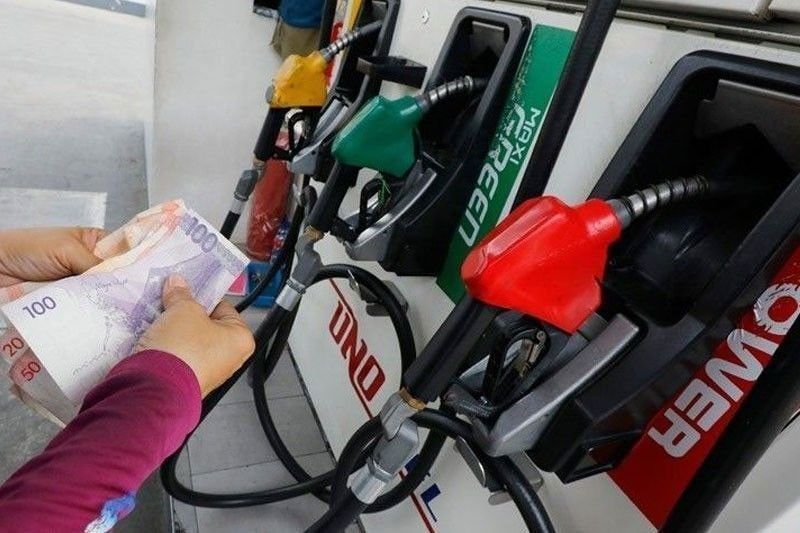
CEBU, Philippines — Motorists will face another round of steep fuel price hikes starting today, Tuesday, with diesel and kerosene registering double-digit increases due to the continuing conflict in the Middle East, the Department of Energy (DOE) announced yesterday.
During a virtual press conference, DOE Secretary Sharon Garin announced that the department is reverting to the prescribed pricing mechanism, replacing the price range implemented in recent weeks with a single maximum adjustment for each fuel product.
“We have readjusted our direction for today. Unlike the past few weeks na meron tayong range, ngayon wala na munang range. Balik muna tayo sa prescribed adjustment na isang presyo na lang,” Garin said.
Under the latest adjustment, gasoline prices will increase by a maximum of P3.65 per liter, diesel by P10.68 per liter, and kerosene by P11.77 per liter.
Garin stressed that oil companies are not allowed to impose increases beyond the prescribed maximum adjustments.
She said diesel posted the sharpest increase, reversing the downward trend seen in previous weeks, while kerosene registered the highest increase among the three fuel products.
The DOE chief said the adjustments were driven by developments in the Middle East, which continue to push up global oil prices.
“Once again, we are at the mercy of the war in the Middle East. The price of how much you buy in is not under our control,” Garin said.
She emphasized that while the Philippines cannot control international oil prices, the government can ensure proper enforcement of fuel pricing regulations and monitor compliance among oil companies.
“But how we consume it, how we enforce our laws, and how we monitor this is under our control. Kaya kailangan trabaho lang tayo, sama-sama para we can go through this hurdle again,” she said.
Despite the sharp increases, Garin expressed hope that the spike would be temporary.
“Hopefully it won’t last that long and it won’t be as bad as noong umpisa,” she said.
Adequate supply
Garin assured the public that the country has sufficient fuel supply despite the latest round of price hikes.
She said petroleum inventories are equivalent to about 46 days, exceeding the 30-day minimum stock requirement mandated by law.
Current inventories are equivalent to 43 days for gasoline, almost 46 days for diesel, nearly 140 days for kerosene, 82 days for jet fuel, almost 29 days for fuel oil, and 34 days for liquefied petroleum gas (LPG).
“Our fuel supply is sufficient. Inventories remain adequate. Filipinos can go about their normal routines and operations with confidence,” Garin said.
She acknowledged that higher fuel prices are placing additional burdens on Filipino families, public utility vehicle (PUV) drivers, and businesses, but said the government is taking all legally available measures to cushion the impact.
“I understand these concerns. The Department of Energy is on top of the situation, and we are taking active steps to protect our people,” she said.
Garin said renewed conflict and recent bombings in the Middle East have disrupted supply chains and created uncertainty in the global oil market.
She explained that the uncertainty affects not only oil producers but also shipping, transportation, insurance, and fuel traders, ultimately driving up prices for oil-importing countries such as the Philippines.
“The Philippines sources all of its petroleum from abroad, and more than 80 percent comes from the Middle East. These global movements reach our pumps,” Garin said.
She added that while the government has no control over international oil prices or geopolitical developments, it can act to protect consumers.
“We cannot change the direction of the global market, but we can act on how it reaches our people,” she said.
Fuel subsidy
To help ease the impact on the transport sector, Garin said the government continues to implement its fuel subsidy program for qualified jeepney and UV Express drivers and other eligible beneficiaries.
As of July 20, 2,734 gasoline stations nationwide are participating in the fuel discount program, including 484 in the Visayas. Qualified jeepney drivers receive a P10-per-liter discount for up to 1,500 liters per week at participating stations.
The total amount released to beneficiaries has reached P327 million, benefiting 87,582 unique public utility vehicles, each identified through its plate number.
Garin said the DOE is also coordinating with oil companies to ensure that pump prices fairly reflect global market movements while appealing for additional discounts for public utility vehicles and the possible staggering of fuel price increases to lessen the immediate burden on drivers.
She also assured the public that the department is closely monitoring the oil industry to prevent overpricing, hoarding, and other violations.
Beyond short-term interventions, Garin said the DOE continues to pursue long-term energy security by reducing the country's dependence on imported fuel through renewable energy and energy efficiency programs. — (FREEMAN)


- Latest


