The Marcos feud: Analysts see legacy, power struggles driving family tensions
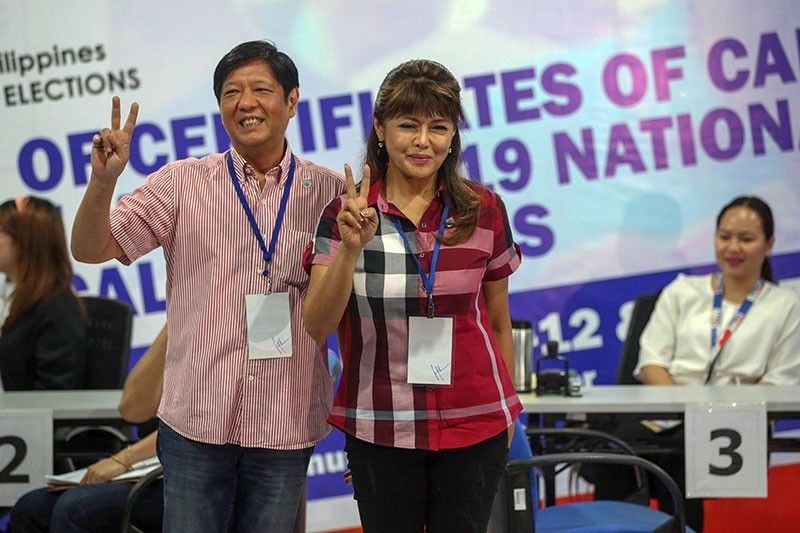
MANILA, Philippines — It is normal for siblings to fight.
That is for two children arguing over whose turn it is on the video game console, until a senator publicly accuses her brother, the sitting president, of using illegal drugs in the middle of one of the largest corruption scandals in history.
During what was supposed to be a non-political, anti-corruption rally of the Iglesia Ni Cristo, Sen. Imee Marcos turned on President Ferdinand “Bongbong” Marcos Jr, portraying him as a weak leader who used illegal drugs—an unproven claim first made years ago by former president Rodrigo Duterte and repeated by his supporters.
Her remarks came just days after resigned lawmaker Zaldy Co, who is turning out to be the main suspect in the flood control fund scheme, accused the president of benefiting from kickbacks—the very issue he made public and sought to uncover and probe.
Philstar.com spoke to two experts to understand the motivations, implications and issues most at risk of being drowned out.
Instability and confusion
Public policy analyst Dindo Manhit, president of the Stratbase Group, questioned the timing of Imee’s accusations.
He noted that if Imee believed her brother was a drug user, why did she let him run?
“For me, this is part of the broader attempt to create instability in our country, which is not good for the Filipino nation and for the Filipino people,” Manhit said.
Imee and Co’s accusations appear to be part of an effort to weaken Bongbong’s presidency, especially now that it is under immense pressure from the flood control corruption scam.
The claim, after all, is not directly tied to the scandal, but it further amplifies political noise, he added.
“It adds to the political polarization that we have in the country,” Manhit said.
While Manhit does not believe there is direct collusion between Co and Imee, he said even without coordination, their statements compound doubt over Bongbong’s leadership and weaken his image.
“It creates instability. Some would even use the term destabilization already,” Manhit said.
Legacy and power
Sociologist Athena Charanne Presto shared Manhit’s central question: if Imee believed her brother was using illegal drugs, why support his presidential run — and why help broker an alliance with Vice President Sara Duterte, with whom he later had a falling out?
Presto said the contradictions point to deeper political motivations, and that the choice alone would also be a form of corruption.
She argued that Imee now appears to wrestling the Marcos family legacy away from Bongbong. The name holds social capital and carries a loyal voting bloc that could become crucial for the 2028 elections.
While Imee has not signaled an intent to run for higher office, with her term as senator to end in 2031, Bongbong's administration has yet to float a name to succeed him.
Presto stressed, however, that the same Marcos legacy both siblings are trying to preserve is tied to longstanding political and economic issues that have kept the nation impoverished.
“All of these things would have a corruption angle, and would actually be motivated by corruption and pressing dynastic issues that actually keep this country buried in debt and disaster crisis,” Presto said.
Presto further developed these points in her essay “Imee Marcos claims the family legacy” on Australia-based publication New Mandala.
The real issue: Corruption
Both Manhit and Presto agree that the conversation must stay centered on corruption, not personality-driven distractions.
Manhit described the recent mud-slinging from Co and Imee as noise, saying the public should remain vigilant and stick to evidence.
If the administration wants to maintain credibility, he said, stronger action is needed. Based on data Stratbase collected, the public does not necessarily want Marcos to step down, but they want an end to corruption—because this is what they attribute poverty and high cost of living to.
And what would signify a believable anti-corruption campaign? “For the Filipinos, accountability means they should be jailed,” Manhit said.
Besides putting the corrupt behind bars, long-term reforms such as creating an independent fact-finding commission and enacting anti-dynasty measures are also key, Manhit said.
Tough but meaningful reform would break the cycle of "exclusive governance," he explained, wielded by political elites.
Presto, meanwhile, said the allegations have made it harder to maintain focus on the flood-control scandal. While it is important to discuss new issues, Presto said corruption must still be the anchor of public conversation.
“Pag-usapan natin ito pero, ‘wag tayo magpakulong sa personal na bagay,” Presto said. (Let us talk about it, but let us not be trapped by these personal things.)






- Latest
- Trending