


Only 22 of 1,700 target classrooms completed
Red-flagged projects may cost DPWH half of budget
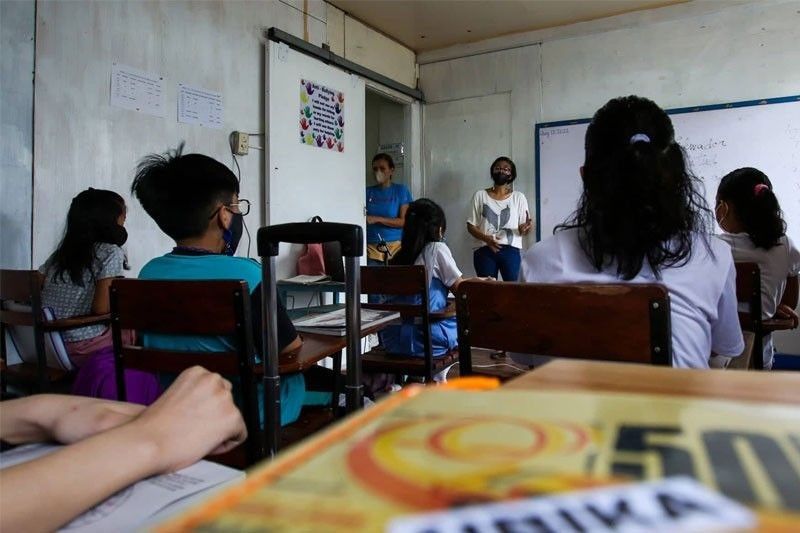
MANILA, Philippines — Only 22 classrooms have been built this year by the Department of Public Works and Highways out of the 1,700 targeted for completion, DPWH Secretary Vince Dizon disclosed yesterday.
At a hearing of the Senate finance committee on the DPWH budget, Dizon said 882 classroom projects are ongoing while 882 more have “not yet even started,” translating to a “very deplorable” performance rate of 15.43 percent.
“It’s October, secretary. Even just saying it, sumasakit po ‘yung puso ko na (my heart aches that) only 22 classrooms were built. If we continue at this rate, our 146,000-classroom backlog will balloon to 200,000 by 2028,” Sen. Bam Aquino said.
Aquino expressed frustration that despite previous priority in infrastructure spending, education facilities have remained neglected.
The senator also cited the need to shift classroom-building responsibilities from the DPWH to local governments.
“What we intend to do is remove this from the DPWH because you’re busy and you need to do other things. Funds should be given directly to LGUs (for building of classrooms),” Aquino said, referring to the proposed Classroom Acceleration Bill.
“We are in full support of this measure, especially now — 22 have been built this year. We really need help,” Dizon said in response.
“We also need an aggressive PPP (public-private partnership) so we can build fast because at this rate, it’s virtually impossible for DPWH to meet the classroom targets,” he added.
Aquino said Education Secretary Sonny Angara was also in favor of the proposal to directly download funds to LGUs, while also tapping NGOs and private groups with good track record in school building to address classroom shortages in isolated areas.
In a message to The STAR, Angara said “DepEd really wants to implement what we call the ‘flexibility’ provision in the General Appropriations Act and in the bill of Sen. Bam Aquino, that classroom construction should not solely be done by the DPWH.”
Finance committee chairman Sen. Sherwin Gatchalian said the DPWH may lose more than half of its P625-billion proposed budget due to thousands of “red-flagged” infrastructure projects worth P271 billion and some P70 billion worth of projects for 2026 found overpriced by over 1,000 percent based on independent review by engineers.
“The potential cut is P348 billion. It’s not yet final but it’s our estimates at the moment,” he told reporters.
Gatchalian said the committee reviewed the updated list of projects submitted by the DPWH for the House-approved General Appropriations Bill, and found 6,817 items with transparency and accountability issues.
For one, the senator flagged 4,566 road projects worth P201 million that had no station numbers or coordinates, making it impossible to verify their location or length.
Duplicated projects
He also raised red flags over 40 duplicated projects worth over P1 billion, citing a multi-purpose building in Muntinlupa City that required P40 million for construction and rehabilitation in the same year. “So there was construction and rehabilitation of the same building in the same year? I find this preposterous,” he said in Filipino.
The DPWH had earlier resubmitted 14,670 projects worth P566 billion through errata to the House of Representatives.
Dizon admitted the issues raised by the Senate were valid and vowed to conduct a full validation.
“I will instruct our implementing units to validate and indicate station number,” Dizon said.
On duplicated and phased projects, Dizon said the department has already started cleaning up the list and told the chamber to just delete the duplicates from the 2026 budget of the department.
Gatchalian said the DPWH must submit the missing project details by Monday next week, before the committee begins reconciling the budget. The committee suspended the hearing yesterday after more than eight hours.
Also at yesterday’s hearing, Sen. Loren Legarda said across-the-board budget cuts being considered by senators on all DPWH infrastructure projects are now as high as 30 percent as the chamber seeks to block “systemic overpricing” from recurring in the 2026 budget.
Legarda said discussions among colleagues have yielded a looming 25 to 30 percent reduction in all DPWH line items, which was previously only set at 15 to 20 percent.
Legarda said the “temporary corrective measure” was agreed upon factoring in findings of inflated costs in the agency’s previous projects.
“In light of the systemic overpricing revealed by recent corruption scandals, would the good secretary and his new team consider it reasonable and technically sound to implement an across-the-board reduction… because the previous officials have admitted that there are even 50 percent overpriced?” Legarda asked Dizon.
“How can we, in conscience, affix our signatures for an overpriced budget?” she added.
Overpricing
Dizon acknowledged the existence of overpricing in various regions, saying his team is conducting a regional review of material costs and project valuations.
“Clearly, there is overpricing. In our initial studies, there are projects overpriced above 20 percent… some even beyond 30 percent in certain regions,” he added.
Dizon said the DPWH would not wait until 2027 to correct the pricing distortions, saying it would block any attempts to overprice ongoing projects and those slated for next year.
He said the department will cut the cost of materials for projects in regions found to have overpriced them, saying steel and cement were overpriced in various amounts per region, ranging from less than 20 percent to more than 30 percent.
He said that the DPWH would be releasing a recommendation in the next weeks based on its assessment on the cost of materials.
“This must be applied immediately, especially for those projects still under procurement,” Dizon said.
Aquino voiced support for Legarda’s proposal, saying the chamber has discussed a 20 to 25 percent cut in the DPWH’s budget if the agency fails to justify or redesign its project costs in time for plenary deliberations.
“If there are substandard, overdesigned, or overpriced projects, we cannot in good conscience sign that budget,” he said. “Let’s take out the fat.”
Budget reallocation
Sen. JV Ejercito, meanwhile, suggested reallocating part of the P250 billion flood control fund to large-scale projects aligned with the government’s Central Luzon Floodway master plan, which the Asian Development Bank expects to complete by August 2026.
Ejercito said the P250 billion should be channeled toward “big ticket items” like floodways, dams, water impounding mechanisms and spillways. The amount represented allocation for flood control that President Marcos ordered taken out of the original P881 billion proposed budget for next year and transferred to other agencies.
“I understand the President said that the P250 billion of the flood control projects – not until you have already established reforms – will be reallocated, reapportioned to other projects like social welfare programs… and PhilHealth,” he said.
“But I think it might be a good opportunity for us because we cannot let the next two or three years that the people will continue to drown because there are no flood control projects , they will suffer in the next two to three years again,” Ejercito said.
Dizon agreed, saying future flood control projects must strictly adhere to the plan to avoid “wasteful and anomalous” spending.
Earlier yesterday, Dizon announced his appointment of DPWH Bureau of Designs director Lara Marisse Inguito-Esquibil as OIC of the National Building Code Development Office and Operations for External Convergence Programs to replace Arrey Perez who abruptly resigned.
In an address after the flag raising ceremonies at the DPWH central office in Manila, Dizon said he also intends to draw from the ranks to fill almost 2,000 vacant plantilla positions at the DPWH.
“Our priority to fill these different positions are from those within the DPWH. I want to promote and raise first from the ranks of deserving, honest, and hardworking people already in the DPWH including the job order (contractual) employees,” Dizon said.
Dizon said that Esquibil was a product of the Cadet Engineering Program which started in 2013 during the time of then DPWH secretary Rogelio Singson, but has since been discontinued.
“I learned just this morning, that she was in the first batch of Cadet Engineering Program,” Dizon said of Esquibil.
Meanwhile, Malacañang brushed aside Gatchalian’s proposal to abolish the DPWH amid allegations of rampant corruption in the agency.
“Not all government officials in the DPWH have committed wrongdoings. There are still public servants who we can say are responding to their obligations,” Presidential Communications Undersecretary Claire Castro said at a briefing yesterday.
“Right now, we haven’t thought about whether it should be abolished because what we need to do is to rid the agency (of) erring personnel,” she said. — Helen Flores, Rainier Allan Ronda, Evelyn Macairan


- Latest
- Trending


