Palace insists unprogrammed funds necessary amid calls for its removal
MANILA, Philippines — Malacañang has rejected recent renewed calls by lawmakers to zero out the P250 billion unprogrammed appropriations in the proposed 2026 national budget, saying the funds are crucial for government programs and are subject to strict oversight.
Palace Press Officer Claire Castro said at a press briefing on Wednesday, October 8, that the funds serve as a reserve for urgent and unforeseen expenses, such as emergencies, and are not automatically disbursed.
“Hindi po ito nagagasta nang basta-basta (This is not spent arbitrarily),” Castro told reporters.
“Kahit po ito ay nasa unprogrammed appropriation, ang ibig pong sabihin nito ay hindi po ito agad-agad makukuha kung wala pong sapat na dokumento," she added.
(Even if it is in the unprogrammed appropriation, it means it cannot be released immediately without sufficient documentation.)
Unprogrammed appropriations are funds authorized in the national budget that are treated as standby reserves. This means it must only be released once the government meets specific revenue targets, such as securing new loans or tax collections, or upon special presidential authorization.
However, large allocations for standby funds have become controversial under the Marcos administration. Critics say the mechanism allows the administration to stash away money for pre-planned programs with less transparency and greater political discretion than regular, itemized budgets.
In a privilege speech yesterday, Rep. Chel Diokno (Akbayan) urged Congress to reduce the allocation to zero. He said the P250 billion was not a necessary contingency fund, but was instead being earmarked for "large, planned, and regular programs" that should be subjected to the rigorous scrutiny of line-item budgeting.
When asked about Diokno's call on Wednesday, Castro directly rejected the feasibility of zeroing out the appropriation.
The funds, Castro said, are under “conditional implementation,” meaning agencies cannot access them unless specific requirements are met.
"Hindi po ba may mga nagrireklamo na hindi raw sila nabibigyan o nari-release-an ng mga pondo (Isn't it some agencies are complaining of the delays in the release of funds)?" Castro said.
"Iyan po ang ginagawa ng Pangulo dahil ito po ay nasa ilalim ng conditional implementation. Ibig sabihin po, pinangangalagaan ng Pangulo ang pondo ng bayan," she added.
(That is what the President is doing because it is under conditional implementation. This means the President is safeguarding the people’s money.)
Growing calls to remove unprogrammed funds
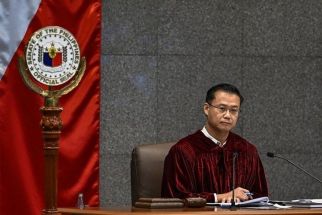
The Senate has the same stance as Diokno and earlier called to remove the standby funds from the spending plan for next year.
Senate President Tito Sotto previously bared plans to eliminate all unprogrammed funds from the 2026 budget, calling them “sources of questionable insertions.” He and Senate finance panel chair Sen. Sherwin Gatchalian have agreed to aim for “100 percent no unprogrammed funds,” with only foreign-assisted components possibly retained.
The controversy over unprogrammed appropriations is playing out against a backdrop of investigations that have revealed billions of funds meant for flood control projects have been misused in past years.
This, according to lawmakers, was made possible through covert budget insertions done behind closed doors by small committees.
Growing awareness of the anomalies in budget insertions has prompted critics to call massive UA allocations a possible alternative for insertions. In arguing for its removal, another Akbayan lawmaker, Rep. Perci Cendaña, earlier pointed out that 70% of UA allocations in the 2026 budget are for infrastructure projects.
“If the unprogrammed appropriations stays, then it might cast a shadow on our efforts to cleanse the stain of corruption from our national budget," Cendaña said Tuesday.





- Latest
- Trending