Should traffic violators in road crashes be denied zero-balance billing coverage?
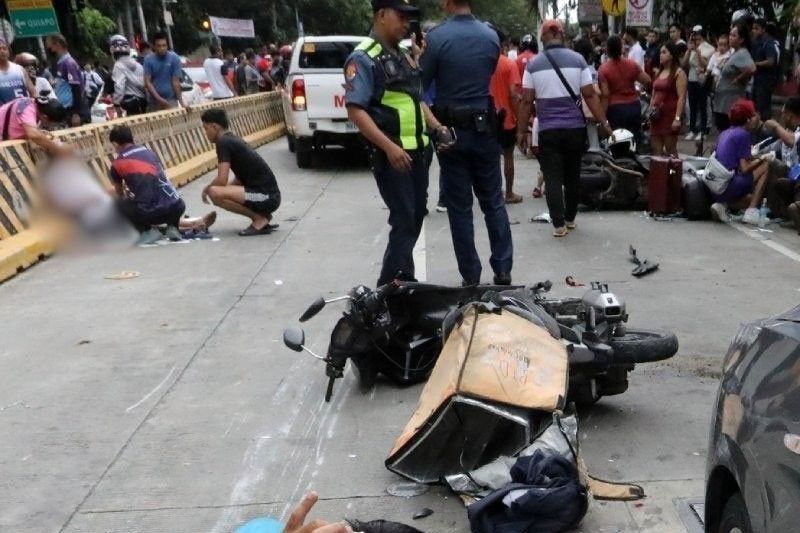
MANILA, Philippines — Health Secretary Teodoro Herbosa plans to exclude traffic violators from availing of zero-balance billing in Department of Health (DOH) hospitals, a move he says is meant to curb road crashes and push motorists to follow traffic rules.
“Today, I’m announcing that if you are admitted because you are not wearing a helmet, you are not wearing a seatbelt, you're drinking — you are now disqualified from the zero balance bill,” he said on Thursday, September 11.
The zero-balance billing policy is promoted as a government health program meant to cover all Filipinos, regardless of socioeconomic status.
To qualify, patients must meet three conditions. One, they should be a registered member of the Philippine Health Insurance Corp., admitted to basic or ward accommodation and confined at a DOH hospital. Still, the program is touted as universal in scope.
RELATED: Confused about the zero-balance billing policy? Here's an explainer.
Herbosa’s proposal, however, would carve out an exception by barring motorists who violate traffic rules from availing of the benefit.
For health reform advocate Tony Leachon, excluding road violators from zero-balance billing crosses an ethical line and undermines universal health care. He said there must be no distinction in care between those at fault and those harmed.
“This disproportionately affects low-income individuals who may already lack access to private care. It also risks punishing those who may have made a mistake but still deserve humane treatment,” he said.
Victims still covered
Herbosa clarified at the press briefing that only motorists found violating traffic rules would be excluded.
Victims of road crashes who are admitted to basic accommodations in DOH hospitals will still be covered under the zero-balance billing policy and will not have to pay out of pocket.
Rationale. DOH spokesperson Albert Domingo explained in an interview with DZBB 594 that the rationale behind the disqualification is simple: public funds should not be used to cover the hospital expenses of those who break the law.
“Ang tanong, kapag hindi tayo sumusunod sa batas at mayroon tayong mga kapuso na nasaktan na na-injure na sila naman ay sumusunod. Tama ba na binabayaran natin ‘yung mga hindi nasunod sa batas?” he said.
(The question is, if we don’t follow the law and some of our fellow Filipinos who did follow it end up getting hurt, is it right that we use public funds to pay for those who broke the law?)
He clarified that the policy does not mean violators will be denied treatment, only that they will have to shoulder their own medical expenses.
Points to consider. Leachon, however, said due process must first be ensured before a hospital labels a motorist as a violator upon admission. Costs, he added, could be recovered through legal or insurance channels instead.
“Universal Health Care must remain universal. It cannot be conditional on moral judgment or presumed fault. Otherwise, we risk turning hospitals into courtrooms — and care into punishment,” he said.
What the data shows
The DOH's new rule comes after it reported an average of 35 people killed in road crashes each day in 2023. The agency has been working with other government offices to cut road traffic deaths and injuries by half by 2028.
In July 2025, the Online National Electronic Injury Surveillance Data recorded about 5,083 road traffic injuries, with two-thirds involving motorcycle crashes.
Nearly nine in 10 of those cases involved drivers or passengers without helmets. More than 200 involved drunk drivers, and 38 people were killed.
Domingo stressed that road incidents should not be called accidents, saying they are crashes with clear causes, often linked to traffic violations.
He said the health department is still ironing out how the policy will be properly implemented.



- Latest
- Trending