DENR to tap informal workers in solid waste management, provide opportunities
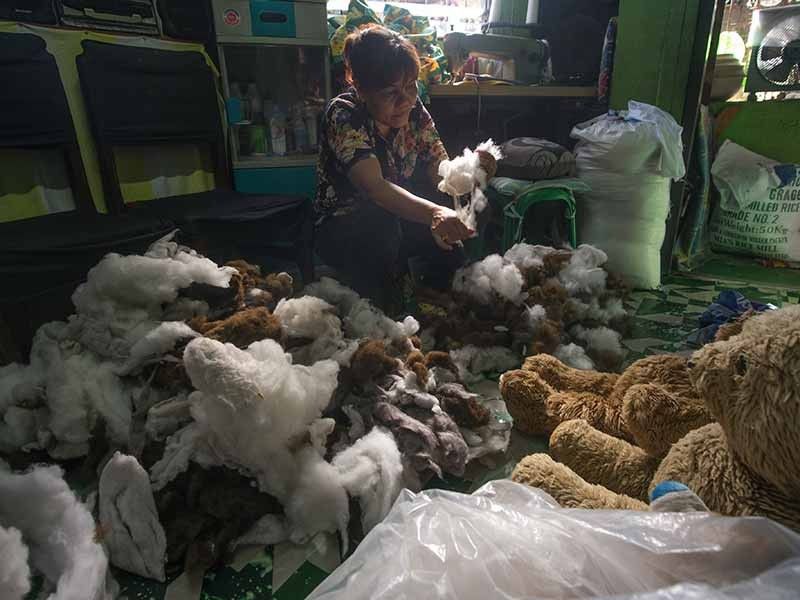
MANILA, Philippines — The Department of Environment and Natural Resources (DENR) is working on formally integrating informal waste workers in the government's solid waste management system.
Informal waste workers, often from the country’s most marginalized communities, survive by scavenging and selling waste from streets or landfill sites. These include waste reclaimers, itinerant waste buyers and small junk shop operators.
Lacking safety gear and health safeguards, they work amid constant exposure to harmful materials.
"Informal waste workers operate without formal policies that ensure workplace safety, stable income, or access to social services. Exposure to hazardous materials puts them at risk of respiratory illnesses, infections and injuries," the DENR's Environmental Management Bureau (EMB) said in a statement on Friday, August 15.
Through the DENR-EMB, the government seeks to provide training and financial literacy programs for informal waste workers to also "promote social inclusion" and give them the opportunity to an alternative livelihood.
“The informal waste workers remain excluded from the solid waste management value chain, yet their work is indispensable and forms the very backbone of a supply chain that advances environmental sustainability,” DENR Secretary Raphael Lotilla said.
As part of its efforts, the agency will provide monetary grants to 50 junk shops in Quezon City to purchase weighing scales and improve waste recovery. The DENR-EMB also seeks to connect them with businesses they could work with under the Extended Producer Responsibility law, which requires enterprises to manage and pay for the pollution they generate.
The government had already conducted lectures for informal waste workers in 2024, particularly catering to some 200 workers in Metro Manila, Central Luzon and Calabarzon.
The National Solid Waste Management Commission also issued Resolution 1655 in 2024, requiring local government units to integrate programs for informal waste workers into their 10-year solid waste management plans and to ensure their access to essential services.
"The lack of integration into the formal waste management systems also leaves them vulnerable to social welfare benefits and limits their economic opportunities," the DENR-EMB said.
"While Republic Act 9003 provides the legal framework for solid waste management, it does not yet establish clear protections or governance structures for the informal waste sector," it added.
Solid waste management has also taken center stage in discussions over the country's flood control, with critics questioning why billions in public funds have shown little to no improvement.
According to the Metro Manila Development Authority (MMDA), worsened floods in urban areas are partly due to improper waste disposal, which has led to garbage clogging drains and disrupting natural water flow.
The DENR-EMB said the government lacks sufficient waste management infrastructure, and with the prevalence of single-use plastics and limited access to sanitary landfills, waste disposal remains a pressing issue among Filipinos.
In Southeast Asia, the Philippines ranks among the top waste producers, with an estimated 23.61 million tons expected in 2025, according to the Climate Transparency Platform.
"By prioritizing the welfare of informal waste workers, the DENR-EMB seeks to build a waste management system that is not only environmentally sustainable but also socially just, ensuring that those who contribute to waste recovery and recycling receive the recognition and support they deserve," the agency said.
The Marcos administration has been reviewing nearly 10,000 flood control projects from 2022 to 2025 and identifying top contractors to hold them accountable for their inability to abide by their contractual promises with local government units.





- Latest
- Trending