Filipinos divided over Supreme Court ruling on VP Duterte impeachment — poll
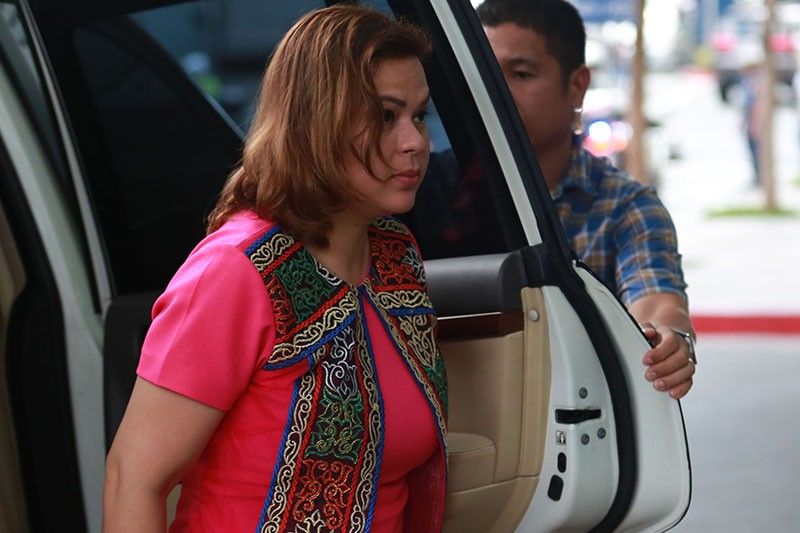
MANILA, Philippines — Filipinos are split over the Supreme Court’s decision to nullify the impeachment of Vice President Sara Duterte, with no clear majority opinion.
Public opinion research firm WR Numero released its latest survey on Wednesday, August 13, revealing that 34% of Filipinos disagree with the high court’s ruling, 26% agree, and two in five remain undecided.
“I think there is a big difference between the numbers of those who say they’re happy with the performance of the court at 58%, and those who agree with this ruling. I think this is an active disagreement with the court,” Cleve Arguelles, WR Numero president and political scientist, said at a press briefing.
He explained that social desirability bias may also be shaping the non-majority opinion, with some respondents siding with the Supreme Court to appear “supportive of the rule of law and the Constitution.”
An active indecision, disagreement
Although 40% don’t have a solid stance on the high court’s ruling over the impeachment, Arguelles said it also demonstrates an “active indecision” that should not be taken lightly.
He added that for ordinary Filipinos who are not lawyers, it may be natural to defer to the high court, trusting that justices and judges who have studied the rule of law and the Constitution know it better than they do.
Such deference, he explained, is also tied to the court’s role in sustaining political order, where it introduces fresh information and arguments while trying to justify its verdicts.
Yet the largest proportion, the undecided, illustrates the “active” form of Filipino indecision.
Apart from that, the survey also shows that 43% of respondents are completely unaware of the allegations and evidence cited in the impeachment complaint against Duterte.
Only one-fourth of the respondents believe they know enough about the complaint, while a third said they lack information.
Arguelles said this reflects criticism of the Senate for delaying the convening of the impeachment court for nearly six months, only to decide not to proceed without hearing the evidence. This comes amid corruption allegations involving Duterte’s use of confidential funds.
“Because the Senate, yes, spent so many session time on debates, but none of it was educational for our kababayans,” he said.
“It was a debate on parang medyo legalistic, but also some of it grandstanding, but none of it was helpful for Filipinos to understand what is the impeachment complaint is about,” he added, noting that it also points to criticism toward the Supreme Court, which chose not to hold oral arguments despite the need to clarify the issues.
What happened
The Supreme Court ruled on July 25 in favor of Duterte’s petition, which sought to declare her impeachment unconstitutional for allegedly violating the one-year bar rule and due process rules.
The court also decided that the Senate has no jurisdiction over the impeachment and therefore cannot convene as an impeachment court, ordering its decision to be “immediately executory.”
Before the Senate could decide on the trial’s fate, however, the House moved for reconsideration, saying the decision was based on factual errors. This means the ruling has yet to attain finality.
Despite this, most senators agreed to abide by the ruling and voted 19-4-1 to archive the articles of impeachment.
Undecided doesn’t mean opposed to trial
It was a move that clashed with earlier poll findings, which showed most Filipinos wanted the trial to go forward — both to see the evidence and to give Duterte her chance to answer the charges.
“So while a lot of them are unsure of the Supreme Court decision, because they don’t have, maybe the wisdom of justice, they’re not lawyers, they don’t know the technicalities, it does not mean that they don’t want an impeachment trial to proceed,” lawyer Dino de Leon said at the press conference.
Julio Teehankee, a political scientist and professor at De La Salle University, said that while the Supreme Court is the final arbiter in all legal matters, its authority’s effectiveness and stability depend on public acceptance and trust in its decisions as rightful and fair.
“So in terms of the Supreme Court decision, it's the final arbiter in all things legal. But legitimacy is the public acceptance of that right. And we can see here that the legitimacy of the decision is not standing on solid ground. … That's the political issue,” he said.
WR Numero conducted the survey from July 29 to August 6 among 1,418 adult Filipinos, using a mix of face-to-face and computer-assisted interviews. It has a national margin of error of ±2% and a 95% confidence level.
The Senate may have ended the impeachment for now, but if the Supreme Court grants the House’s motion for reconsideration and overturns its decision, it could still vote to restore the articles from the archives and hold a trial.




- Latest
- Trending