Classroom backlog could outlast 5 presidents, says Bam Aquino
MANILA, Philippines — The Philippines’ classroom shortage is so severe it could persist well beyond the terms of five future presidents unless the government finds a more efficient way to build new school infrastructure, Senate basic education panel chairperson Sen. Bam Aquino warned Tuesday, August 12.
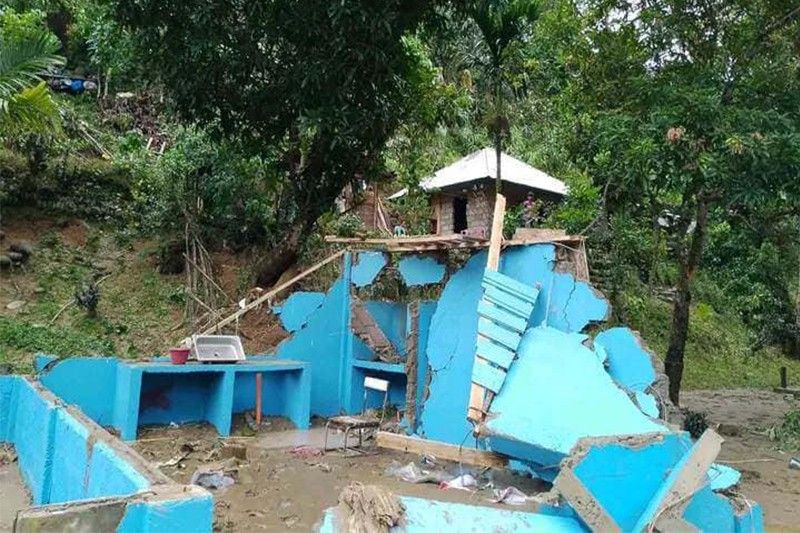
The Department of Education (DepEd) currently estimates a backlog of 165,000 classrooms, but Aquino said the real number could be higher once dilapidated classrooms or classrooms used for double and triple shifts are counted.
"If we cannot find a solution to the backlog of classrooms, we're looking at not just years, but decades, perhaps more than five presidents' terms will pass, before we can catch up... if we don't act with urgency and give [the problem] proper attention," Aquino said at the Senate basic education committee's inquiry on classroom and textbook shortages.
Bottlenecks and mismatched standards
Data from the Second Congressional Commission on Education (EDCOM 2) from 2014 to 2024 shows the government has consistently fallen short of its annual classroom construction targets, with many projects spilling into later years. This has led to an accumulated backlog of more than 165,000 classrooms.
Even in 2024, DepEd was only able to complete 605 new classrooms — barely a third of its target of 1,628 under the 2024 budget, according to the agency’s submission for the 2026 National Expenditure Program.
The Senate inquiry on Tuesday surfaced multiple obstacles in the classroom "project cycle," including slow budget releases, outdated regulations and unresolved land ownership issues.
National building standards also often failed to account for varying terrain or lack of buildable space in cities, which further delays classroom construction.
“It’s hard to accept that we can put up condos quickly in Metro Manila, or casinos during the POGO boom, yet we still have classroom bottlenecks,” Aquino said.
Cheaper and faster outside DPWH
Figures presented Tuesday showed that classrooms built through local government–private sector partnerships cost P1.5 million to P2 million each and can be finished in under a year.
In comparison, DepEd- and DPWH-built classrooms cost P2.5 million to P3.8 million. A single classroom can take an average of three years to complete, based on a study by state think tank Philippine Institute for Development Studies.
“If we can build at P1.5 million to P2 million, we can double the number of classrooms,” Aquino said.
A major issue tackled in the hearing was the rule in the national budget that makes the DPWH the sole agency allowed to build public school classrooms — a restriction senators said has slowed projects and shut out faster, often cheaper builders, including local governments that partner with the private sector.
Since 2018, the GAA has contained a provision that makes the DPWH the sole implementing agency of the government's school building program. This is a pivot from the previous setup, where DepEd oversaw the construction of new classrooms through its school building funds.
Citing her recollections as Senate finance chair in past Congresses, Legarda said the arrangement began at DepEd’s own request in 2016 or 2017, when the agency admitted it lacked engineers to build classrooms quickly.
“At that time… they requested, can you decongest it from us and transfer it because we don’t have the engineers to do it,” Legarda said, adding that it may be time to delete the provision as the backlog has only worsened since.
“Eight years later, we should review whether implementation was better under DepEd or DPWH, or just as bad,” Legarda said.
Aquino noted that the gap actually shrank to as low as 20,000 classrooms in 2016–2017 before DPWH took over, only to widen again in the years after.
“Maybe this third suggestion — to partner with private sector and LGUs — will finally address this,” Angara said.
Proposed law
Aquino said his proposed Classroom-Building Acceleration Program Act (Senate Bill 121) seeks to remove bottlenecks by allowing DepEd, local governments, NGOs and the private sector to build classrooms simultaneously alongside the DPWH.
He likened it to Republic Act 10931 or the free tuition law, which was passed and implemented outside the budget cycle, and, hence, was not dependent on waiting for the next year’s appropriations before it could be rolled out.
“The spirit of this bill is that if LGUs are ready and have land, NGOs that have been making classrooms for a long time, the government, DepEd — if we all build at the same time and together, we have the opportunity to close this gap,” Aquino said.
But even without a law, DepEd Undersecretary Wilfredo Cabral said the department has already proposed a 2026 budget provision that will allow the government more flexibility in tapping LGUs and private sector groups for classroom construction projects.
The Senate basic education panel is set to meet with the DPWH, local governments, and private and non-government organziations in a technical working group to compare classroom construction costs item by item, from materials to labour, Aquino said.
“When you talk about P3 million versus P1.5 million, we jump to conclusions,” Aquino said. “But with detailed analysis, we can see where the differences really are, and make sure we’re giving our students the best value.”





- Latest
- Trending