DepEd estimates over P100 million recoverable from schools in voucher fraud
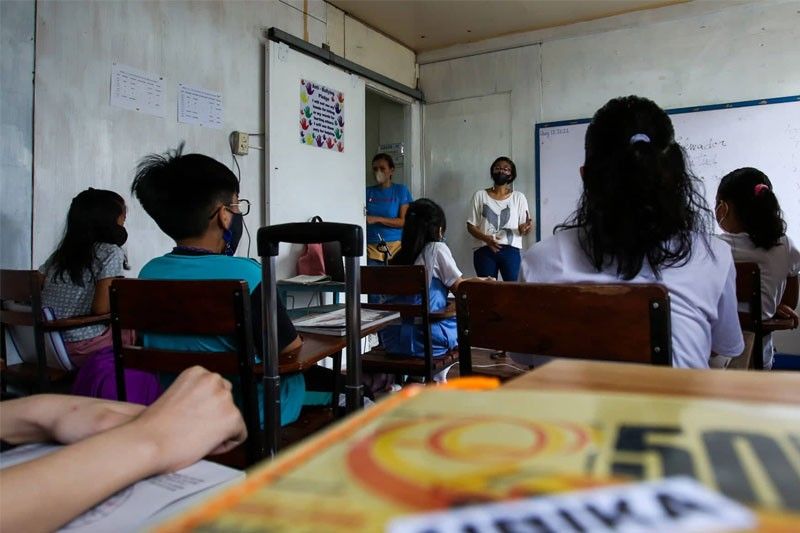
MANILA, Philippines — The Department of Education could recover over P100 million from private schools accused of making fraudulent claims under its multi-billion senior high school voucher program, Education Secretary Sonny Angara said Wednesday, July 30.
DepEd in March already recovered P65 million from 54 private schools removed from the program after investigations revealed they claimed subsidies for "ghost students" — enrollees who either did not exist or were ineligible for tuition subsidies.
But the actual total of refunded claims could be worth over P100 million based on DepEd's ongoing probe of the schools flagged for possible anomalies, said Education Secretary Sonny Angara on Wednesday, July 30.
"Not just 65... I think it is bigger. I think it is bigger than 100," Angara said at a post-State of the Nation Address forum when asked about the scale of the fraud. "Our investigation is ongoing."
Criminal cases filed to 'teach lesson'
The department has filed both civil and criminal cases against the schools involved, which are accused of unduly benefiting from the P50 billion voucher system designed to help grade 11 and 12 students pay for private school education.
"[We filed] not just a civil case to recover the payments, but also a criminal case, to teach them a lesson that the system should not be abused, because the value of what is discussed here is big," Angara said in mixed English and Filipino.
"It's not just the value of the money, but the value of losing the right to receive this voucher. This is their future, the future of our youth," the DepEd chief said.
The voucher program — launched in 2015 — provides financial subsidies to qualified Grade 11 and 12 students that would help them complete their senior high school education in private schools.
Instead of giving cash to students, DepEd sends the subsidy payments directly to the private schools where voucher-eligible Grade 11 and 12 students enroll. It is this way that some private schools see the vouchers as a steady source of revenue.
What came before. In February, DepEd launched a probe into reports of “ghost students” — undocumented or ineligible enrollees — purportedly listed by private schools as voucher recipients.
The probe initially targeted just 12 private schools across nine divisions before it was eventually expanded to 65, as of March.
While DepEd has not provided the latest number of schools facing charges in relation to the voucher program, Angara on Wednesday confirmed that DepEd's investigation was still ongoing.
"Our investigation is continuous. How do we strengthen the system so that there is no more fraud?" Angara said. "It is not good that these programs are being abused."
Data shared during a House probe in March revealed that DepEd withheld approximately P200 million in subsidies for around 22,000 "ghost students" in the 2023-2024 school year alone. (School year 2024-2025 had yet to end at the time of the House inquiry.)
But reports of undocumented senior high voucher beneficiaries are as old as the senior high program itself, which was rolled out nationwide starting school year 2016-2017. For instance, state auditors in 2016-2017 identified at least 115 cases of students billed multiple times in the same school year, while a 2018 audit revealed schools had returned P10.4 million for double-billed grantees.
DepEd has been clear in previous House inquiries that schools flagged for having "ghost students" or undocumented beneficiaries do not immediately indicate that they tampered with the list. Some may be caused by clerical errors.
Difficulty in verifying. While the voucher program's guidelines require DepEd to verify these lists, there are gaps in its oversight due to the sheer scale of the program, which counts over a million beneficiaries.
Rod Malonzo, head of the Private Education Assistance Committee's (PEAC) monitoring and processing unit, told the House basic education panel in March that they had been physically monitoring or conducting site visits for only 10% of beneficiaries in previous years.






- Latest
- Trending