'Physical beatings' worry DepEd as school bullying cases climb
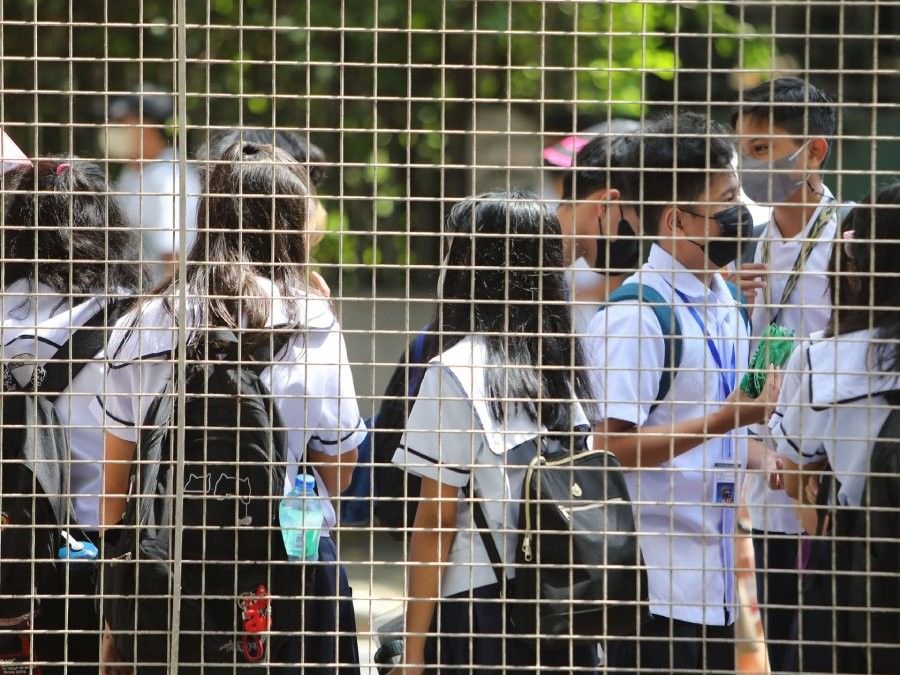
MANILA, Philippines — Amid an uptick in bullying cases, the Department of Education is now tightening enforcement of a long-standing policy that requires schools to have "anti-bullying committees" that act on complaints and identify students who may be quietly suffering from harm.
Education Secretary Sonny Angara acknowledged that while Republic Act 10627 or the Anti-Bullying Act has been in place for over a decade, many schools still fail to implement its core provisions — including the setting up of child protection committees meant to respond promptly when bullying is reported.
“Bullying incidents have gone up,” Angara said in an interview on ANC Headstart on Monday, July 7. “It also includes cyberbullying… But what really concerns us are these physical beatings."
Videos of students' physical altercations have been circulating on social media in past months, prompting DepEd to review their anti-bullying measures nationwide and allow police to be stationed outside "high-risk" schools.
Under the Anti-Bullying Act of 2013, all public and private schools are required to establish a child protection committee, led by school heads and composed of teachers, parents, students and community representatives.
The committee is tasked with drafting school-level policies to prevent abuse, addressing bullying complaints, identifying students showing signs of harm, and coordinating with police and social workers when needed.
Schools that fail to comply with this requirement are, under the implementing rules of RA 10627, subject to sanctions. But it's unclear how often — if at all — the department has enforced these penalties.
Only a little over 900 public schools were found to have functioning anti-bullying committees, based on a Department of Education review of more than 3,000 schools. The findings, presented at a Senate basic education hearing in April, reflect a tiny portion of the more than 45,000 schools nationwide.
“Despite the law being there for over a decade, not all schools are implementing it,” Angara said on Monday. “That’s why we’re really focusing now on making sure every public school has a committee in place to deal with this.”
DepEd has also long pointed to a chronic shortage of licensed guidance counselors in public schools — a gap it says not only fuels the prevalence of bullying but may also explain why many cases go unreported.
A default policy. To address noncompliance with the law, DepEd has rolled out a default anti-bullying policy that will automatically apply to schools without an internal anti-bullying protocol or committee. “Because you didn't institute a child protection policy or committee, this will be your default setting, so to speak,” Angara said. “So no one will be able to say that there is no anti-bullying policy in their school."
Nearly half of Filipino students aged 15 years old reported being bullied at least a few times a month, based on results from the 2022 Programme for International Student Assessment. That includes 43% of girls and 53% of boys — more than double the OECD averages of 20% and 21%, respectively.
A different assessment, the 2019 Southeast Asia Primary Learning Metrics, found that 63% of Grade 5 students in the Philippines experience bullying at least once a month.
--
If you or someone you know is experiencing bullying, please remember that you are not alone and help is available. You can reach out to the following hotlines for support and to report bullying incidents:
National Center for Mental Health (NCMH) Crisis Hotline:
0917-899-8727 (Globe)
7-989-8727 (PLDT)
Department of Education (DepEd) Learners Telesafe Hotline:
(02) 8632-1372
#33733 (#DEPED) for Smart/PLDT users
0945-175-9777 for Globe subscribers


- Latest
- Trending