Can Filipinos learn from US midterm polls?
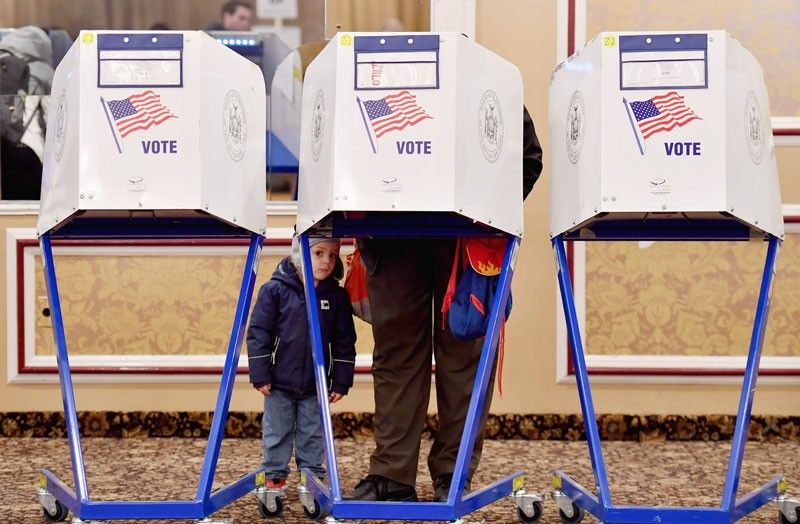
LAS VEGAS – On May 13 next year, Filipino voters will troop to polling precincts for the midterm elections.
What can they learn from the Americans who just had their midterm polls on Nov. 6?
Abner Galino, a reporter of LA-based newspapers Weekend Balita and US-Asian Post, said one of these lessons is simplicity, which is obviously absent from campaigns in the Philippines.
“Here, elections are very simple. You won’t see campaign materials on the road, unlike in the Philippines where all corners are full of campaign posters. Campaign spending here is minimal,” he told The STAR.
Galino, who used to edit a tabloid in the Philippines, noted that when candidates here campaign, they are not accompanied by a caravan of supporters.
Candidates and their supporters in the Philippines are unmindful of the bother that they cause to others, Galino added.
But according to James Jimenez, spokesman for the Commission on Elections (Comelec), elections are not only political but also cultural for many Filipinos.
“Our colonial history has given us the mindset that only some people are able to (or should) fill leadership positions. So, when our politicians campaign, they have to evoke that ‘specialness’ and the easiest way to do that is to demonstrate ‘popularity’ – large numbers of supporters, a fiesta (festive) atmosphere,” Jimenez told The STAR in a text message.
Manner of voting
Emy Rubio, 60, who migrated to Illinois from Bulacan 34 years ago, said election day in the US is not declared a holiday although employees are permitted to report to work late or leave early so they can cast their ballots.
Rubio added that voters can opt for “early voting” as long as they register for it in advance, regardless of the reasons why they cannot cast their vote on election day.
In the Philippines, early or absentee voting can be availed of only by selected sectors like the police, military and members of the media who cannot vote in their designated polling precincts on election day because they go to work somewhere else.
Campaign ads
Campaign advertising is more aggressive in the US than in the Philippines. In the course of the campaign here, there were television propaganda that openly maligned or insulted candidates.
The STAR observed ads describing one candidate as “senator spineless” and another as “the man we cannot trust in Congress.”
According to Lynn Vavreck, a professor of Political Science and Communication at the University of California, Los Angeles, campaign advertisements in the US are straightforward.
“The political ad could be insulting but it is practically based on issues. The (aggrieved) party can always refute,” she said in an interview after her presentation before the journalists participating in the International Reporting on the Midterm Elections in Los Angeles, California and Las Vegas, Nevada.
For his part, Jimenez maintained that the Comelec is not mandated to regulate the contents of campaign advertisements but it has jurisdiction over the aggregated airtime in broadcast media and space in newspapers.
“That is called negative ad. It is actually allowed in the Philippines. There is no prohibition against negative campaigning. The difference is cultural,” Jimenez added.
Jimenez explained that Filipinos are “non-confrontational and usually avoid giving direct criticism,” as opposed to their American counterparts.
“This is why we still use ‘Brand X” in product commercials. When we do see negative ads in politics, they’re usually ‘anonymous’ because the ones behind them are worried that if they admit to putting out a negative ad, there will be a backlash against them,” Jimenez added.
The types of voting system in the US depend on the states where an election is held.
In California, voting is done manually while voters in Nevada use touch screens.
Dan Kulin, public information administrator at the Clark County in Nevada, said paper receipts are printed after voters cast their ballots.
Kulin added that the paper receipt contains the “selection” or candidates chosen by the voter but not the voter’s name or any form of identification.
In the Philippines, the paper receipt was introduced in the 2016 polls but it indicated voter’s information and not the candidates he or she voted for, raising doubt among voters if their ballots reflected their true choice of candidates.




- Latest
- Trending