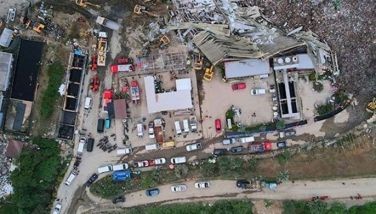


Carbon building completes structural phase
CEBU, Philippines — Despite an ongoing court battle questioning the legality of the Carbon Market Redevelopment Project, Cebu City's historic trading hub reached a major milestone on Wednesday as developers and city officials celebrated the topping-off of the project's main public market building, with operations targeted to begin in April 2027.
The ceremony marked the completion of the structural framework of Carbon Market's main building, or B2, the centerpiece of the redevelopment being undertaken by Cebu2World Development Inc. and Megawide Construction Corp. in partnership with the city government.
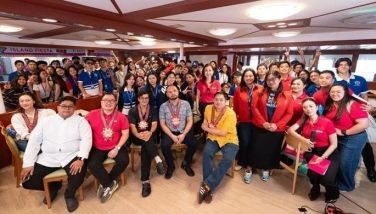
The topping-off ceremony gathered city officials, project stakeholders, market administrators, vendors, contractors, and representatives from Megawide and Cebu2World, signaling the transition from structural construction to interior fit-out and finishing works.
According to Cebu2World President Louie Ferrer, the building's main construction phase started only in February following various challenges during the project's early stages.
"Just a few months, now we have this building, and we will open this in April," Ferrer said.
Project documents showed that B2’s structural construction was completed in 10 months.
The building will accommodate Carbon's wet market operations on the lower ground floor and vendors of flowers, native products, and selected dry goods on the upper ground floor.
The second and third floors are intended for retail and commercial spaces, while the fourth floor will house a food hall featuring national brands and curated Cebuano food concepts.
A wellness and recreation area, including pickleball courts, a gym, and a wellness clinic, is planned for the fifth floor.
The facility will also feature upgraded drainage, sanitation and utility systems, escalators, elevators, and dedicated loading areas aimed at improving market operations and customer experience.
In a message delivered by Assistant City Administrator Kenneth Siasar, Mayor Nestor Archival welcomed the progress of the project but stressed that modernization must not come at the expense of the vendors who have long depended on Carbon for their livelihood.
"I want to make one thing very clear: All existing vendors who will be affected by this redevelopment must be properly accounted for and consulted, and assured of fair treatment and continued opportunities to earn a living," Archival said.
The mayor acknowledged longstanding concerns that redevelopment could result in higher operating costs for vendors.
"We do not want a situation where the market becomes more modern, but the vendors take home less because of the many fees and additional expenses they have to pay," he said.
Archival said the true measure of success would not be the construction of a modern facility alone, but whether vendors would be able to improve their incomes and livelihoods.
"We want a Carbon Market that is clean, organized, safe, and competitive, but remains affordable and accessible to everyone," he added.
Several vendor representatives who spoke during the ceremony voiced support for the redevelopment, recalling years of operating in aging facilities plagued by leaks, flooding, deteriorating structures, and declining customer traffic.
Vendor representative Dodong Caramelo, president of the Unit1 Stallholders’ Association, recounted decades of moving between temporary locations and selling in makeshift stalls before the current redevelopment initiative.
"Nahituman na gyud ang among mga damgo nga dugay na nga panahon nga kahatagan mi og insaktong lugar nga kabaligyaan namo," Caramelo said, thanking both the city government and project developers.
Another vendor leader, Nicefora Falora, president of UNICAMSA, similarly welcomed the new facility, saying many stallholders have endured years of operating in conditions that had become unsafe and inadequate for both vendors and customers.
Falora, however, urged authorities to ensure rental and occupancy costs remain affordable so that existing stallholders and ambulant vendors will have an opportunity to continue earning a living in the redeveloped market.
While some groups continue to oppose aspects of the redevelopment and have raised concerns over privatization, displacement, and future costs, not all vendors are against the project.
Several vendor associations and legitimate stallholder groups have participated in consultations and publicly expressed support for the redevelopment, provided that safeguards for livelihoods and reasonable market fees are maintained.
The latest milestone comes as legal challenges against the redevelopment remain pending.
Vice Mayor Tomas Osmeña, a longtime critic of the project, has sought to nullify the joint venture agreement (JVA) between Cebu City and Megawide.
He argued that the JVA is disadvantageous to the city, threatens the public character of Carbon Market, and could affect the welfare of small vendors.
Osmeña has also elevated the dispute to the Supreme Court.
Megawide and Cebu2World, meanwhile, have asked the high court to dismiss Osmeña's petition and allow the project to proceed, arguing that similar issues are already being litigated in a separate case and that the redevelopment complied with applicable laws and procedures.
Despite the legal challenges, construction activities have continued.
Project proponents describe the redevelopment as an effort to address decades-old problems in Carbon, including aging infrastructure, poor drainage, sanitation issues, congestion, and safety concerns, while preserving the district's role as Cebu City's historic center of commerce.
For Ferrer, the completion of B2's structural framework represents only the beginning.
"This is just the start of our main development in Carbon," he said. — (FREEMAN)







- Latest